Explore Cyprus with Our Interactive Map

Explore our top stories and discover ideas worth your time.

Kampanopetra Basilica

Kampanopetra Basilica

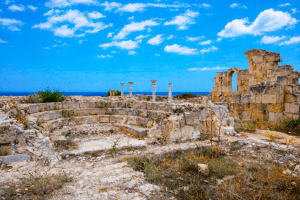
The Basilica of Kampanopetra is a large Early Christian church complex located at the archaeological site of ancient Salamis, near modern Famagusta in the Turkish-occupied part of Cyprus. Built during the late 5th or early 6th century CE, the basilica served the city of Constantia, the name given to Salamis after it was rebuilt following devastating earthquakes in 332 and 342 CE. The complex consists of four major sections arranged in a linear sequence. From west to east, these include a large western courtyard, a second western atrium connected to a narthex (entrance hall), the main three-aisled basilica, and an eastern atrium. The entire structure measures approximately 152 meters in length and reaches nearly 38 meters at its widest point. This makes it one of the largest Early Christian basilicas in Cyprus. The name "Kampanopetra" has been interpreted in different ways. Some sources translate it as "stone by the monks' cells," while others suggest it means "stone bell." The name likely refers to features or traditions associated with the site during medieval times when a small monastic community continued to use portions of the ruined basilica. Historical Background Salamis was one of Cyprus's most important cities throughout antiquity. According to legend, it was founded around the 11th century BCE by Teucer, a hero from the Trojan War who was exiled…

Read more
Adaptation Imported Artistic Techniques

Adaptation Imported Artistic Techniques

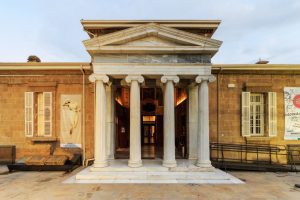
Adaptation of Imported Artistic Techniques in ancient Cyprus involved incorporating styles from regions such as Greece, Egypt, and the Near East, then modifying them to align with local beliefs and values. Rather than exact replication, Cypriot artists infused these elements with distinctive island characteristics, resulting in art that felt authentically Cypriot - unique and rich in significance. This process of selective adaptation transformed external influences into innovative expressions, illustrating how an island on the periphery of empires developed a vibrant creative identity. metmuseum-org A Creative Synthesis at a Mediterranean Crossroads Cypriot art emerged from the island's position as a nexus of cultural exchange, where imported techniques underwent transformation to reflect indigenous perspectives. External styles arrived through trade, migration, and conquest, but artists selectively reshaped them to emphasize themes central to Cypriot life, such as harmony with nature, divine protection, and communal resilience. Pottery, sculptures, and architectural elements bear witness to this blending, where foreign forms gained new meanings tied to the island's spiritual and social fabric. The outcome was a visual language that balanced innovation with tradition, capturing the essence of a society navigating diverse influences while preserving its core identity. ancientcyprus-com The Beginnings of Cultural Adaptation The practice of adapting imported techniques traces back to the Bronze Age around 2500 BC, when Cyprus's copper resources attracted merchants from surrounding…

Read more

Protaras Beach

Protaras Beach

Protaras sits on the southeastern coast of Cyprus in the Famagusta District, approximately 70 kilometers from Larnaca International Airport. This coastal resort developed specifically for tourism offers 10 kilometers of coastline along the Mediterranean Sea. The beaches here feature fine golden sand and exceptionally clear waters that earned international recognition. Fig Tree Bay was named Europe's third best beach by TripAdvisor in 2011, though rankings shifted in following years. Unlike the party atmosphere of nearby Ayia Napa, Protaras built its reputation as a quieter alternative better suited to families and domestic Cypriot tourism. Historical Context In ancient times, the area now known as Protaras was home to the old city-state of Leukolla, which had a small, safe harbor where Demetrius Poliorketes sought refuge in 306 BC. For centuries afterward, the coast remained sparsely populated due to pirate threats that made settlement dangerous. The area earned the nickname "the land of windmills" from agricultural equipment that once dotted the landscape. The first windmills appeared in Paralimni in the early 20th century and were imported from Chicago, Toronto, and later Great Britain. Tourism development began in earnest during the late 20th century following the 1974 events that closed Famagusta to Greek Cypriot tourism. Protaras transformed from agricultural land into a major resort destination. The population of the broader Paralimni area grew from…

Read more