Explore Cyprus with Our Interactive Map

Explore our top stories and discover ideas worth your time.

Cyprus Police Museum (Nicosia)

Cyprus Police Museum (Nicosia)

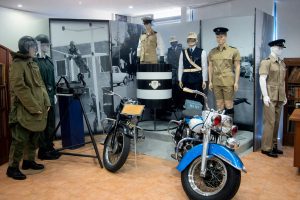
The Cyprus Police Museum chronicles law enforcement history in Cyprus from British colonial times through independence to the present day. The British Chief of Police, W.C.C. King, founded the museum in 1933 during the colonial period. cyprusbutterfly-com The museum documented criminal methods and police responses during a period when Cyprus was transitioning from traditional village life to a more modern urban society. The facility displays uniforms, weapons, equipment, police vehicles, and documents that trace the development of policing on the island. The museum also houses important materials from World War II and the 1955 to 1959 National Liberation Struggle against British rule. Evolution to a Historical Institution Over decades, the museum's scope expanded beyond purely criminal matters. While crime-related exhibits remain important, the collection now covers the broader history of the Cyprus Police Force. The institution documents how policing changed through different political periods, from British colonial administration through the establishment of the Republic of Cyprus in 1960 to modern law enforcement practices. cyprusbutterfly-com The Police Museum is owned by the Cyprus Police and managed by Department A of the Police Headquarters. It operates as a public institution with free admission, making police history accessible to all visitors. The museum serves both educational purposes and institutional memory, preserving the legacy of police work in Cyprus. Police History Collections A substantial…

Read more
A Crossroads That Accumulated

A Crossroads That Accumulated

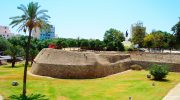
Cyprus is best understood as a layered island, where newcomers rarely erased what came before, and daily life absorbed languages, customs, and beliefs over centuries of close contact. Positioned between Europe, the Levant, and Anatolia, it became a crossroads early through trade, then accumulated Roman, Byzantine, Arab, Latin, Venetian, Ottoman, and British influences without turning into any single one of them. googleapis This article traces how those layers formed, where coexistence was practical rather than ideal, and why "Cypriot" identity still carries many histories at once. Ten Thousand Years of Settlement Human settlement in Cyprus stretches back more than ten thousand years. Long before empires arrived, early communities established farming villages and ritual spaces that tied life closely to land and seasons. These foundations mattered because when later cultures arrived, they did not start from nothing. istockphoto As Cyprus entered the Bronze Age, copper transformed the island into a hub of Mediterranean trade. This was not just an economic shift. It brought constant contact with Egypt, the Levant, and the Aegean, embedding Cyprus into international networks very early in its history. From that point on, isolation was no longer possible. The island’s identity was shaped by exchange. Greeks and Phoenicians Intertwined Greek-speaking settlers arrived in large numbers during the late Bronze Age, establishing language, myths, and social structures that would…

Read more

Cyprus Scenic Mountain Passes

Cyprus Scenic Mountain Passes

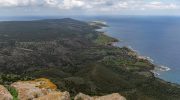
Cyprus mountain roads offer some of the Mediterranean's most spectacular drives, with routes that climb from sea level to nearly 2,000 meters through ancient forests, traditional villages, and panoramic viewpoints. These roads showcase the island's dramatic geography while connecting travelers to centuries of history and natural beauty. Shutterstock-com Mount Olympus Road The road to Mount Olympus climbs to 1,952 meters above sea level, making it the highest point on the island. Two military bases occupy the summit, one British and one Cypriot, limiting public access to the very top. However, roads leading toward the peak provide stunning views of surrounding valleys and forests. Shutterstock-com The journey starts from several possible directions, with routes from Limassol through Platres being among the most popular. The ascent features countless switchbacks and hairpin turns as the road gains elevation. Dense pine forests cover the mountainsides, giving way to more exposed terrain at higher altitudes. Winter transforms this area into Cyprus's only ski destination, with snow covering the peaks from January through March. Drivers should fill fuel tanks before attempting the climb because petrol stations become scarce above 1,000 meters. The temperature drops noticeably with altitude, sometimes falling 10 degrees Celsius cooler than coastal areas. This makes the mountain roads a welcome escape during summer heat but creates challenging conditions in winter when ice forms…

Read more