Explore Cyprus with Our Interactive Map

Explore our top stories and discover ideas worth your time.

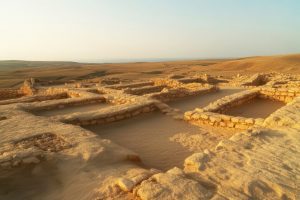
Ancient Enkomi Cyprus Bronze Age City

Ancient Enkomi Cyprus Bronze Age City

On the eastern coast of Cyprus near today’s Famagusta, Enkomi was one of the most important Bronze Age cities in the Mediterranean. For over 600 years, this walled city controlled much of the region’s copper trade and acted as a key link between the Near East, Egypt, and the Aegean world. visitnorthcyprus-com Enkomi was a major Late Bronze Age settlement, occupied from around 1650 BCE to 1050 BCE. The city grew near a Mediterranean inlet, which has since filled with silt, leaving the ruins several kilometers from the sea. At its height, between 1340 and 1200 BCE, Enkomi was one of Cyprus’s main centers for copper production and export. Historical Background Enkomi was first settled in the Middle Bronze Age, around 2000 BCE, when Cyprus traded with Egypt’s Middle Kingdom. Activity at the site slowed during the 17th and 16th centuries BCE, possibly because Hyksos control in Egypt disrupted trade. mail-com The city became important again after 1550 BCE, when Egypt’s Eighteenth Dynasty reunited the country and started importing copper again. This period marked the start of Enkomi’s rise as a major urban center. During the Late Bronze Age, Cyprus was part of a wider trade network across the eastern Mediterranean. Cities like Ugarit, Byblos, Sidon, and Tyre became regular trading partners, and by 1400 BCE, Mycenaean Greeks also developed…

Read more

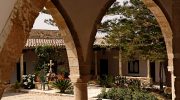
Cyprus Stone Courtyards Architecture

Cyprus Stone Courtyards Architecture

Traditional Cyprus courtyards with stone arches represent the architectural heart of village homes where families conducted daily life away from public view. The avli, as courtyards are called in Greek, functioned as outdoor living rooms enclosed by thick limestone walls exceeding half a meter in depth. Between rooms inside the house, graceful stone archways created a sense of flow and strength while thick wooden beams supported roofs covered with clay tiles. cyprushighlights-com The architecture prioritized both community connection through shared walls with adjacent family compounds and climate adaptation through thermal mass that kept interiors cool in summer and warm in winter. The iliakos, a covered porch created by extending the roof 2 to 3 meters forward on wooden beams or stone arches, served as the main social space where families received guests and conducted handicrafts. High stone walls and tightly locked gates hid houses from passing strangers, creating privacy that defined traditional Cyprus domestic architecture where facades and gardens remained invisible to uninvited observers. The Avli as the Heart of Home The central courtyard served multiple essential functions that made it indispensable to Cyprus village life. Families cooked, worked, ate together, and processed agricultural products in these open-air spaces that provided natural light and ventilation unavailable in small interior rooms. Women dried fruits and vegetables on flat rooftops accessible from…

Read more
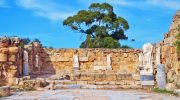
The Gymnasium of Salamis

The Gymnasium of Salamis

The ancient city of Salamis on Cyprus holds some of the Mediterranean's most remarkable Roman architecture. Among its treasures, the Gymnasium stands out as a testament to how Romans blended physical training, social interaction, and luxury bathing into a single sprawling complex. Located on the eastern coast near modern Famagusta, this site offers visitors a direct connection to daily life in Roman Cyprus. worldhistory-org The Gymnasium traces its roots to the Hellenistic period, when Greek colonists first established athletic training facilities in Salamis. However, the structure visible today belongs to the 2nd century AD, specifically during the reigns of emperors Trajan and Hadrian. The transformation came after a devastating Jewish revolt in 116 AD that left much of Salamis in ruins. Rather than simply repairing the damage, Roman engineers rebuilt the Gymnasium on a grander scale. The new complex featured a colonnaded palaestra, a large open courtyard surrounded by covered walkways on all four sides. This provided athletes with shaded areas for training and spectators with comfortable viewing spots. The Romans added sophisticated bathing facilities that transformed the Gymnasium from a simple training ground into a complete social center. An inscription found in the pavement credits Trajan with constructing the roof over one of the swimming pools, while multiple honorific decrees mention Hadrian as a benefactor and savior of the…

Read more