Explore Cyprus with Our Interactive Map

Explore our top stories and discover ideas worth your time.

Greek Independence Day Cyprus

Greek Independence Day Cyprus

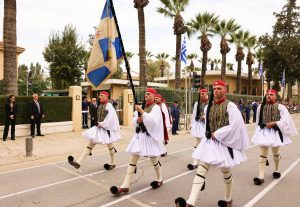
March 25 stands as a major public holiday in Cyprus, commemorating Greek Independence Day alongside the religious Feast of the Annunciation. The day celebrates the beginning of the Greek War of Independence in 1821 when Greeks rose against nearly 400 years of Ottoman rule. cyprusmail-com For Cyprus, this holiday holds special significance beyond historical solidarity, representing the deep cultural, linguistic, and religious bonds between Greek Cypriots and mainland Greece. The celebration is particularly important for Greek Cypriots, who see parallels between Greece's struggle for freedom and their own fight for independence from British rule that succeeded in 1960. The Historical Background of the Revolution Greece had been under Ottoman control since the mid-15th century when Constantinople fell in 1453. For nearly four centuries, Greeks maintained their cultural identity through language, Orthodox Christianity, and collective memory of their ancient heritage. The revolution was officially declared by Bishop Germanos of Patras on March 25, 1821, at the Agia Lavra Monastery near Kalavryta. The date was specifically chosen to coincide with the Feast of the Annunciation, blending the struggle for political freedom with religious significance. The revolutionary slogan "Eleftheria i Thanatos," meaning "Freedom or Death," became the rallying cry. This powerful phrase represented the determination of Greeks who pledged they would rather die than continue living under subjugation. The banner of revolution became…

Read more

Circum Troodos White Ring Cyprus Route

Circum Troodos White Ring Cyprus Route

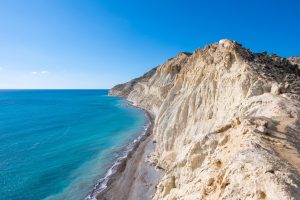
While climbing the high slopes of Troodos we’ve been walking on the frozen machinery of an ancient ocean. But now it’s time to step away from the mountain, slightly change our story and observe what had been happening under the sea, as the Olympus peak was rising into the sky. wikiloc Leaving the cool shade of Platres behind, we approach the wine village of Omodos. The dark volcanic surfaces give way to pale rocks. Chalk breaks easily under your fingers. Hills become rounder. Valleys widen. Vineyards, orchards and white stone villages appear. The geology has shifted from fire to sediment. Encircling the Troodos massif lies a vast geological belt known as the Circum-Troodos Sedimentary Succession. It is the quiet counterpart to the violent ophiolite core. While Troodos itself formed through submarine volcanism deep beneath the Neo-Tethys Ocean, these surrounding rocks were created slowly, grain by grain, as sediments settled on the seabed around the rising mountains. For nearly eighty million years, currents carried shells, clay, volcanic fragments and microscopic marine organisms into the surrounding basin. Layer upon layer accumulated. Over time these sediments hardened into limestones, chalks, marls and sandstones that now form the foothills surrounding the Troodos range. If the ophiolite tells the story of the ocean floor, the Circum-Troodos formations tell the story of the island emerging from…

Read more
Leventis Municipal Museum

Leventis Municipal Museum

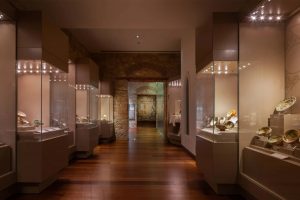
The Leventis Municipal Museum tells the story of Europe's last divided capital through over 10,000 objects collected across five thousand years. Within two years of opening in 1989, it won the European Museum of the Year Award for bringing modern museum standards to Cyprus. shutterstock-com The museum occupies a complex of three historic buildings on Ippokratous Street in the Laiki Geitonia neighborhood within the Venetian walls of Nicosia. The main building at number 17 once served as the clinic of Dr. Themistocles Dervis, who was mayor of Nicosia for 27 years between 1929 and 1959. The building at number 15 operated as the Victoria Hotel. The third structure at 18 Solonos Street is a small traditional house from the late 18th century, where Nikolaos Tsikkinis, one of the city's best-known teachers, was born and lived. Historical Background In the early 1980s, the Dervis family mansion stood in ruins and faced demolition. Lellos Demetriades, who served as mayor of Nicosia from 1971 to 2001, saw an opportunity. He wanted to create a civic history museum as part of his broader effort to revitalize the old city within the walls. Although demolition work had already begun, the Municipality of Nicosia managed to purchase the building. leventismuseum-org Demetriades approached the A.G. Leventis Foundation with his vision. Constantine Leventis, the first chairman of the…

Read more