Explore Cyprus with Our Interactive Map

Explore our top stories and discover ideas worth your time.

Madari Viewpoint Cyprus Panoramic Views

Madari Viewpoint Cyprus Panoramic Views

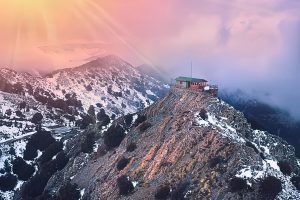
Madari Summit stands at 1,613 metres, securing the spot as the second-highest peak among the mountains in Cyprus. The Madari viewpoint sits atop Mount Adelfoi in the eastern Troodos range, offering unrestricted access to its summit, unlike Mount Olympus, where military installations block the highest point. The fire lookout station at the peak provides 360-degree views that stretch from the Turkish-occupied Pentadaktylos mountains in the north across the Mesaoria plain to the southern coast. Visitors can climb the open tower structure to gain even higher vantage points. The location draws photographers, nature enthusiasts, and hikers who want to experience Cyprus from its most panoramic natural viewpoint without the restrictions that limit access elsewhere in the mountains. Historical Development The Troodos Mountains formed approximately 90 million years ago as part of the Neotethys seafloor. The range rose slowly from the sea as a result of the collision between the African and European tectonic plates, a process that eventually formed the island of Cyprus. The Madari area showcases the famous Troodos Ophiolite, one of the world's most complete and accessible examples of oceanic crust that has been lifted above sea level. Ophiolite formations include layers of oceanic crust and upper mantle rocks normally found deep beneath the ocean floor. As this process slowed and nearly ceased, the rock formations remained largely intact,…

Read more
Kyrenia Mountains

Kyrenia Mountains

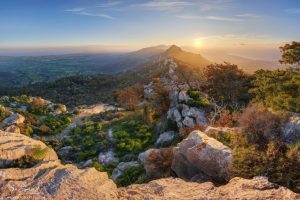
Whether you stand on the observation deck in Troodos near the summit of Mount Olympus on a clear day, walk across the rolling fields of the Mesaoria plain, or simply drive through the streets of Nicosia, your eyes will inevitably be drawn north. There, a long, jagged ridge cuts across the horizon like a line drawn by a giant hand. In some places it rises so sharply that it feels unreal, as if the land itself has been lifted and frozen mid-motion. At sunrise it glows pale and soft. By midday it hardens into white stone. At dusk it becomes a jagged silhouette, like the ruins of a forgotten kingdom. These are the Kyrenia Mountains, also known as Pentadaktylos. Unlike Troodos, which rises gradually through valleys, plateaus and forests, the Kyrenia Mountains are abrupt, almost theatrical. They form a narrow ridge stretching for almost 200 kilometres, from Cape Kormakitis in the west to Cape Apostolos Andreas in the east. To the north they fall sharply toward the sea, separated by a narrow coastal strip rarely more than five kilometres wide. To the south they rise almost vertically above the flat Mesaoria plain. They look less like mountains and more like a stone wall, or the ruins of a forgotten city from the fantasy epic. And in many ways, they are…

Read more

Women Roles in Cyprus Rural Life

Women Roles in Cyprus Rural Life

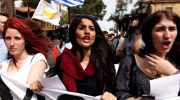
Traditional women's roles in Cyprus rural life centered on agricultural work, textile production, food processing, household management, and child-rearing within extended family structures. Women participated heavily in field labor, with the rural female workforce comprising 51 percent of agricultural workers in the mid-20th century before shifting to urban occupations. Textile manufacturing represented a crucial economic activity, with British period censuses documenting thousands of Cypriot women earning income from weaving for local markets and export traders. The village of Lefkara became internationally famous for its intricate white embroidery called lefkaritiko, which brought more wealth to the village between 1900 and 1930 than reached most other Cypriot communities. Women's social lives occurred primarily within gender-separated spaces including courtyards, village fountains where they drew water and washed clothes, and communal textile work sessions that created female networks parallel to men's coffee shop culture. Agricultural Labor and Field Work Women provided essential labor for Cyprus agriculture across all farming activities. They participated in planting, weeding, harvesting, threshing, and processing crops alongside male family members. During olive harvest season from October through January, women and children gathered fallen olives while men climbed trees to shake branches. The grape harvest in September brought entire families to vineyards, with women carrying heavy baskets and sorting fruit by quality. Women handled most vegetable cultivation in kitchen gardens adjacent…

Read more