Explore Cyprus with Our Interactive Map

Explore our top stories and discover ideas worth your time.

How Altitude Shapes Cyprus Wines

How Altitude Shapes Cyprus Wines

Cyprus vineyards occupy the southern slopes of the Troodos Mountains at altitudes ranging from 250 to 1,500 meters above sea level. This elevation places them among the highest in Europe. The Petralona vineyard operated by Tsiakkas Winery reaches 1,440 to 1,480 meters, while Kyperounda Winery owns plots between 1,400 and 1,500 meters. These high-altitude locations fundamentally transform wine quality by creating cooler temperatures, dramatic day-to-night temperature swings, increased solar radiation, and unique soil conditions. Protected designation of origin wines must come from vineyards above 600 to 750 meters depending on the region. Altitude determines whether grapes develop balanced acidity and complex flavors or ripen too quickly into heavy, alcoholic wines. Historical Background Winemaking in Cyprus dates back 6,000 years, with archaeological evidence from Erimi village showing wine production from 3500 to 3000 BC. Ancient people understood that mountain locations offered superior conditions. Traditional villages across the Troodos region developed reputations as wine centers, with names like Krasochoria translating directly to wine villages. Modern high-altitude viticulture emerged from necessity and innovation. Cyprus joined the European Union in 2004, which triggered reforms to improve wine quality over quantity. The Cyprus Vine Products Commission introduced new grape varieties and incentivized creation of small regional wineries with capacity between 50,000 and 300,000 bottles annually. Producers began experimenting with elevation to see how it affected…

Read more
Oriental Plane in Cyprus (Platanus orientalis)

Oriental Plane in Cyprus (Platanus orientalis)

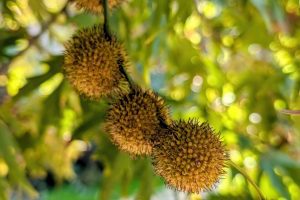
Beside a sparkling mountain stream in the Troodos foothills, tall trees with beautiful patchwork trunks cast deep, cool shade over the water. Their large, hand-shaped leaves rustle gently, while round, spiky fruit-balls dangle like tiny planets through the winter. This is the Oriental Plane, Platanus orientalis – Cyprus’s own river guardian and one of the island’s most majestic native trees. A Member of an Ancient Family Known scientifically as Platanus orientalis, the Oriental Plane belongs to the small but noble Platanaceae family within the order Proteales. The Tree of Hippocrates, under which Hippocrates—the "Father of Medicine"—taught at Kos, is reputed to have been an oriental plane. In Cyprus it is the only native plane tree, perfectly adapted to life along permanent watercourses where it often forms beautiful gallery forests with willows and alders. From Ancient Rivers to Modern Cyprus The Oriental Plane has been part of Cyprus’s landscape since prehistoric times and is listed as fully indigenous in the Flora of Cyprus. It was already noted by 19th-century British foresters in riverine woodlands, and in 2001 the Department of Forests honoured it as one of Cyprus’s Trees of the Year. Today it remains a flagship species of the island’s precious riparian habitats. Distinctive Features That Make It Unmistakable The Oriental Plane is a large deciduous tree reaching 20–30 metres with…

Read more
Whispers of the Wild Marathos

Whispers of the Wild Marathos

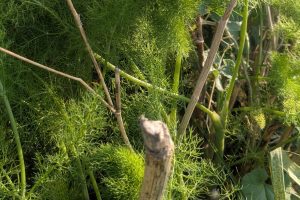
Imagine wandering through the sun-drenched hills of Cyprus, where a tall, feathery plant sways gently in the breeze, releasing a sweet, licorice-like aroma that hints at ancient secrets. This is wild fennel, a humble herb that has flavored Cypriot life for millennia, blending culinary delight with healing wisdom. But what tales does this unassuming plant hold, and why does it thrive so vibrantly on this island paradise? A Fragrant Member of the Carrot Clan Wild fennel, known scientifically as Foeniculum vulgare, belongs to the Apiaceae family – a vast group that includes everyday favorites like carrots, parsley, and dill. This broader taxonomy places it among plants celebrated for their aromatic seeds and leaves, which have sustained Mediterranean communities for generations. In its simplest form, it's a perennial herb that pops up in unexpected places, offering both beauty and utility without demanding much in return. From Ancient Myths to Island Shores The story of wild fennel stretches back to the dawn of Mediterranean civilization, intertwined with human history and mythology. In ancient Greece, it was so abundant on the plain of Marathon – where a legendary battle unfolded in 490 BC – that the site was named after the plant itself; "marathos" in Greek means fennel, evoking images of vast fields swaying like a green sea. Greek scholars like Pliny the…

Read more