Explore Cyprus with Our Interactive Map

Explore our top stories and discover ideas worth your time.

Music and Identity in the Cyprus National Anthem

Music and Identity in the Cyprus National Anthem

Cyprus and Greece share the same national anthem, the Hymn to Liberty, making them the only two countries in the world to use the same musical composition for their national anthems. On November 16, 1966, it was unilaterally decided by the Greek members of government that the Greek anthem would be used by Cyprus as well. The Turkish members had already boycotted the government by this point. This decision reflected the cultural and historical ties between Greece and Cyprus, both of which share language, traditions, and a sense of common identity, though it also revealed the deep division between the island's two communities. The Revolutionary Poem Behind the Music Dionysios Solomos wrote Hymn to Liberty in 1823 in Zakynthos during the Greek War of Independence when Greeks fought to break free from nearly 400 years of Ottoman rule. He was only 25 years old at the time. The poem consists of 158 four-line stanzas, making it the longest national anthem text in the world. Inspired by the Greek War of Independence, Solomos wrote the hymn to honor the struggle of Greeks for independence after centuries of Ottoman rule. The Hymn to Liberty recounts the misery of the Greeks under the Ottomans and their hope for freedom. He describes different events of the War, such as the execution of Patriarch Gregory…

Read more

Akrotiri Peninsula

Akrotiri Peninsula

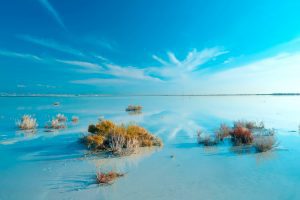
The Akrotiri Peninsula in the Limassol District marks the southernmost tip of Cyprus and also the southernmost part of Europe. This 123 square kilometer area contains the largest complex of natural wetlands on the island, centered around Akrotiri Salt Lake. The peninsula hosts over 300 recorded bird species, more than 800 indigenous plant species representing roughly 40 percent of all plants found on Cyprus, and critical habitats ranging from coastal sand dunes to Mediterranean juniper forests. Most of the peninsula lies within the British Sovereign Base Area of Akrotiri, territory retained by the United Kingdom when Cyprus gained independence in 1960. From Ancient Island to Protected Reserve The Akrotiri Peninsula was once a small island that merged with the rest of Cyprus through processes spanning thousands of years, creating what geologists call a double tombolo. The Kouris River carried sediment to create a land bridge on the western side at least 56,000 years ago, while the Garilis River later formed a second connection on the eastern side. This gradual process trapped seawater between the two land bridges, forming Akrotiri Salt Lake. The south cliffs of the peninsula, known as Aetokremmos, host the earliest known archaeological site in Cyprus and are believed to be the first part of the island inhabited by people during the pre-Neolithic period. The site contains 12,000-year-old…

Read more
Troodos Hiking Trails

Troodos Hiking Trails

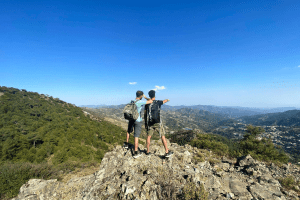
The Troodos Mountains offer Cyprus's most extensive network of hiking trails, with approximately 90 designated paths across the island's largest mountain range. Mount Olympus rises to 1,952 meters as the highest peak, surrounded by dense forests of black pine, Cyprus cedar, and golden oak. The Department of Forests manages most trails through state forests, while local communities maintain paths in their jurisdictions. These trails range from easy 30-minute family walks to challenging 14-kilometer circuits that require several hours to complete. The Troodos region contains 64 percent of Cyprus's endemic flora despite covering only 12 percent of the island's territory, with 37 plant species found nowhere else on Earth. This combination of dramatic mountain scenery, unique biodiversity, and well-maintained paths has made Troodos a premier destination for hikers seeking alternatives to Cyprus's beach-focused tourism. The Geological Foundation That Shapes the Trails The Troodos Mountains represent a rare geological phenomenon where scientists can examine ocean floor and upper mantle rocks without descending to the seabed. These mountains formed 92 million years ago at the bottom of the ancient Tethys Sea at a depth of 8,000 meters. Tectonic movements caused by the collision between African and Eurasian plates pushed Troodos upward starting 15 million years ago. UNESCO recognized this extraordinary geological importance by designating Troodos as a Geopark in 2008. This unique geology…

Read more