Explore Cyprus with Our Interactive Map

Explore our top stories and discover ideas worth your time.

Cyprus Island Identity as a Cultural Crossroads

Cyprus Island Identity as a Cultural Crossroads

Cyprus stands at a cultural, linguistic, and historic crossroads between Europe and Asia. Situated at the crossroads of Europe, Asia, and Africa, the island has been shaped by Greeks, Romans, Byzantines, Venetians, Ottomans, and the British. This strategic location has resulted in Cyprus being contested and occupied by several empires throughout history, including the Assyrians, Egyptians, Persians, and many others. As early as 370 BC, the island was inhabited and considered to be the crossroads between the east and west. The eastern Mediterranean island of Cyprus has long been a cultural thoroughfare. It was the starting, stopping, and midway hot spot for many ancient seafaring cultures including the Myceneans, the Minoans, the Phoenicians, the Greeks, and the Romans. The Bronze Age Trading Hub Cyprus experienced significant social and economic transformations during the Late Bronze Age, roughly from 1700 to 1100 BC. The island became more connected to the wider Mediterranean world driven by the trade in copper extracted from the Troodos Mountains, which stimulated the development of urbanized settlements across the island. At this time Cyprus was ruled by kings who corresponded with the leaders of other Mediterranean states like the pharaohs of the New Kingdom of Egypt, as documented in the Amarna letters. The first recorded name of a Cypriot king is Kushmeshusha, as appears on letters sent to…

Read more

Monastery of Saint John Lampadistis

Monastery of Saint John Lampadistis

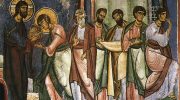
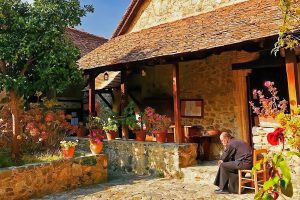
The Monastery of Saint John Lampadistis, located in the Marathasa Valley of the Troodos Mountains near the village of Kalopanayiotis, is one of the most distinctive monuments within the UNESCO World Heritage group known as the Painted Churches of the Troodos Region. Its importance lies not only in its remarkable frescoes but also in its unusual architectural composition. Unlike single-phase churches, this monastic complex combines three interconnected churches built in different periods, all enclosed beneath a later protective roof. This layered structure makes the monastery a rare example of architectural continuity, reflecting the gradual development of religious space in response to changing spiritual, artistic, and community needs. The monastery is dedicated to Saint John Lampadistis, a local Cypriot saint whose life is associated with piety, endurance, and miraculous healing. According to tradition, he lived in the region during the Byzantine period and became a figure of popular devotion after his death. His tomb within the complex transformed the monastery into a pilgrimage center, attracting worshippers seeking spiritual assistance. The religious importance of the site ensured its continued maintenance and expansion over centuries, leading to the creation of a complex that embodies both local religious tradition and broader Byzantine artistic influence. Architectural Composition and Structural Evolution The most remarkable feature of the Monastery of Saint John Lampadistis is the combination of…

Read more
Eastern Western Symbolism Cyprus

Eastern Western Symbolism Cyprus

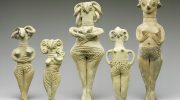
Fusion of Eastern and Western Symbolic Systems in Cypriot art stands out in the ancient world for its masterful blending of Near Eastern grandeur, Aegean elegance, and broader Mediterranean motifs, resulting in a uniquely hybrid visual language. Rather than direct imitation, Cypriot artisans integrated these influences to create fresh expressions that reflected trade, migration, and cultural intersections. This approach produced artworks that appear both familiar and original, providing insight into how an island positioned at the fringes of empires became a hub for creative synthesis. A Canvas of Cultural Crossroads Cypriot art embodies the island's role as a bridge between continents, where symbols from diverse traditions merged into cohesive forms. Pottery adorned with mythical beasts and sculptures combining human and animal elements illustrate narratives of sailors, traders, and settlers exchanging ideas across seas. This synthesis arose from Cyprus's involvement in extensive trade networks, where motifs representing power, fertility, and divinity were reinterpreted to form a distinctly local style. The result is a visual dialogue between worlds, characterized by vitality and innovation. Tracing the Threads of Influence The fusion began in the Bronze Age around 3000 BC, as early Cypriot artists incorporated elements from neighboring regions. The island's copper mines attracted interactions with Anatolia, the Levant, and the Aegean, leading to prehistoric figurines that combined Near Eastern curves with local abstraction.…

Read more