Explore Cyprus with Our Interactive Map

Explore our top stories and discover ideas worth your time.

Cyprus Narrative Wall Paintings

Cyprus Narrative Wall Paintings

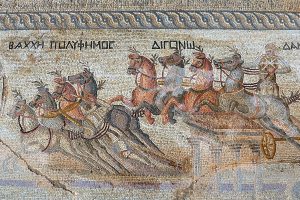
Narrative Storytelling Through Sequential Imagery in Cypriot Art involved the use of connected visual elements to convey myths, rituals, or sacred events within limited spaces such as walls or floors. This technique transformed individual scenes into cohesive narratives, engaging viewers with tales of deities, heroes, and everyday experiences without relying on text. Comparable to early forms of sequential illustration, it encouraged exploration of deeper layers through progressive imagery. A Method for Conveying Complex Narratives in Compact Forms Cypriot art employed sequential imagery to construct dynamic stories despite spatial constraints. Rather than isolated depictions, series of linked scenes unfolded myths, such as divine births from the sea, or rituals celebrating fertility and harvests. This approach allowed intricate concepts to fit into confined areas, like domestic floors or vessel surfaces, fostering reflection on cultural and spiritual themes. Origins on the Island This narrative style emerged in the Bronze Age around 2000 BC, amid Cyprus's role as a trade nexus incorporating elements from Greece, the Near East, and Egypt. Early pottery featured basic sequences illustrating hunts or dance rituals. The Iron Age after 1050 BC introduced Greek mythological influences, with friezes on temple walls depicting events like Aphrodite's emergence in ordered panels. Roman periods from 58 BC advanced the form through elaborate mosaics in villas, where floors served as narrative canvases for legends.…

Read more

Ottoman Baths in Cyprus

Ottoman Baths in Cyprus

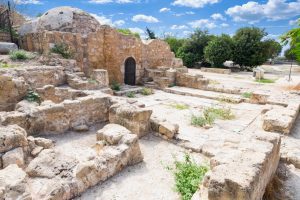
Ottoman baths, known as hamams, represent a distinctive cultural contribution to Cyprus architecture and social life. These public bathhouses served communities across the island for centuries, combining cleansing rituals with social gathering spaces. Several hamams survive today as monuments to Ottoman rule, with two still operating as functional spas. The hamam tradition did not originate with the Ottomans. Its roots stretch back to Roman thermae and Byzantine bathing practices, which the Ottomans inherited and adapted to Islamic requirements for ritual cleanliness. The word hamam comes from the Arabic root meaning heat or heating, reflecting the central role of warmth in the bathing process. Islamic tradition emphasizes cleanliness as a prerequisite for prayer. This religious requirement, combined with social customs, made hamams essential public facilities throughout the Ottoman Empire. Most homes lacked private bathing facilities, so hamams served practical hygiene needs while also becoming important social institutions. Historical Background The Ottoman Empire captured Cyprus from Venice in 1571 after a prolonged military campaign. This conquest marked the beginning of over three centuries of Ottoman administration that fundamentally reshaped the island's demographic and cultural character. One of the Ottomans' first priorities in newly conquered cities was establishing hamams. These buildings demonstrated Ottoman presence and provided essential services to both the Turkish soldiers and settlers who arrived from Anatolia and the existing Greek…

Read more
Khirokitia UNESCO Chalcolithic Village

Khirokitia UNESCO Chalcolithic Village

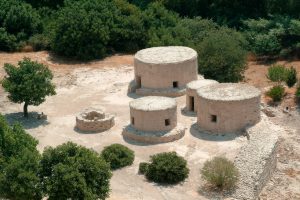
Khirokitia (also spelled Choirokoitia) represents the peak of Cyprus's Aceramic Neolithic period, when communities built permanent settlements without any knowledge of pottery production. The site covers approximately 3 hectares at its maximum extent and consists of circular stone and mudbrick houses clustered together on a hillside. These structures were protected by massive stone walls that enclosed the settlement on multiple sides. The archaeological remains document a sophisticated farming society that thrived for over 1,500 years. Residents cultivated wheat and barley, raised domesticated sheep, goats, and pigs, and supplemented their diet through hunting and gathering wild foods. The settlement's name likely derives from the Greek words for pig (χοίρος) and cradle (κοιτίς), suggesting an area where pigs were raised, though several alternative etymologies exist in local tradition. Historical Background Porphyrios Dikaios, director of the Department of Antiquities of Cyprus, discovered Khirokitia in 1934 during archaeological surveys for the newly established Cyprus Museum. He identified surface scatters of prehistoric material on the terraced slopes of the Maroni River valley. Between 1936 and 1946, Dikaios conducted six excavation campaigns at the site despite interruptions from World War II between 1939 and 1945. His initial findings, published in The Journal of Hellenic Studies in 1934, first dated the settlement to around 4000 BC. However, radiocarbon dating later revealed a much earlier foundation date of…

Read more