Explore Cyprus with Our Interactive Map

Explore our top stories and discover ideas worth your time.

Community Festivals in Cyprus

Community Festivals in Cyprus

Community festivals in Cyprus center on panigyria, traditional religious fairs that combine Orthodox liturgy with secular celebration through music, dancing, and shared meals. These village gatherings honor patron saints on their designated feast days, transforming quiet rural communities into vibrant hubs where extended families reunite, traditional customs are maintained, and social bonds strengthen. The festivals begin with solemn evening Vespers services and icon processions called Litania that wind through village streets, followed by Artoklasia bread blessings where five loaves, wine, and olive oil are consecrated. The next day's Divine Liturgy gives way to festivities featuring folk musicians, tsiattista poetry competitions, traditional circle dances, and food stalls selling loukoumades honey doughnuts, souvla grilled meat, and grape-based sweets. Some panigyria have received UNESCO Intangible Cultural Heritage recognition including the Feast of Saint Fokas in Athienou, acknowledging their role in preserving cultural practices threatened by modernization and rural depopulation. The Sacred Beginning and Litania Procession Panigyria begin on the evening before the actual feast day with Esperinos, the evening Vespers service that marks the liturgical day's beginning in Orthodox tradition. The service includes scripture readings, Byzantine chanting, incense burning, and icon veneration that prepare worshippers spiritually for the saint's celebration. The church fills with villagers, returning emigrants who timed visits to coincide with their ancestral community's patronal feast, and visitors from neighboring settlements.…

Read more
Sacred Geometry and Proportion Cyprus

Sacred Geometry and Proportion Cyprus

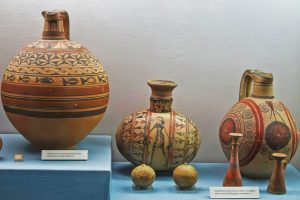
Symbolic Use of Geometry and Proportion in Cypriot Art refers to the ancient practice on the island where repeating shapes and balanced designs conveyed concepts of order, harmony, and cosmic balance. These patterns extended beyond decoration, embedding profound meanings in pottery, sculptures, and other artifacts, fostering a sense of connection to an structured universe. This method transformed basic lines into representations of life's fundamental principles, highlighting the thoughtful intent behind each composition. A World Expressed Through Structured Forms Ancient Cypriot art frequently employed basic geometric elements, such as circles, triangles, and zigzags in repetitive arrangements, rather than detailed depictions of figures or scenes. These patterns appeared across various media, from clay vessels to stone engravings, serving purposes that transcended ornamentation. They articulated notions of a harmonious cosmos, where elements aligned in predictable ways. For communities facing natural uncertainties like earthquakes and storms, such designs provided reassurance of underlying structure, affirming that existence adhered to inherent principles amid apparent disorder. Origins and Development of Patterns This artistic approach originated in the Neolithic era around 7000 BC, evident in early pottery with incised lines resembling waves or hills. The Bronze Age, beginning approximately 2500 BC, saw increased organization as trade introduced concepts from Greece, Egypt, and the Near East. Artists drew from natural repetitions, such as the sun's path or seasonal shifts,…

Read more

Cyprus Traditional Stone Villages

Cyprus Traditional Stone Villages

While modern cities rise along Cyprus's coasts, hidden in the island's hills and mountains are stone villages that have barely changed in centuries. These aren't open-air museums or tourist recreations—they're living communities where narrow cobblestone streets still wind past churches older than nations, where women still make lace using techniques passed down through generations, and where the rhythm of life follows patterns shaped by water, terrain, and survival. To visit these villages is to step into a Cyprus that exists outside of time, where the past and present speak to each other in stone, wine, and thread. Where Old Cyprus Still Lives Traditional Cypriot villages are the island's cultural heartbeat, preserving customs, crafts, dialects, and ways of life that have largely disappeared from urban centers. These settlements grew organically over centuries, shaped by geography, climate, and the practical needs of survival rather than by modern planning or tourism. Most sit inland—tucked into hillsides, nestled in mountain valleys, or perched on slopes—rather than along the vulnerable coastline where pirates and invaders once threatened. These villages aren't relics frozen in amber but living communities that have adapted while maintaining their essential character. Stone houses still cluster around churches and monasteries, narrow streets still provide shade and defense against summer heat, and communal spaces still bring neighbors together. While many younger Cypriots moved…

Read more