Explore Cyprus with Our Interactive Map

Explore our top stories and discover ideas worth your time.

The Dove as a Peace Symbol

The Dove as a Peace Symbol

The white dove carrying an olive branch appears as the centerpiece of Cyprus's national emblem, adopted in 1960 when the island gained independence from British rule. The dove, symbolizing peace, and the olive branch, symbolizing peace-making, are important elements that emphasize Cyprus's aspiration for peace and stability after many years of conflict. These universal symbols of harmony are fundamental to the aspirations of the Republic of Cyprus, deliberately chosen to unite ethnic and cultural groups on the island without favoring Greek Orthodox crosses or Turkish crescents. Biblical Origins of the Peace Dove The dove as a peace symbol traces its roots to the biblical story of Noah's Ark. After the great flood, Noah sent out a dove to determine if waters had receded. The dove returned with an olive branch, signaling that land had emerged and God's wrath had ended. This story established the dove and olive branch as symbols of hope, new beginnings, and divine peace across Christian, Jewish, and Islamic traditions. The olive tree itself held sacred significance throughout Mediterranean civilization. In ancient Greece, the olive represented wisdom and was sacred to Athena. Victors at the Olympic Games received crowns woven from olive branches. The tree's long life, sometimes exceeding 800 years, made it a symbol of endurance and continuity. Its fruit and oil provided food, light, and…

Read more
Omodos to Vouni Wine Route Cyprus

Omodos to Vouni Wine Route Cyprus

The route from Omodos to Vouni represents one of Cyprus's most scenic drives through the Krasochoria, or wine villages, of the Troodos Mountain foothills. This stretch of approximately 15 kilometers connects charming settlements at altitudes between 700 and 900 meters above sea level, where traditional architecture meets centuries-old viticulture. The drive passes through Lofou, Koilani, and other villages that form the backbone of Cyprus's wine production, offering panoramic viewpoints across vineyards, valleys, and distant coastlines. The route belongs to Wine Route 4, known as Krasochoria Lemesou, home to the greatest concentration of wineries on the island. Omodos and Its Cobbled Square Omodos sits at the foothills of Troodos Mountain at approximately 800 meters altitude and serves as one of the most popular destinations on the wine route. The village dates back to the Frankish period when it was called Homodos, derived from the Greek word odos meaning street. The cobbled central square remains the village's focal point, surrounded by traditional stone-built houses with narrow balconies and wooden doors. The Monastery of Timios Stavros, or Holy Cross, dominates the square with its impressive woodcarvings and pristine icons. This monastery ranks among Cyprus's oldest and most historic, with the current structure dating to different periods of renovation and expansion. Within the monastery complex, visitors find a museum dedicated to the National Liberation…

Read more
The House of Aion Mosaics

The House of Aion Mosaics

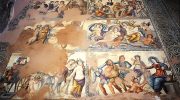
The House of Aion in Kato Paphos preserves a late Roman mosaic program designed to communicate ideas, not just decorate a room, using myth to argue for cosmic order, education, and limits on human ambition. Made in the 4th century AD during the empire’s rapid Christianisation, the floor reads as a coherent statement from a pagan elite defending continuity through refined symbolism rather than confrontation. This article explains where the building sits in ancient Paphos, how the five scenes build one argument, and what the mosaics reveal about power, belief, and artistic change in late antiquity. Paphos, Power, and Maloutena The House of Aion lies in the Maloutena district of ancient Nea Paphos, once the island's administrative and cultural centre under Roman rule. This was a prestigious neighbourhood, close to the seat of the Roman governor and surrounded by villas that reflected wealth, education, and political influence. Its location matters. The house was not hidden or marginal. It stood among the most powerful spaces in the city, signalling that the ideas expressed inside were meant to be seen, discussed, and shared by those at the top of provincial society. A Reception Room for Debate Although commonly called a “house,” the structure breaks with standard Roman domestic design. The main reception room, a large triclinium, sits directly near the entrance rather…

Read more