Explore Cyprus with Our Interactive Map

Explore our top stories and discover ideas worth your time.

Cyprus Housing and Property Services

Cyprus Housing and Property Services

In recent year, the median price for an apartment in Cyprus is 469,983 euros, with a median price per square meter of 3,962 euros. In contrast, the median price for a house or villa is 835,000 euros, with a median price per square meter of 3,750 euros. The Cyprus property market closed 2025 with positive results, confirming its strong growth momentum despite global economic uncertainties. Real estate in Cyprus has transformed from a traditional resort destination into a mature sector attracting both institutional and private investors, driven primarily by the mass relocation of international companies and the formation of a strong IT cluster that created structural shortages of modern housing and office space. Regional Price Differences Across the Island Limassol is the most expensive district in Cyprus, with a median listing home price of 670,000 euros. The city retains its status as the most prestigious location, where prices per square meter in premium seafront developments have stabilized at high levels. In central Limassol, a one-bedroom property is offered for rent for an average of 1,338 euros per month, while a three-bedroom property rents for 2,350 euros. Paphos ranks second with a median listing home price of 613,000 euros. The city has strengthened its position in the luxury villa and eco-friendly housing segment. Price growth there is more moderate but stable,…

Read more
A Tapestry of Faith

A Tapestry of Faith

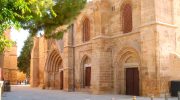
Most visitors to Cyprus know about its Greek Orthodox churches and ancient Christian monasteries, but the island's religious story is far richer and more complex. For millennia, Cyprus has been home to Jewish communities, Muslim mosques, Armenian and Maronite Christians, Sufi mystics, and Latin Catholic cathedrals - each faith leaving monuments that testify to survival, migration, and remarkable coexistence. Walking through Cyprus's cities means encountering this layered religious landscape where synagogues stand near mosques, Gothic cathedrals became prayer halls, and sacred springs were shared by people of different beliefs. Where Many Faiths Met and Mingled Cyprus has never belonged to a single religious tradition. Its position at the meeting point of Europe, Asia, and Africa made it a crossroads not only for trade and armies but also for belief systems. Long before Orthodox Christianity became dominant in the medieval period, Cyprus hosted Jewish traders and craftsmen, pagan mystery cults, and early Christian congregations mentioned in the New Testament. Later waves brought Islamic institutions during Ottoman rule, Armenian refugees fleeing persecution, Maronite Christians migrating from Lebanon and Syria, and Western European Crusaders establishing Latin Catholic strongholds. Rather than existing as isolated enclaves, these religious minorities participated actively in Cyprus's economy, diplomacy, and urban life. Their monuments - synagogues, mosques, churches of different denominations, and Sufi lodges - aren't marginal curiosities but…

Read more

Maa-Palaikastro

Maa-Palaikastro

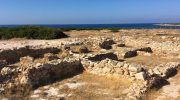
Maa-Palaikastro is a fortified Bronze Age settlement on the west coast of Cyprus, built during a time of major upheaval in the ancient Mediterranean. Strategically positioned and strongly defended, it played an important role in early settlement, copper production, and trade, and is closely linked to the arrival of Greek-speaking populations on the island. What remains today tells the story of resilience, planning, and cultural change at a crucial moment in Cyprus’s history. A Rocky Peninsula with a Big Story Perched on a narrow rocky peninsula on the Coral Bay coast of western Cyprus, Maa-Palaikastro (often simply called Maa) may look quiet and unassuming today. Yet beneath its surface lies the story of one of the island’s most important early settlements, shaped by movement, survival, and cultural change at a turning point in Mediterranean history. Archaeological excavations revealed that this small site played a surprisingly large role in the story of Cyprus, linking the island to wider events unfolding across the ancient world. A New Community in an Uncertain World Maa-Palaikastro was founded around 1200 BCE, a time when the eastern Mediterranean was in turmoil. Powerful kingdoms were collapsing, trade routes were breaking down, and people were migrating in search of safety and opportunity. Against this backdrop, a group of settlers, likely connected to the Mycenaean Greek world, arrived on…

Read more