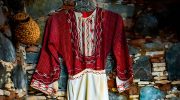
Traditional Cypriot Attire
Traditional Cypriot clothing is not just about what people wore. It is about how they lived, what they valued, and how they understood their place in the world. Across villages, towns, and generations, dress functioned as a visible language, communicating age, status, profession, and regional identity without a single word being spoken. This article explores how Cypriot attire developed over time, what made it distinct, and why these garments still matter today, not as costumes, but as cultural memory woven into fabric. An island shaped by layers, stitched into cloth Cyprus has always stood at the crossroads of civilisations, and its clothing reflects this layered history. Byzantine restraint, Venetian refinement, Ottoman opulence, and later European influence all left their marks on the way Cypriots dressed. Rather than replacing one another, these influences accumulated. Early garments emphasised structure and modesty, shaped by Orthodox tradition and practical rural life. Later, luxury fabrics, embroidery, and layered silhouettes entered daily wear, especially in towns. Clothing became a way to absorb change while maintaining continuity, adapting foreign elements into something recognisably Cypriot. Materials that came from the land itself Traditional attire grew directly out of the island’s environment. Cotton, silk, linen, and wool were not imported ideas but local resources, cultivated, spun, dyed, and woven in villages across the island. Almost every household participated in…
Read more