Explore Cyprus with Our Interactive Map

Explore our top stories and discover ideas worth your time.

Byzantine Cyprus: Eastern Mediterranean Defense

Byzantine Cyprus: Eastern Mediterranean Defense

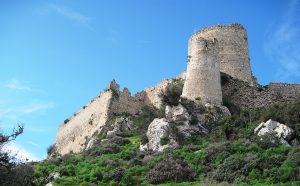
Cyprus was never a distant outpost of the Byzantine Empire. From late antiquity through the Middle Ages, it functioned as a frontline maritime shield, protecting the sea lanes that connected Anatolia, the Levant, and the Aegean. Byzantine naval defense on Cyprus was not limited to fleets and battles. It was a layered system combining geography, coastal fortifications, mountain surveillance, communication networks, and naval presence. Together, these elements allowed the empire to detect threats early, control movement at sea, and preserve stability in one of the Mediterranean’s most contested regions. An Island Positioned to Watch the Sea Cyprus sits at a natural crossroads of the Eastern Mediterranean. From its shores, routes radiate toward southern Anatolia, Syria and Palestine, Egypt, and the Aegean. This position made the island unavoidable for any power seeking maritime dominance in the region. For the Byzantine Empire, Cyprus acted as a forward sentinel. Control of the island meant early visibility over naval traffic moving between the Islamic-controlled Levant and the Byzantine heartlands of Asia Minor. Losing Cyprus would have meant losing advance warning, leaving the southern coast of Anatolia and the Aegean islands exposed to sudden raids. This strategic reality shaped every aspect of Byzantine policy on the island. From Roman Province to Maritime Bastion In the early Roman and late antique periods, Cyprus was relatively peaceful.…

Read more
Common Myrtle In Cyprus

Common Myrtle In Cyprus

Picture yourself on a sun-drenched slope in Cyprus, where the air carries a sweet, spicy fragrance whenever a breeze stirs the shrubs. Amid the rocky terrain and scattered pines, you encounter clusters of glossy green leaves dotted with delicate white flowers. This is the common myrtle, a quiet but ever-present companion in the island’s wild landscapes. A Shrub Steeped in Mediterranean Grace Myrtus communis, known simply as the common myrtle, belongs to the Myrtaceae family a group that includes fragrant giants like eucalyptus and clove trees. In Cyprus it grows as an evergreen shrub or small tree, reaching up to five metres tall. It is one of only two species in its genus worldwide, the other being a rare Saharan relative. Here on our island it forms part of the classic maquis vegetation, that resilient scrubland of aromatic bushes that cloaks hillsides from sea level right up to 1,500 metres. Tales from Antiquity: Aphrodite’s Favourite Veil Long before botanists catalogued it, the myrtle was woven into the very birth story of Cyprus. Legend tells that when Aphrodite, the goddess of love and beauty, rose from the foaming waves near Paphos, she modestly hid her nakedness behind a myrtle bush. Ever since, the plant has been sacred to her. Ancient brides wore myrtle wreaths and bathed in myrtle-scented water on their…

Read more
Wild Chamomile of Cyprus

Wild Chamomile of Cyprus

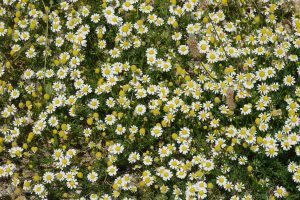
Imagine wandering through the sun-kissed fields of Cyprus, where a delicate flower with daisy-like petals sways in the breeze, releasing a soothing apple-like aroma that whispers of healing and calm. This is wild chamomile, a humble herb that has graced the island's landscapes for millennia, offering comfort to weary souls. But what secrets does this unassuming plant hold in its tiny blooms, and why does it continue to captivate us? Unveiling the Humble Herb Wild chamomile, known scientifically as Matricaria recutita, is a member of the vast Asteraceae family, which includes sunflowers and daisies, showcasing how even the smallest relatives can pack a punch in nature's pharmacy. It's an annual plant that pops up in disturbed soils, roadsides, and meadows, thriving in the Mediterranean's mild winters and warm summers. Simply put, it's nature's resilient wanderer, adapting to wherever the wind scatters its seeds. Roots in Time: From Ancient Remedies to Island Lore The story of wild chamomile in Cyprus stretches back to antiquity, intertwined with the island's rich tapestry of civilizations – from the Mycenaeans to the Romans and Ottomans. Historical texts, like those referenced in ancient Greek manuscripts and echoed in Cyprus' ethnobotanical records from the Troodos Mountains, reveal its use by early healers for soothing ailments, much as Dioscorides described in his "De Materia Medica" around 50 AD,…

Read more