Explore Cyprus with Our Interactive Map

Explore our top stories and discover ideas worth your time.

Australian Pine in Cyprus

Australian Pine in Cyprus

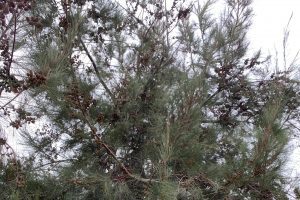
Picture yourself walking along a sandy Cypriot beach on a breezy afternoon, where tall, slender trees sway like green fountains, their needle-like branches rustling softly like the sea itself. These are the coastal she-oaks, or Casuarina trees, quiet guardians of our shores that have a story as intriguing as the waves they overlook. But how did these Australian natives find their way to our island paradise? www.wikimedia.commons.org Getting to Know the She-Oaks Coastal she-oaks belong to the Casuarinaceae family, a group of trees and shrubs mostly from the southern hemisphere that look a bit like pines but are actually flowering plants. In Cyprus, the main species you'll encounter is Casuarina equisetifolia, often just called she-oak or Australian pine, along with a few others like C. cunninghamiana and C. glauca. Locally, they're known as Καζουαρίνα (Kazouarina), a name borrowed from the Malay word for cassowary, because their drooping branches resemble the feathers of that big, flightless bird. A Journey Across Oceans These trees first grew in the sandy coasts and woodlands of Australia, Southeast Asia, and the Pacific islands, where they've been part of the landscape for millions of years. They arrived in Cyprus during the British colonial era in the late 19th and early 20th centuries, much like eucalyptus and acacia, brought in to help stabilize dunes, provide quick shade,…

Read more
Colour as Theological and Social Language

Colour as Theological and Social Language

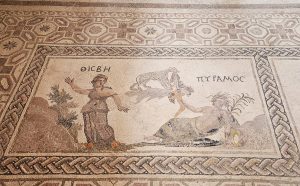
Color as Theological and Social Language in ancient Cypriot art involved the deliberate use of hues to convey concepts of divinity, societal roles, and human experience. Red often symbolized fertility and vital energy, black represented mourning or the mysteries of the afterlife, and gold evoked divine authority. Artists selected these colors with intent, transforming ordinary objects into carriers of profound messages that continue to reveal insights into the island's cultural and spiritual world. dom-com-cy A Palette Rich in Symbolism Ancient Cypriot art employed colors as a form of communication, where each shade carried layers of theological and social significance. Far from mere embellishment, these choices reflected a sophisticated system in which hues expressed ideas of sanctity, power, grief, or renewal. Influenced by the island's position as a crossroads of Eastern and Western traditions, colors served to link everyday life with deeper spiritual realities, creating a visual language that resonated across communities and generations. visitpafos-org-cy Origins and Development in Cypriot Art The use of color in Cypriot art dates to prehistoric periods, beginning around 4000 BC during the Chalcolithic era, when natural pigments derived from earth, minerals, and plants were applied to figurines and pottery. Red ochre, sourced from local soils, appeared frequently in cave markings and on ritual objects, associated with blood, life force, and regenerative power. As trade expanded…

Read more

Pelendri Cyprus Historic Village Vineyards Churches

Pelendri Cyprus Historic Village Vineyards Churches

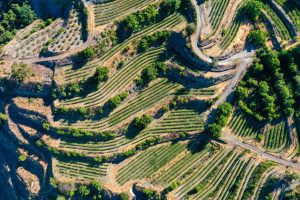
Pelendri is a mountain village in the Limassol district known for its UNESCO World Heritage church, traditional architecture, and established wine production. It’s located in the Pitsilia region at 880 meters altitude and 40 kilometers from Limassol. The village combines medieval history with contemporary viticulture in a setting of steep valleys and high peaks. mytroodos.com Despite being built on relatively barren slopes, the area benefits from approximately 750 millimeters of annual rainfall, which supports diverse cultivation and natural vegetation. Several tributaries cross through the area, providing water resources that sustain both agriculture and forest growth. The administrative boundaries of Pelendri include portions of the Troodos state forests and monastery forests. Natural vegetation includes pines, wild olives, plane trees, and various indigenous shrubs, with uncultivated areas maintaining rich plant diversity. Historical Background Historical records confirm Pelendri as an established settlement during the medieval period. Louis de Mas Latrie, documenting Cyprus during Lusignan rule, refers to the village as Pelendres or Pelondres. In 1353 it was a fief of John de Lusignan, Prince of Antioch and a member of the royal family of Cyprus. Medieval chronicler Georgios Boustronios mentioned the village twice in his writings. He recorded that around 1461, a wealthy merchant named Satin lived in Pelendri, indicating commercial activity in the settlement. Boustronios also documented two farmsteads in the Pelendri…

Read more