Explore Cyprus with Our Interactive Map

Explore our top stories and discover ideas worth your time.

Gallery Kypriaki Gonia, Cyprus

Gallery Kypriaki Gonia, Cyprus

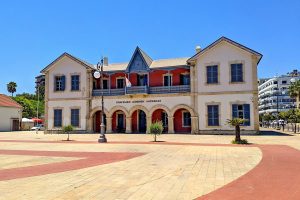
Gallery Kypriaki Gonia stands as one of Larnaca's most established independent art spaces. Located at 45 Stadiou Street in central Larnaca, this gallery has operated continuously since 1993. The name "Kypriaki Gonia" translates to "Cypriot Corner," which accurately reflects its core mission to showcase art by local and international artists. The gallery maintains a focus on both traditional and contemporary artistic approaches, giving visitors exposure to different styles and periods of Cypriot art. googlemaps-com Over three decades, the gallery has built a reputation for consistent quality in its exhibition program. It provides a platform where established artists can present major bodies of work and emerging artists can gain visibility. The space operates as a commercial gallery while also functioning as a cultural venue that contributes to Larnaca's artistic infrastructure. Historical Context By 2013, Gallery Kypriaki Gonia celebrated its 20th anniversary with a significant group exhibition. This show brought together works by 70 Cypriot and foreign artists across multiple media, including paintings, sculpture, ceramics, etchings, and photography. The exhibition received the auspices of the Mayor of Larnaca, and the opening ceremony was performed by Petros Christodoulou. All works were offered at modest prices of up to 200 euros, with 50 percent of revenue directed to the Larnaca Municipality Community Store. This charitable component demonstrated the gallery's commitment to community service alongside…

Read more
Cyprus Youth Leadership Networks

Cyprus Youth Leadership Networks

In Cyprus, civic life is often learned long before formal politics, through scouts, youth clubs, cultural groups, and community projects where responsibility has real consequences. These organisations teach leadership through practice, from organising festivals and rehearsals to running clean-ups and coordinating volunteers, so accountability becomes a habit rather than an idea. This article explains the main youth pathways into civic participation, how they build trust across communities, and why these structures remain one of Cyprus’s most resilient sources of social cohesion. vlagere-ru Civic learning outside the classroom Much of Cyprus's youth engagement happens through non-formal education. Unlike school curricula, these settings emphasise participation over instruction. Young people learn by organising events, managing groups, resolving disagreements, and working toward shared goals that have visible outcomes in their communities. cypruschessfederation-org Scout groups, youth clubs, and cultural associations function as practical training grounds. Leadership is learned by doing, whether that means coordinating a village festival, leading a patrol on a hike, or managing volunteers during a clean-up campaign. These experiences teach decision-making, accountability, and cooperation in ways that formal education rarely replicates. Scouting as a long-standing leadership pathway Scouting has existed in Cyprus for more than a century and remains one of the most structured systems for youth leadership development. Its model is built around gradual responsibility, where young members progress from participation…

Read more

Blue Flag Beaches of Cyprus

Blue Flag Beaches of Cyprus

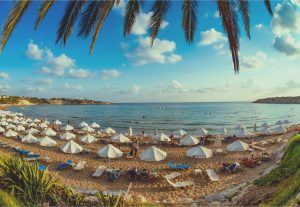
Cyprus earned 66 Blue Flags in 2025, with 64 beaches and 2 marinas recognized for exceptional quality and environmental standards. The Blue Flag certification represents one of the most prestigious international awards for beaches and marinas, granted by the Foundation for Environmental Education. Shutterstock-com Cyprus consistently ranks as having the cleanest bathing waters in Europe, achieving the highest scores in the Mediterranean year after year. The European Commission's 2024 report confirmed that Cyprus ranked first in the European Union for bathing water quality in both 2022 and 2023. This recognition stems from strict compliance with 33 coastal criteria and 38 marina specific standards covering water quality, environmental management, safety, and educational activities. The number of Blue Flags decreased slightly from 78 in 2024, with 16 flags revoked due to non compliance, demonstrating that certification requires continuous effort rather than one time achievement. What the Blue Flag actually means A Blue Flag beach must meet at least 30 stringent criteria across four categories: environmental education and information, water quality, environmental management, and safety and services. Water samples must be taken every two weeks rather than the monthly minimum required by European Union directives, with results posted on information boards at each beach to ensure transparency. The beach must contain no industrial or sewage waste influence and maintain low levels of escherichia…

Read more