Explore Cyprus with Our Interactive Map

Explore our top stories and discover ideas worth your time.

Brachychiton (Bottletrees)

Brachychiton (Bottletrees)

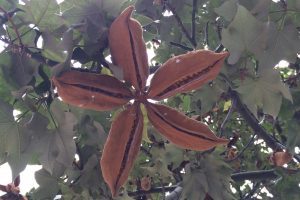
Imagine strolling through a sunlit park in Limassol or Nicosia when suddenly a tree bursts into vivid scarlet flowers, turning the branches into a living flame against the blue sky. These are the Brachychiton trees — Australian visitors that add a splash of dramatic color to our island's gardens and streets, whispering tales of distant lands. Konstantin-Solovev Bottle-Shaped Beauties Brachychiton trees are part of the vast Malvaceae family, the same group that gives us cotton, hibiscus, and cacao – plants known for their showy flowers and useful fibers. In Cyprus, they are tall, sturdy trees often grown for their striking looks and shade, fitting right into our warm, dry climate like old friends from afar. From Australian Bush to Cypriot Shores These trees first took root in the wild bushlands of Australia millions of years ago, evolving alongside kangaroos and koalas in a continent shaped by ancient isolation. They arrived in Cyprus during the British colonial era around the early 20th century, planted as hardy ornamentals to beautify towns and provide quick-growing shade, much like the eucalypts that came before them. Today, they stand as quiet reminders of how human wanderings have blended the world's green treasures. Konstantin-Solovev Swollen Trunks and Scarlet Spectacles What makes Brachychiton stand out is their bottle-shaped trunks, swollen at the base like natural water tanks…

Read more

Wattles of Cyprus

Wattles of Cyprus

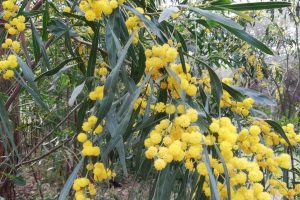
Picture a roadside verge or coastal slope in late February, when the Mediterranean light turns sharp and warm. Suddenly, whole thickets explode into vivid, butter-yellow spheres that light up the landscape like thousands of tiny suns. These are the wattles of Cyprus Australian guests that arrived with good intentions but have written their own lively, sometimes challenging chapter in the island’s green story. www.inaturalist.org Wattles in the World of Legumes Wattles belong to the enormous Acacia genus within the Fabaceae (legume) family – the same botanical clan as peas, beans, carobs and acacias of the ancient world. Most of the 1,000-plus Acacia species are native to Australia, where they are proudly called “wattles”. In Cyprus the star of the show is Acacia saligna, the golden wreath wattle or orange wattle, though a handful of other species (A. farnesiana, A. ligulata, A. karroo) appear in small numbers. Locally they are simply known as Ακακία (Akakia) – a name that echoes the ancient Greek “akakia”, used two thousand years ago by Dioscorides for the gum of Egyptian acacias. From Australian Shores to Cypriot Soil When British foresters took charge in 1878 they faced an island stripped of much of its woodland by centuries of grazing and fuelwood cutting. Following earlier recommendations by French arborist P.G. Madon (1881), they turned to fast-growing exotics.…

Read more
The Peeling Cinnamon Guardians of Cyprus Slopes

The Peeling Cinnamon Guardians of Cyprus Slopes

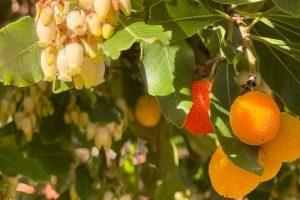
High on rocky, sun-scorched hillsides where pine meets maquis, a graceful evergreen catches the eye with branches glowing like polished copper. Each summer its smooth bark peels away in thin, papery sheets, revealing fresh layers of vivid orange-red and pistachio-green beneath – a living canvas of renewal. This is the Cyprus strawberry tree, one of the island’s most elegant natives and a quiet sentinel of the Mediterranean wildlands. www.inaturalist.org A Graceful Member of the Heath Family Known scientifically as Arbutus andrachne, this evergreen shrub or small tree belongs to the genus Arbutus within the Ericaceae family (the heath or heather family) in the order Ericales, part of the asterid group of flowering plants. In Cyprus it grows alongside its close relative Arbutus unedo (the common strawberry tree) and is a classic component of maquis shrublands and pine-forest understories. Roots Deep in Ancient Mediterranean Landscapes Arbutus andrachne has been part of Cyprus since prehistoric times, forming an integral element of the original maquis vegetation. The ancient Greek botanist Theophrastus (4th–3rd century BC) described it as “Andrachni” in his History of Plants. It was noted by 19th-century explorers and in the 2007 Cyprus “Tree of the Year” campaign by the Department of Forests. Today it remains widespread and secure, listed as Least Concern on the IUCN Red List thanks to its broad…

Read more