Explore Cyprus with Our Interactive Map

Explore our top stories and discover ideas worth your time.

Music in Cyprus Weddings And Festivals

Music in Cyprus Weddings And Festivals

Cyprus uses music as a social "signal system" that marks life transitions and pulls communities into the same emotional rhythm, from weddings and baptisms to village saint festivals. facebook-com Across many Greek Cypriot celebrations, the violin (violi) and laouto form the classic duo, while Turkish Cypriot traditions often foreground the oud and, in outdoor festivities, the powerful davul and zurna pairing. Religious settings shift the sound world. Orthodox ceremonies are shaped by Byzantine chant, while Turkish Cypriot gatherings may include Mevlit recitations that bring blessings to the home. Modern Cyprus is increasingly hybrid: live musicians for key rituals, then DJs for late-night receptions, especially in urban venues. When music is not the background, but permission In Cyprus, music is rarely a decorative extra. It is how a moment becomes official. paphosweddingcompany-co A wedding is not just a couple signing papers or walking into a church. It becomes socially “real” when the instruments arrive, the first dance line forms, and the right songs tell everyone what stage of the ritual they are in. Baptisms, too, move from sacred chant to family feast once the community shifts from reverence to celebration. Even the biggest religious festivals carry this same logic: prayer first, then the village square opens into food, dancing, and sound. That is why Cypriot celebration music feels so purposeful. It…

Read more
Ancient Kourion in Cyprus

Ancient Kourion in Cyprus

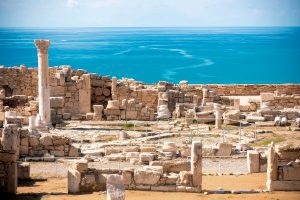
Ancient Kourion sits on a limestone cliff nearly 100 meters high along the southwestern coast of Cyprus, overlooking Episkopi Bay. The site was first inhabited during Neolithic times, with the earliest evidence dating back to 4,500 to 3,900 BC, but the town itself was founded in the 13th century BC by the Argives. orangecyprushome.com The city-kingdom was built on the hills of the area and overlooked and controlled the fertile valley of the river Kouris. Archaeological finds suggest that Kourion was associated with the Greek legend of Argos of Peloponnese, and its inhabitants believed they were descendants of Argean immigrants. The site stands as one of Cyprus's most impressive archaeological areas, preserving remains that span from the Bronze Age through the Byzantine period. The ruins tell stories of prosperity, political intrigue, natural disaster, and religious transformation. Historical Background According to Herodotus, Kourion was founded by Argives in the Late Bronze Age and was named for Koureus, the son of Cinyras, the first king of Cyprus. The Assyrian kings Sargon II and Esarhaddon mentioned Damasu, king of Kuri, in their records. During the Cypriot uprising against Persia in the 5th century BC, its king Stasanor betrayed his country, lending his support and troops to the Persians. However, Kourion later supported Alexander the Great's fight against the Persians in the 4th century…

Read more

Transportation and Mobility in Cyprus

Transportation and Mobility in Cyprus

Cyprus holds one of the highest car ownership rates in the world with 742 cars per 1,000 people according to International Road Federation figures from 2007. Private car ownership in the country ranks as the fifth highest per capita globally. With more than 658 automobiles per 1,000 people in recent years, Cyprus relies heavily on private vehicles for daily mobility. in-cyprus-philenews-com Only 3 percent of journeys in the Greater Nicosia urban region are made by public transportation, while cycling remains even less common at 2 percent. This dominance of private vehicles creates traffic congestion in major cities, particularly during peak hours, while contributing to air pollution and urban sprawl. The Road Network and Driving Conditions From the 12,118 kilometers of roads in the areas controlled by the Republic of Cyprus, 7,850 kilometers were paved while 4,268 kilometers remained unpaved as of 2006. The island boasts the highest number of motorways per capita in the EU as of 2025, with major routes linking key cities including Limassol, Larnaca, Nicosia, Paphos, and Ayia Napa. One significant advantage for travelers is the absence of toll roads in Cyprus, making exploration of the island more accessible and cost-effective. in-cyprus-philenews-com As a legacy of British rule, Cyprus is one of only three EU nations where vehicles drive on the left. Road signs appear in both…

Read more