Explore Cyprus with Our Interactive Map

Explore our top stories and discover ideas worth your time.

Cyprus City Kingdoms

Cyprus City Kingdoms

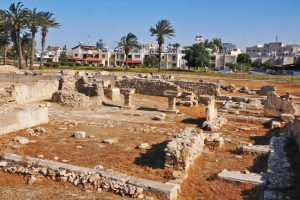
For over 3,000 years, Cyprus was home to powerful independent city-kingdoms that controlled trade routes, mined copper, and blended Greek, Phoenician, and local cultures into something uniquely Cypriot. These ancient cities left behind spectacular ruins - theaters still hosting performances, mosaic-floored villas, and temple foundations - that tell the story of a small island that punched far above its weight in the ancient world. A Patchwork of Powerful Cities Unlike many ancient lands ruled by a single king or empire, Cyprus developed as a collection of independent city-kingdoms. Each coastal city controlled its surrounding territory, built its own temples and palaces, minted its own coins, and conducted its own diplomacy with the great powers of Egypt, Persia, and Greece. worldhistory-org At its height during the Iron Age (around 1000-300 BC), Cyprus had about a dozen of these city-kingdoms. Names like Kourion, Kition, Salamis, and Paphos appeared in ancient texts and on diplomatic correspondence. Some were founded by Greek colonists, others by Phoenician traders, but all developed distinctly Cypriot identities that blended Eastern and Western influences in architecture, religion, and daily life. From Bronze Age Towns to Iron Age Kingdoms Cyprus's city-kingdoms emerged from earlier Bronze Age settlements that had grown wealthy from copper mining and Mediterranean trade. By 1600-1050 BC, the island had become a crucial hub connecting the civilizations…

Read more

Lapithos

Lapithos

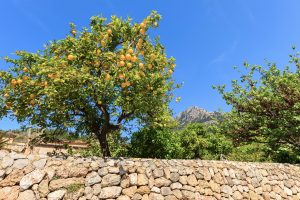
Lapithos sits on the northern coast of Cyprus beneath the Kyrenia mountains, where lemon groves once produced 11 million fruits per year and Byzantine treasures buried during Arab raids emerged a thousand years later in museum collections around the world. This settlement has existed for over 5,000 years under at least four different names. adobe-stock-com Lapithos is one of the oldest continuously inhabited sites on Cyprus. The modern town of Lapithos occupies the slopes of the Pentadactylos mountain range near where the ancient city kingdom once stood. The coastal ruins three kilometers north are called Lambousa, the name used during Roman and Byzantine times. Ancient writers, including Strabo, knew it as Lapethos. The philosopher Alexander of Ephesus called it Imeroessa, meaning attractive and passion-arousing. Assyrian inscriptions from 700 BC mention it as Sillu. Each name reflects a different period in the settlement's long history. Historical Background The oldest settlement at Lapithos dates to the Neolithic or Chalcolithic period and is located west of the current town at a site called Alonia ton Plakon. Archaeological evidence, including pottery and pottery wheels, confirms occupation as early as 3000 BC. Stone foundation walls, hearths, and three bothroi cut into rock have been found, though floods and later cultivation damaged much of the early settlement. adobe-stock-com According to Greek tradition, Spartan colonists led by…

Read more
Understanding the Cyprus National Emblem

Understanding the Cyprus National Emblem

The coat of arms of the Republic of Cyprus depicts a dove carrying an olive branch, symbolizing peace, over 1960, the year of Cypriot independence from British rule. The background is a copper-yellow color, representing the large deposits of copper ore on Cyprus, chiefly in the form of chalcopyrite which is yellow in color. commons-wikimedia-org The two-part olive wreath surrounding the shield represents the two ethnic groups of Cyprus, Greeks and Turks. Adopted in 1960 following the Zurich and London Agreements that ended colonial administration, the emblem embodies aspirations for reconciliation between the Greek and Turkish Cypriot populations. The Designer Behind the Symbol Designed by Turkish Cypriot artist İsmet Güney, the emblem parallels the neutral motifs of the national flag to promote unity. The intentional incorporation of neutral motifs, a dove with an olive branch over the date of independence, symbolized peace without favoring Greek Orthodox crosses or Turkish crescents, aligning with the Zurich and London Agreements' stipulation for neutral state symbols chosen jointly by the Greek Cypriot president and Turkish Cypriot vice president. cyprustravellerguide-com Copper-infused elements, such as the yellowish shield tint evoking chalcopyrite ore, recur as a material nod to Cyprus's ancient metallurgical prominence, linking modern republican heraldry to the island's etymological roots in Latin aes Cyprium meaning "metal of Cyprus," derived from prehistoric bronze-age exports that named…

Read more