Explore Cyprus with Our Interactive Map

Explore our top stories and discover ideas worth your time.

Cinematic Sea Cliffs and Stone Fortresses

Cinematic Sea Cliffs and Stone Fortresses

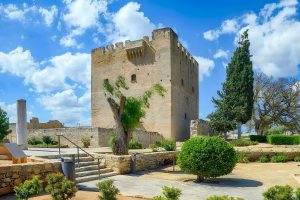
These fortifications originally served as watchtowers and defensive positions against Arab raids from the 7th to 10th centuries, with guards using fire signals to communicate between castles and warn coastal cities of approaching enemies. The strategic positioning allowed 360-degree views across both northern and southern coasts, with Kantara's summit offering visibility extending to Turkey, Lebanon's mountains 160 kilometers away, and across the Karpasia Peninsula. oloi-cy Saint Hilarion's Fairytale Architecture Saint Hilarion Castle occupies an impregnable position on a rocky outcrop at 732 meters, creating a structure believed to have inspired Walt Disney's design for Snow White and the Seven Dwarfs castle. The fortress divides into three distinct levels embedded into mountain rock, each featuring hidden rooms, secret tunnels, and gardens offering panoramic views of the Mediterranean and surrounding countryside. Byzantine builders originally constructed the castle in the 10th or 11th century, though some sources suggest earlier origins. pinterest-com The Lusignan dynasty from 1192 to 1489 expanded the fortifications extensively, adding chambers for knights, royal families, and administrative functions. The castle served simultaneously as military outpost and royal summer residence, with the upper level containing royal apartments that provided escape from coastal heat. The Venetians who ruled from 1489 to 1571 added heavy defensive walls and strong towers, though they later abandoned mountain castles in favor of coastal fortifications at Kyrenia,…

Read more
Cyprus Traditional Dance Competitions

Cyprus Traditional Dance Competitions

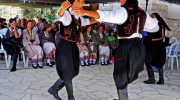
Traditional dance competitions in Cyprus are not performances staged for spectacle alone. They are structured moments where history, regional identity, and communal memory are actively tested and refined. Across village squares, coastal towns, and formal festival stages, dancers are judged not only on technique but on how faithfully they carry movements shaped by centuries of Cypriot life. What emerges is not nostalgia, but discipline. Not a postcard version of tradition, but a living standard that Cyprus expects its dancers to meet. More Than Dance: Why Competition Matters in Cyprus In Cyprus, dance has never been separate from daily life. For generations, it accompanied weddings, harvests, religious festivals, and seasonal gatherings. Competition emerged naturally from this environment, not as rivalry for its own sake, but as a way of recognising skill, confidence, and social standing. wordpress-com Modern competitions continue that older logic. They exist to ensure that dances are not diluted by convenience or modern taste. Judges evaluate how well performers understand structure, rhythm, posture, and cultural intent. Winning matters, of course, but correctness matters more. To dance well in Cyprus is to show that you know where the movement comes from and why it exists. A Shared Language with Regional Accents Cypriot folk dance operates on two levels at once. There is an island-wide vocabulary of steps and formations that…

Read more

Spikes and Towers in the Cypriot Sun

Spikes and Towers in the Cypriot Sun

Stand on a rocky hillside in southern Cyprus at the end of a long, dry summer and you may suddenly notice a giant green starburst on the slope. Then, one day, a towering stalk shoots skyward like a living flagpole, topped with a candelabra of creamy-yellow flowers. This is the agave of Cyprus a dramatic New-World succulent that has quietly become one of the island’s most eye-catching landscape characters. www.inaturalist.org Meet the Agaves Agaves belong to the asparagus family (Asparagaceae), in the subfamily Agavoideae. These are tough, rosette-forming succulents perfectly built for arid life. The genus Agave contains around 200 species, nearly all native to the deserts and dry hills of Mexico, the southern United States and Central America. In Cyprus the two most common are Agave americana (the century plant or American aloe) and Agave sisalana (sisal agave). Gardeners also grow several other attractive species, including the graceful, almost spineless Agave attenuata (foxtail agave) with its soft, arching leaves and the compact, fiercely spiny Agave stricta. Locally they are known as Αγαύη (Agávi), a direct borrowing of the scientific name, which comes from the ancient Greek agauós “admirable” or “noble” a perfect description for their striking, architectural form. Some older Cypriots in Greek-speaking areas still call the spikiest ones Αλάς (Alás), perhaps a folk name evoking the sharp, sword-like…

Read more