Explore Cyprus with Our Interactive Map

Explore our top stories and discover ideas worth your time.

Pentozali Cyprus Dance

Pentozali Cyprus Dance

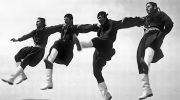
The Pentozali is one of the most powerful dances ever to cross the sea between Crete and Cyprus. Born in the mountains of western Crete as a dance of resistance and endurance, it later became part of Cyprus’s festival life, folk education, and stage tradition. When performed on Cypriot soil today, the Pentozali is not treated as a foreign import, but as a shared expression of strength, memory, and collective identity within the wider Hellenic world. This is not a dance meant to decorate an evening. It is meant to command attention. A Dance Built on Movement, Not Decoration Pentozali belongs to the family of pidichtos dances, a term that refers to leaping, high-impact movement rather than flowing steps. The body does not glide. It strikes, lifts, stamps, and suspends itself in the air. The posture is upright and direct, with little ornamentation, because the focus is on force and timing rather than elegance. The dance is usually performed in an open circle or semi-circle, with dancers linked at the shoulders. That formation creates both physical stability and a sense of collective strength. Everyone moves as one unit, but the attention belongs to the leader at the front of the line, whose improvisations set the intensity of the performance. Why Leadership Matters in Pentozali Unlike many communal dances, Pentozali places…

Read more
Nymphs and Nature Spirits in Cypriot Mythology

Nymphs and Nature Spirits in Cypriot Mythology

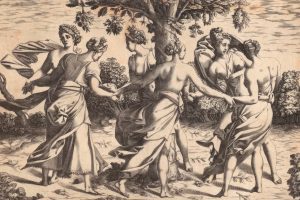
Cyprus is an island with a long memory. Long before cities were built and kingdoms were named, the people who lived here believed that the land around them was alive. Springs, forests, rivers, mountains, and the sea itself were not just features of the landscape. athensaf.eu They were home to spirits. These spirits had names, roles, and personalities. The Greeks called them nymphs, and on Cyprus, they took on a life of their own, shaped by the island's unique mix of Greek, Phoenician, and local traditions. Nymphs were not gods. They sat below the major gods in rank, but they were present everywhere, and the people of Cyprus respected them for it. Historical Background The belief in nature spirits on Cyprus goes back a long way, well before the Greeks arrived. The island was a meeting point for cultures from Greece, Egypt, Phoenicia, and Anatolia. Each of these brought its own ideas about the natural world. The Greeks had a detailed system for classifying nymphs by the type of nature they were tied to: water, trees, mountains, or the sea. When Greek ideas reached Cyprus, they mixed with local beliefs that already existed on the island. The result was something distinct. Cypriot nymph traditions were not a simple copy of Greek mythology. They were a blend, shaped by the land…

Read more

Alampra Early Bronze Age Town

Alampra Early Bronze Age Town

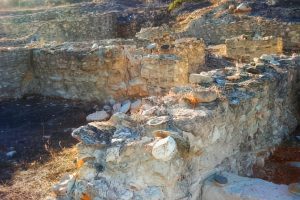
Alampra Mouttes stands as one of Cyprus’s most significant Middle Bronze Age settlements. Located in central Cyprus near the modern village of Alampra, this archaeological site provides rare evidence of prehistoric urban life and early copper metallurgy between 1900 and 1650 BC. The excavated remains reveal a substantial community that occupied a strategic position close to copper ore deposits at the foothills of the Troodos Mountains. wikipedia-org The archaeological site occupies the northeast facing flank of a ridge between two hills called Mouttes and Spileos. The settlement consists of multi room rectangular houses built from local limestone and flint, with walls still standing in several areas. During its period of occupation, Alampra functioned as a largely self sufficient agricultural and metallurgical community. The site lies about 8 kilometers east of Marki Alonia, another major Bronze Age settlement, and sits at the point where the volcanic pillow lava foothills of the Troodos Massif meet the calcareous limestone of the central Mesaoria plain. Historical Background Archaeological interest in Alampra began in the 19th century, but the first systematic investigation took place in 1924 when Swedish archaeologist Einar Gjerstad excavated a prehistoric house he named Mavroyi, meaning red earth. For decades, this remained the only precisely documented building in Cyprus from the long period between the Chalcolithic and the end of the Middle…

Read more