Explore Cyprus with Our Interactive Map

Explore our top stories and discover ideas worth your time.

Syrtos of Cyprus

Syrtos of Cyprus

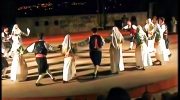
Syrtos of Cyprus (Local Variants) is a restrained, grounded dance form that emphasizes communal movement and continuity, with subtle differences from mainland Greek versions shaped by the island's unique cultural blend. Performed in circles or lines, it features slow, deliberate steps that foster group harmony and emotional expression, often accompanied by laouto and violin. This dance reflects Cyprus's historical crossroads, preserving ancient rhythms while adapting to local traditions, making it a living symbol of the island's resilient spirit. hellenicaworld-com A Timeless Dance Form Syrtos in Cyprus represents a core element of the island's folk dance heritage, a form where participants link hands in a circle or line, moving with measured, flowing steps that prioritize collective rhythm over individual flair. Unlike more energetic dances, Cypriot syrtos maintains a grounded, introspective quality, with feet close to the earth and bodies swaying in unison to evoke shared emotions like joy, sorrow, or nostalgia. This restraint stems from the island's agrarian past, where dances served as communal rituals tying people to the land's cycles. Regional variants add depth: the Paphos syrtos is slower and more solemn, while the Famagusta version incorporates lighter skips, reflecting local histories and influences from Greek, Ottoman, and Venetian eras. As a dance that bridges generations, it embodies Cyprus's cultural mosaic, where movement becomes a silent language of unity. Historical…

Read more

Saint Barnabas Gospels

Saint Barnabas Gospels

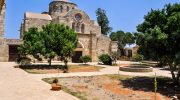
The “Saint Barnabas Gospels” refer to a tradition that helped secure the Church of Cyprus’s independence after a late fifth-century discovery near Salamis, where a Gospel of Matthew was said to rest on Saint Barnabas’s chest. Presented to Emperor Zeno, the manuscript functioned as proof of apostolic origin and was used to confirm Cyprus’s autocephaly in a jurisdictional dispute. This article explains the discovery story, why the original book matters even though it is lost, and how later Cypriot Gospel manuscripts carried the same claim through art, script, and ritual display. A Fifth-Century Power Dispute In the late fifth century, Cyprus stood at the centre of a quiet but serious dispute. Powerful church authorities on the mainland sought control over the island's Christian community, challenging its claim to independence. northcyprusinform-com According to tradition, Archbishop Anthemios was guided by a vision to the burial place of Saint Barnabas, near Salamis. When the tomb was opened, the saint’s remains were found holding a copy of the Gospel of Matthew. The discovery was not treated as symbolic. It was evidence.The manuscript was carried to Constantinople and presented to Emperor Zeno. By accepting it, the emperor confirmed that the Church of Cyprus had apostolic origins of its own and therefore did not answer to any external patriarch. From that moment on, Cyprus’s religious independence…

Read more
Bosea Cypria

Bosea Cypria

High on a sun-bleached limestone cliff in the Akamas or along a rocky gulley near Paphos, you might spot a graceful evergreen shrub with deep-green leaves cascading like a living curtain. In late summer its branches glow with clusters of bright red berries that shine like tiny rubies against the rock. This is Bosea cypria, a quiet but extraordinary survivor that has clung to the island’s rugged edges for millions of years. www.inaturalist.org An Ancient Shrub from the Amaranth Family Bosea cypria belongs to the Amaranthaceae family – the same group that gives us spinach, beetroot and colourful garden amaranths. Unlike most of its relatives, which are soft-stemmed herbs, this species is a woody evergreen shrub, one of only three living members of the genus Bosea worldwide. In Cyprus it grows 1–2 metres tall, highly branched, often pendulous, seeming to drape dramatically from cliffs, old stone walls or even tree trunks. A Living Fossil from the Ancient Tethys Sea This plant is a true botanical relic. Its ancestors once grew along the shores of the vast Tethys Sea during the Tertiary period, long before the Mediterranean took its present form. As continents drifted and the sea shrank, most Bosea species disappeared; today only three remain — one in Cyprus, one in the Canary Islands and one in the north-west Himalayas.…

Read more