Explore Cyprus with Our Interactive Map

Explore our top stories and discover ideas worth your time.

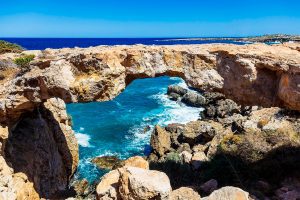
Cape Greco Natural Arch

Cape Greco Natural Arch

Cape Greco's natural arch, known locally as Kamara tou Koraka or "Crow's Arch," stands as one of Cyprus's most remarkable geological features. Located within Cape Greco National Forest Park on the southeastern tip of the island, this limestone bridge stretches over the Mediterranean Sea between the resort towns of Ayia Napa and Protaras. getyourguide-com The arch sits alongside a coastal road that winds through the park, where visitors can observe this natural wonder without difficulty. The bridge was formed over millennia by the erosive forces of wind and water, creating a structure that appears both delicate and enduring. How Ancient Seas Created This Natural Bridge The geological story of Cape Greco's natural arch begins millions of years ago when Cyprus was submerged beneath ancient oceans. During the Cretaceous period, Cyprus was situated near the equator and the region was characterized by a warm, shallow sea where the deposition of marine sediments led to the formation of limestone and marl. These calcium carbonate deposits accumulated layer by layer as countless marine organisms died and settled on the seafloor. Cyprus sits near the boundary between the Eurasian and African tectonic plates, a position that has shaped the island's dramatic geology. The collision of these plates triggered gradual uplift, eventually pushing the ancient seabed above water. This uplift continues today at a measurable…

Read more
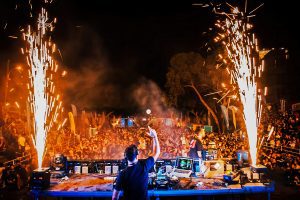
Cyprus Street Music Festivals

Cyprus Street Music Festivals

In Cyprus, street music festivals transform ordinary streets, squares, and promenades into shared cultural spaces where sound is free, public, and woven into daily movement. Unlike formal concerts held behind walls and tickets, these events unfold directly within the urban fabric, allowing residents and visitors to encounter music while walking, gathering, or simply passing through. The city does not just host the festival. It becomes the festival. What makes these festivals distinctive is not only the music, but the way they blur boundaries. Performers and audiences share the same ground. Music spills into cafés, markets, and waterfronts. The street, normally shaped by commerce and traffic, becomes a temporary stage for collective experience. Why the Street Matters in Cyprus In Cyprus, the street has always been more than a route from one place to another. Narrow Venetian alleys, seaside promenades, and village squares have long served as social meeting points. Street music festivals build on this tradition by temporarily suspending the usual rules of movement, commerce, and noise, allowing sound to reshape how public space is used. What distinguishes these festivals is accessibility. There are no tickets, no fixed seating, and no formal boundary between performer and audience. Music becomes something encountered rather than sought out. This openness allows people of different ages, backgrounds, and income levels to share the same…

Read more

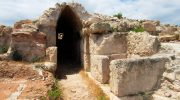
Vouni Palace Reliefs

Vouni Palace Reliefs

Vouni Palace was a Cypro-Classical hilltop complex built around 500 BC to control coastline movement and project authority over a contested landscape near Soli. Its architectural reliefs and capitals show Persian imperial symbols, including Hathor imagery, rosettes, and royal protection motifs, translated through local limestone carving and later blended with Greek spatial elements as political alignment shifted. This article explains why the site’s position mattered, how decoration was used to regulate experience inside the palace, and what the surviving fragments reveal about Cyprus negotiating empire without simply copying it. google-com A Hilltop Built to Watch Soli Vouni was never meant to be subtle. Rising roughly 250 meters above sea level, the hill offers uninterrupted views across the coast and inland plains. From here, movement along the shoreline could be monitored with ease, especially the nearby territory of Soli, a city-kingdom that repeatedly resisted Persian authority. google-com The location makes the palace’s purpose immediately clear. Vouni was built to watch, to assert presence, and to project authority outward. Comfort and urban life were secondary. This was a place where geography itself became part of governance. 500 BC: A Palace of Tension The palace was constructed around 500 BC, during a period when Cyprus stood at the intersection of competing powers. The island was under the control of the Achaemenid Persian Empire,…

Read more