Explore Cyprus with Our Interactive Map

Explore our top stories and discover ideas worth your time.

Flowers Bloom Without Leaves in Cyprus Autumn Woods

Flowers Bloom Without Leaves in Cyprus Autumn Woods

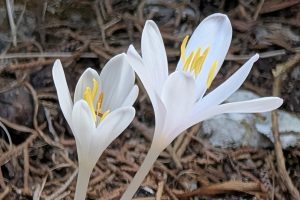
Picture this: as the summer heat fades in Cyprus, delicate white flowers suddenly pop up from the bare ground in the mountains, like little surprises from nature. Colchicum troodi is one of the island's special plants, blooming in fall and hiding a few secrets that make it both beautiful and a bit mysterious. But why does it flower "naked," and what ancient stories does it carry? www.inaturalist.org What Exactly Is This Quirky Cypriot Bloom? Colchicum troodi or “Troodos’s Naked lady” is a small, wild flowering plant that's unique to Cyprus — meaning it grows nowhere else in the world. It's a type of perennial that sprouts from an underground bulb-like structure called a corm, and it belongs to the Colchicaceae family, which includes other autumn-blooming flowers. Think of it as Cyprus's own version of an autumn crocus, adding a touch of color to the landscape when most plants are winding down. How Did This Flower Emerge from Cyprus's Ancient Past? The story of Colchicum troodi goes back to 1865, when Austrian botanist Theodor Kotschy discovered it during his travels across Cyprus and named it after the Troodos Mountains where he found it. The genus name "Colchicum" comes from Colchis, an ancient region on the Black Sea coast in what's now Georgia, tied to Greek myths about the sorceress Medea who…

Read more
Left-Hand Driving System in Cyprus

Left-Hand Driving System in Cyprus

Cyprus stands out in Europe as one of only four countries where cars travel on the left side of the road. This unique characteristic catches many visitors by surprise, but it reflects a fascinating blend of historical influence and practical continuity that has shaped the island's transportation system for over a century. paphosmotorentals.cy The British assumed administrative control of Cyprus in 1878 through the Cyprus Convention with the Ottoman Empire. The island officially became a British crown colony in 1925 and remained under British rule until gaining independence in 1960. During this 82-year period, British authorities introduced left-hand traffic to match the system used throughout the British Empire. At that time, the British Empire was expanding rapidly across the globe. Countries under British control, including Australia, India, New Zealand, and numerous others, all adopted left-hand driving. When Cyprus joined this group, it made practical sense to maintain consistency with other British territories. The infrastructure built during the colonial period, from road layouts to signage systems, was all designed for left-hand traffic. When Cyprus gained independence in 1960, authorities faced a choice about whether to switch to right-hand driving like most European countries or maintain the existing system. They chose to keep left-hand traffic because the population had become accustomed to it over eight decades, and changing would have required massive…

Read more
Black Locust Of Cyprus

Black Locust Of Cyprus

Imagine walking through an older Cypriot village or along a rural roadside in late May, when the air suddenly fills with a sweet, heavy perfume reminiscent of orange blossom. Looking up, you see long, drooping clusters of creamy-white flowers hanging like fragrant tassels from the branches of a graceful, thorny tree. This is the black locust of Cyprus – a fast-growing, nitrogen-fixing beauty that has quietly become part of the island’s living heritage. www.inaturalist.org The False Acacia of the Legume Family Black locust, Robinia pseudoacacia, belongs to the vast Fabaceae (legume) family – the same group as carob, peas and beans. It is a deciduous tree famous for its ability to enrich poor soils by fixing nitrogen from the air. Locally it is known as Ροπίνια η ψευδοακακία (Ropínia i pseudoakakía), literally “false acacia Robinia”, because its pinnate leaves and pea-like flowers resemble true acacias even though it is not closely related. From American Forests to Cypriot Roadsides Native to the Appalachian Mountains and Ozarks of the eastern United States, black locust was one of the first North-American trees brought to Europe in the early 17th century. It reached Cyprus during the British period (late 19th–early 20th century) and was widely planted for durable timber, excellent honey production, erosion control on degraded land, and quick shade in villages and towns.…

Read more