Explore Cyprus with Our Interactive Map

Explore our top stories and discover ideas worth your time.

Kantara Castle Cyprus

Kantara Castle Cyprus

Kantara Castle is a Byzantine and medieval fortress located in the eastern Kyrenia mountain range in the Turkish-occupied part of Cyprus. The name comes from the Arabic word “qantara,” meaning bridge or arch, though some sources translate it as observation point. The castle sits at the easternmost position of three famous mountain castles in Cyprus, with Buffavento Castle to the west and St. Hilarion Castle further west. The castle occupies a strategic position with views over both the northern coast and the Mesaoria Plain. On clear days, visitors can see the Karpasia Peninsula, Famagusta Bay, and distant mainland coasts. This commanding location made Kantara essential for Cyprus’s defense for nearly 500 years. Historical Background The exact construction date remains unknown, but most historians place the Byzantine construction around 965 AD after Arab raiders were pushed back from Cyprus. For centuries, coastal populations had faced repeated attacks, and mountain watchtowers were needed to spot approaching ships and warn inland settlements. wikipedia-org Before the fortress existed, an Orthodox monastery dedicated to St. Mary of Kantara stood on the site. Defensive walls were gradually added, turning the religious complex into a military stronghold. This mix of sacred and defensive use was common during unstable periods. Kantara formed part of a signal network with the other Kyrenia mountain castles. Guards could see neighboring fortresses…

Read more
Fertility and Mother-Goddess Cults

Fertility and Mother-Goddess Cults

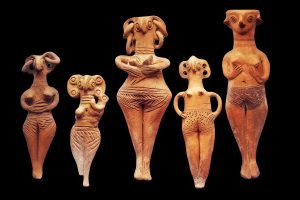
Fertility and Mother Goddess cults in ancient Cyprus were the island's earliest spiritual heartbeat, centered on a powerful female divine force that oversaw birth, growth, and the rhythms of nature. These beliefs weren't about distant deities but a hands-on reverence for life's cycles, helping early communities thrive amid uncertainty. Digging into them reveals how Cypriots turned everyday survival into something sacred, leaving us wondering just how much of that ancient wisdom still echoes today. The Roots of Cyprus's Earliest Beliefs Imagine a time when religion wasn't found in grand temples or holy books, but in the soil under your feet and the changing seasons overhead. That's where Fertility and Mother Goddess cults began in Cyprus - as a practical way for prehistoric people to make sense of a world full of risks like failed crops or harsh winters. These weren't fancy philosophies; they were born from the need to ensure life kept going. The Mother Goddess, often depicted as a nurturing female figure, symbolized the force behind everything that grew or multiplied. She wasn't a queen on a throne but more like the earth's own pulse, connecting humans to the land's bounty. For early Cypriots, from the Chalcolithic period around 4000 BC onward, this wasn't superstition - it was survival wrapped in awe, a way to feel in control of…

Read more
Halloumi and Festival Foods of Cyprus

Halloumi and Festival Foods of Cyprus

Cyprus is a culinary treasure trove where traditional flavors meet modern tastes, and nowhere is this more evident than in its cheese and festival foods. Halloumi, the island’s most famous export, embodies the island’s culture, history, and social life. Beyond its grillable texture and unique flavor, halloumi represents centuries of agricultural tradition, village cooperatives, and community heritage. In-Cyprus Cyprus’s festival foods, from grape harvest sweets to carnival pastries, highlight seasonal cycles, religious celebrations, and communal joy. For locals and visitors alike, tasting halloumi with a slice of watermelon, sampling fresh loukoumades, or savoring grape must treats is a journey into the island’s heart. These foods are not just meals, they are symbols of hospitality, identity, and Cypriot tradition. Halloumi - Cyprus’s Culinary Icon Halloumi is a semi-hard, white cheese with a high melting point, allowing it to be fried or grilled without losing shape. In 2021, it received Protected Designation of Origin (PDO) status, meaning only cheese produced in Cyprus according to traditional methods can bear the name “halloumi.” Traditionally made from goat and sheep milk, PDO regulations require at least 25% of these milks during peak seasons, increasing annually to reach 50% by 2029. Modern production sometimes incorporates cow’s milk, especially for export, but true Cypriot halloumi remains rooted in traditional dairy practices. Wikipedia-Com Interestingly, Cypriots enjoy halloumi in…

Read more