Explore Cyprus with Our Interactive Map

Explore our top stories and discover ideas worth your time.

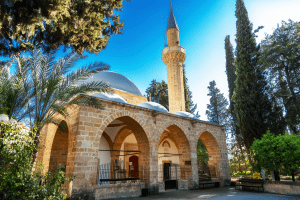
Arabahmet Mosque (Nicosia)

Arabahmet Mosque (Nicosia)

Arabahmet Mosque is a 16th-century Ottoman mosque located in the Arab Ahmet Quarter of Nicosia. Built in the late 1500s shortly after the Ottoman conquest of Cyprus in 1571, the mosque was named after Arab Ahmet Pasha, one of the commanders who led the Ottoman army during the invasion. He also served as Governor General of Rhodes. shutterstock-com The mosque is the only one in Cyprus to feature typical Turkish-style domes. A large central dome about 6 meters across covers the main prayer hall, three smaller domes protect the entrance porch, and four more tiny domes sit at the building's corners. This design follows the classical Anatolian style of placing a dome on a square building. Historical Background Arab Ahmet Pasha was a senior military officer in the Ottoman forces that conquered Cyprus. After the successful invasion, the neighborhood where his mosque stands became one of the most important residential areas in Ottoman Nicosia. High-ranking Turkish officials, judges (kadis), and governors (pashas) chose to live here for two practical reasons. severis-org First, the area was close to the old Ottoman Saray, which had been the Lusignan Palace before the conquest. Officials could walk to work easily. Second, Arab Ahmet Quarter caught the evening breeze coming from Morphou Bay in the west, making the coolest part of the city during hot…

Read more
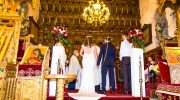
Marriage and Birth Traditions of Cyprus

Marriage and Birth Traditions of Cyprus

Marriage and birth stand as the most significant life transitions in traditional Cyprus society, each marked by elaborate rituals that involve entire communities. Wedding customs symbolize separation from childhood families and entry into adult society, while birth traditions welcome new members into both family and village. limassoltourism-com Orthodox Christianity frames these milestones through sacraments of marriage and baptism, but older customs dating to pre-Christian times persist beneath the religious overlay. The preservation and transmission of these customs falls mainly to new couples, their families, musicians who perform traditional songs, and folkloric groups that keep practices alive through demonstration and participation. Engagement and Marriage Preparations The engagement is usually arranged by the families of the bride and groom, who agree on the dowry, the wedding date, and other details. The groom's family visits the bride's family with gifts such as jewelry, clothes, and money. The bride and groom exchange rings and wear them on their right hands until the wedding day. In earlier times, marriages in Cyprus used to be arranged through the services of matchmakers known as proxenitra who facilitated negotiations between families. kopiaste-org Upon engagement, the groom's family accepts the task of making traditional sesame-coated breads called glistarkes that the bride's family hands out as wedding invitations. These round breads carry symbolic meaning related to fertility and abundance. The…

Read more
Mediterranean Work Culture and Daily Life

Mediterranean Work Culture and Daily Life

Cyprus combines Mediterranean traditions with European business practices to create a work culture centered on relationships, balance, and quality of life. The standard work week runs 38 to 40 hours, but the rhythm of daily life follows patterns shaped by climate, family values, and ancient hospitality customs. Unsplash-com Work is important to Cypriots, yet it occupies a specific place in life rather than dominating it. Family gatherings, long meals, and social connections receive equal priority. This approach reflects a philosophy where professional success and personal wellbeing exist in harmony rather than competition. How Work Patterns Developed on the Island Cyprus sits at the crossroads of Europe, Asia, and Africa. Its position made it a vital trading hub for millennia. Ancient Phoenicians, Greeks, Romans, Byzantines, Venetians, Ottomans, and British all ruled Cyprus at different times. Each culture influenced how Cypriots approach work and daily routines. wikimedia-org The British colonial period from 1878 to 1960 introduced structured office hours and formal business practices. English became widely spoken in professional settings. After independence in 1960, Cyprus maintained these European business standards while preserving Mediterranean social customs. Climate shaped work patterns significantly. Summer temperatures can exceed 40 degrees Celsius. Historically, people worked early mornings when it was cooler, took long midday breaks during peak heat, then returned to work in the late afternoon. This…

Read more