Explore Cyprus with Our Interactive Map

Explore our top stories and discover ideas worth your time.

Cyprus Ancient Gods

Cyprus Ancient Gods

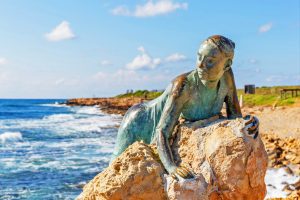
Long before saints and churches, Cyprus was home to powerful gods and goddesses whose temples dotted the island and whose myths shaped Mediterranean culture. From Aphrodite rising from the sea foam to warrior deities protecting cities, Cyprus's ancient pantheon blended Greek, Phoenician, and local traditions into something uniquely Cypriot - and traces of these divine beings still linger in the landscape today. A Crossroads of the Divine Ancient Cyprus didn't worship just one set of deities. Instead, the island's position at the crossroads of Greek, Near Eastern, and Egyptian civilizations created a rich religious tapestry where different cultures' gods merged, borrowed from each other, and sometimes became the same deity under different names. myfirstticket-com From the Bronze Age onward, Cypriots worshipped a Great Goddess of fertility who would eventually be identified with the Greek Aphrodite. But they also honored male gods adapted from neighboring lands - Phoenician warrior protectors, Greek sky fathers, and mysterious local spirits. By classical times, the island had developed a complex pantheon where Greek Aphrodite and Apollo appeared alongside Near Eastern Astarte and Resheph, creating a unique mythic identity that belonged fully to neither East nor West but to Cyprus itself. Where Divine Traditions Met and Merged Cyprus's religious history stretches back thousands of years, with each wave of settlers adding new layers to the island's…

Read more

Ancient Soli A Hellenistic Coastal City

Ancient Soli A Hellenistic Coastal City

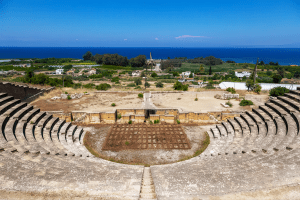
Soli was one of the ten ancient city kingdoms that ruled Cyprus from the 6th century BC until the Roman conquest. The city occupied an ideal location beside the Kambos River on Morphou Bay, with an acropolis on high ground and a lower town next to the harbor. visitncy-com Rich copper deposits lay just south of the city, good water flowed from nearby sources, and fertile soil stretched across the plains. These advantages made Soli prosperous for over a thousand years until Arab raiders destroyed it in the 7th century AD. Historical Background Several legends explain how Soli got its name. One Greek story claims the mythical Athenian hero Acamas founded the city after the Trojan War, accompanied by Phalerus. Another version tells of King Philocyprus, who ruled the nearby town of Aipeia around 580 BC. The famous Athenian lawmaker and philosopher Solon visited Cyprus during his travels and met the king. adakibrisim-com According to ancient sources, Solon noticed that Aipeia sat in a strong position on rough, elevated ground but suffered from poor access and cramped conditions. He persuaded Philocyprus to abandon the old site and move his capital down to the coastal plain, where there was more space, better water, and easier access to the harbor. Solon stayed to help plan and organize the new city. In gratitude,…

Read more
The Peeling Cinnamon Guardians of Cyprus Slopes

The Peeling Cinnamon Guardians of Cyprus Slopes

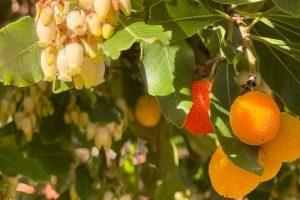
High on rocky, sun-scorched hillsides where pine meets maquis, a graceful evergreen catches the eye with branches glowing like polished copper. Each summer its smooth bark peels away in thin, papery sheets, revealing fresh layers of vivid orange-red and pistachio-green beneath – a living canvas of renewal. This is the Cyprus strawberry tree, one of the island’s most elegant natives and a quiet sentinel of the Mediterranean wildlands. www.inaturalist.org A Graceful Member of the Heath Family Known scientifically as Arbutus andrachne, this evergreen shrub or small tree belongs to the genus Arbutus within the Ericaceae family (the heath or heather family) in the order Ericales, part of the asterid group of flowering plants. In Cyprus it grows alongside its close relative Arbutus unedo (the common strawberry tree) and is a classic component of maquis shrublands and pine-forest understories. Roots Deep in Ancient Mediterranean Landscapes Arbutus andrachne has been part of Cyprus since prehistoric times, forming an integral element of the original maquis vegetation. The ancient Greek botanist Theophrastus (4th–3rd century BC) described it as “Andrachni” in his History of Plants. It was noted by 19th-century explorers and in the 2007 Cyprus “Tree of the Year” campaign by the Department of Forests. Today it remains widespread and secure, listed as Least Concern on the IUCN Red List thanks to its broad…

Read more