Explore Cyprus with Our Interactive Map

Explore our top stories and discover ideas worth your time.

Sun-Chasing Yellow Blossoms of Cyprus

Sun-Chasing Yellow Blossoms of Cyprus

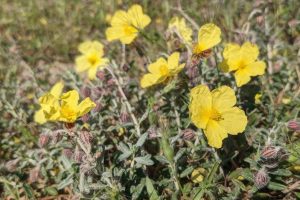
Springtime in Cyprus brings a splash of sunshine to rocky hills with Cyprus Rock-rose Helianthemum obtusifolium, a wildflower that's like a mini sunrose hugging the ground. This tough little plant, found only on the island, turns dry slopes into cheerful displays. But why does it follow the sun, and what ancient stories hide in its petals? www.inaturalist.org Just What Is This Sunny Cypriot Native? Helianthemum obtusifolium is a small, shrub-like wildflower from the rockrose family, the kind of plants that love sunny, dry spots around the Mediterranean. It's a perennial that pops up year after year, adding bright yellow touches to Cyprus's wild landscapes without needing much care. Roots in Cyprus's Ancient Earth and Botanical Tales Millions of years ago, as ancient seas dried up and tectonic shifts shaped Cyprus's rocky hills, plants like this one adapted to the island's isolation, evolving into unique species. First named in 1824 by French botanist Michel Félix Dunal, it draws from Greek words for "sun flower," reflecting how explorers in the 19th century uncovered Cyprus's floral secrets during Mediterranean expeditions. It's part of a broader story of how Cyprus, like a natural time capsule, preserved these gems from prehistoric times. A Fuzzy Bush with Crinkly Yellow Charms This low-growing plant reaches about 25-30 cm tall, with woody stems that spread out like a…

Read more
Ancient Tamassos

Ancient Tamassos

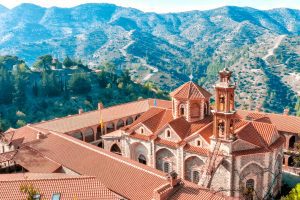
About 21 kilometres southwest of Nicosia, near the village of Politiko, lies one of ancient Cyprus's most significant city-kingdoms: Tamassos. It was not a coastal city with a grand harbour or a sprawling palace complex. It was something different. airial.travel Tamassos was an inland powerhouse, built almost entirely around one thing: copper. For centuries, this city sat on some of the richest copper deposits in the eastern Mediterranean, and that single resource shaped everything about it, from its economy to its politics, from its wealth to its eventual decline. Historical Background The land around Tamassos has been occupied since the Chalcolithic period, thousands of years before the city itself took shape. Small farming villages dotted the area well into the Early Bronze Age. But the real turning point came when people started mining and processing copper in large numbers. By the 8th century BC, Tamassos had grown into a formal city-kingdom, one of ten that ruled Cyprus at the time. The earliest written proof of the city comes from an Assyrian inscription dated to 673 BC, on the Prism of Esarhaddon, which mentions a place called "Tamesi" as a city paying tribute to the Assyrian Empire. Around the same time, Homer appears to have referenced Tamassos in the Odyssey, calling it "Temese." In that passage, the goddess Athena tells Odysseus'…

Read more
Three Dishes Define Cypriot Food Culture

Three Dishes Define Cypriot Food Culture

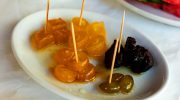
Cypriot cuisine is often described through individual recipes, yet its deeper identity emerges through patterns of use rather than isolated dishes. Makaronia tou Fournou, kolokasi, and traditional sweets occupy very different places on the table, but together they reveal how Cypriots eat across time, season, and social setting. One dish marks a celebration, one sustains daily life, and one formalises hospitality. Seen together, they form a practical map of how food functions in Cypriot culture. These foods do more than taste distinct. They organise social life. They reflect land, climate, economy, and ritual. To understand them is to understand how Cypriots structure eating itself. Makaronia tou Fournou and the Language of Celebration Makaronia tou Fournou is the dish most closely associated with gathering. Known informally as the Cypriot version of pastitsio, it appears at Easter, Christmas, Sunday lunches, and, most notably, weddings. Its importance lies less in the recipe itself and more in what it represents: abundance prepared to be shared. charloui-com The dish is built in layers. Tubular pasta forms a firm base, a lightly spiced meat sauce sits at its centre, and a thick béchamel enriched with eggs and local cheese seals the top. This structure is deliberate. When sliced, the layers hold their shape, allowing large trays to be portioned cleanly for many people. Long before it…

Read more