Explore Cyprus with Our Interactive Map

Explore our top stories and discover ideas worth your time.

Traditional Cypriot Rural Life

Traditional Cypriot Rural Life

Cyprus's rural economy developed around livestock farming for thousands of years before modern tourism. Goats, sheep, and donkeys formed the backbone of village life, providing milk, meat, wool, transportation, and labor. These animals adapted perfectly to the island's hot, dry climate and rocky terrain. cypruslife-com Families raised small herds using methods passed through generations, with women typically managing milk production and cheese making while men handled field work and shepherding. The livestock fit naturally into Cyprus's agricultural cycle, grazing on wild plants during rainy months and consuming crop residues during summer. This system created self-sufficient communities where nearly every household maintained animals. Archaeological evidence shows Cypriots domesticated these species during the Aceramic Neolithic Period around 7000 BCE, making livestock farming one of the island's oldest continuous traditions. Ancient Origins of Cypriot Animal Husbandry Prehistoric settlers brought domesticated animals to Cyprus during the early Bronze Age around 2500 BCE. These people possessed navigation skills that allowed them to transport household goods and livestock across the Mediterranean. They introduced pigs, sheep, goats, and cattle to the island. Evidence from Bronze Age sites like Politiko Troullia shows communities consumed sheep, goat, cattle, and pig while also hunting fallow deer for ritual feasts. The indigenous Cyprus Fat-tailed sheep developed over millennia of breeding in local conditions. This triple-purpose breed produced milk, coarse wool, and…

Read more

Cyprus Clay Pots Ceramics

Cyprus Clay Pots Ceramics

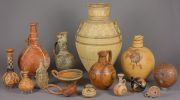
Cyprus has been shaping clay into beautiful vessels for over 7,000 years. The pottery tradition on this Mediterranean island represents one of the longest continuous craft practices in human history. cycladic.gr From ancient times to modern workshops, Cypriot ceramics tell a story of skilled hands, local materials, and cultural exchange. The distinctive red clay pots, elegant jugs, and decorative vessels created here have become symbols of the island's creative spirit and its role as a crossroads between civilizations. Historical Context The ceramic story in Cyprus begins during the Neolithic period around 4400 BCE, when early settlers started working with the island's abundant clay deposits. These first potters created simple vessels with red and white decorations that were surprisingly uniform across the island. Unlike mainland pottery of the same era which showed regional variations, Cypriot ceramics developed a consistent style that hinted at shared cultural practices. knews-kathimerini-com The real transformation came during the Bronze Age, starting around 2600 BCE. Cyprus sat at a strategic location between Egypt, the Hittite empire, and Mycenaean Greece, which turned the island into a vital trading hub. Cypriot potters continued to handcraft their vessels even after the pottery wheel had been invented elsewhere. This traditional approach lasted until about 1500 BCE and produced ceramics of such high quality that they became sought-after commodities throughout the Mediterranean.…

Read more
Cyprus Commandaria Wine and Its Heritage

Cyprus Commandaria Wine and Its Heritage

Commandaria is an amber-colored sweet dessert wine made exclusively in the Commandaria region of Cyprus on the southern slopes of the Troodos Mountains. It represents an ancient wine style documented back to 800 BC and holds the distinction of being the world's oldest named wine still in production. needpix The wine is made from sun-dried grapes of two indigenous varieties, Xynisteri and Mavro. Production takes place only in 14 designated villages at altitudes between 500 and 900 meters within the Limassol District. The name Commandaria dates to the Crusades in the 12th century when Knights Templar and Knights Hospitaller controlled the region. From Ancient Nama to Medieval Commandaria The Greek poet Hesiod first described a dried grape wine from Cyprus in 800 BC in his work "Works and Days." He detailed how harvested grapes were dried in the sun for ten days and nights, then covered for five more before fermentation. Ancient people originally called this wine Nama or Cypriot Manna. Roman physician Dioscorides and geographer Strabo praised Cypriot wine for its excellence in the first century AD. Bishop Synesius of Ptolemais in the 5th century described it as resembling thick honey. mungfali The wine gained its current name during the Crusades. King Richard the Lionheart captured Cyprus in 1191 and celebrated his marriage to Berengaria of Navarre in Limassol…

Read more