Explore Cyprus with Our Interactive Map

Explore our top stories and discover ideas worth your time.

Tombs of the Kings

Tombs of the Kings

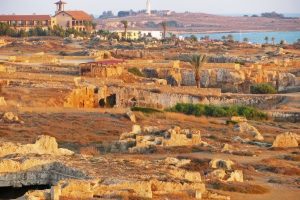
The Tombs of the Kings is a large necropolis that served the ancient city of Nea Paphos from the 3rd century BCE to the 3rd century CE. The site covers approximately 1.2 square kilometers in the northwestern part of the city, just outside the ancient fortifications. Eight major tomb complexes have been excavated, along with numerous smaller burial chambers. wikipedia-org These monuments were built for Ptolemaic officials and aristocratic families who governed Cyprus during the Hellenistic period. The royal institution had been abolished in 312 BCE, so no actual kings were buried here. The name comes purely from the impressive scale and elaborate architecture of the tombs themselves. When early visitors saw these underground structures with their Doric columns and painted frescoes, they assumed only royalty could command such magnificent burial monuments. shutterstock-com The tombs were carved from the natural limestone bedrock using tools and techniques developed in Alexandria, Egypt. The architecture imitates the houses of the living, following an Egyptian tradition that believed the dead should reside in spaces resembling their earthly homes. This created underground courtyards, burial chambers, and ritual spaces that remain remarkably preserved today. Historical Background Nea Paphos, meaning "New Paphos," was founded in the late 4th century BCE as the administrative capital of Cyprus under Ptolemaic rule. After Alexander the Great's death in 323 BCE,…

Read more
Ancient Ledra Early History of Nicosia

Ancient Ledra Early History of Nicosia

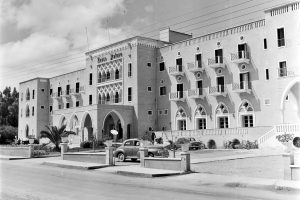
Ancient Ledra was a city-kingdom in the center of Cyprus where modern Nicosia stands today. It was established around 1050 BC and it became one of ten Cypriot kingdoms by the 7th century BC. Unlike coastal kingdoms that thrived on maritime trade, Ledra developed as an agricultural settlement in the fertile Mesaoria Plain. By Hellenistic times, it had dwindled to a small village before transforming into the capital city that continues to this day. oxfordre-com Archaeological remains from ancient Ledra have been found in several areas around modern Nicosia. The Bronze Age settlement was located on Leontari hill, approximately 6.5 kilometers southeast of the historical city center. This platform measures about 200 by 300 meters and includes a small cemetery. Historical Background The kingdom of Ledra appears for the first time in historical records on a clay prism of the Assyrian king Esarhaddon, dated to 672 BC. The inscription refers to the settlement as "Lidir" and records its ruler as "Unasagusu," generally identified as Onasagoras, the only king of Ledra whose name we know. He is listed ninth among ten Cypriot kingdoms that paid tribute to Esarhaddon. shutterstock-com The Assyrian text identifies Ledra as a "mat," meaning country or land, rather than a "kur," which denotes a city. This suggests that Ledra lacked a significant urban center and functioned more…

Read more
Cyprus Infrastructure Projects

Cyprus Infrastructure Projects

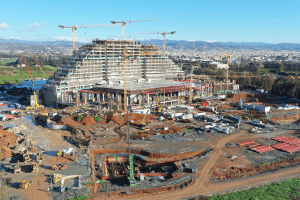
Cyprus has committed over 1.3 billion euros to infrastructure development in 2025, representing one of the most ambitious public investment programs in the island's recent history. President Nicos Christodoulides announced this figure in January 2025, emphasizing the government's determination to modernize public works legislation and introduce electronic systems to increase transparency and efficiency. shutterstock-com The infrastructure push covers multiple sectors, from road networks and smart city technologies to hospital construction and educational facilities. These projects aim to transform Cyprus into a more connected, sustainable, and economically competitive nation. However, several flagship projects have faced significant setbacks, including the troubled 1.2 billion euro Larnaca port and marina redevelopment, which saw its original concession terminated in 2024 after years of delays and financing problems. The Road Network Modernization Program The Ministry of Transport, Communications, and Works has prioritized road infrastructure development, allocating 439.3 million euros through September 2026 for a comprehensive highway and road network upgrade. The program includes ten major projects designed to reduce travel times, improve safety, and decrease urban congestion. These infrastructure interventions represent the most significant road construction effort in Cyprus in over a decade. shutterstock-com The Nicosia Perimeter Motorway represents the centerpiece of this program. Phase A1, which connects the Lakatamia Industrial Area to the Dali Industrial Area, includes 7.5 kilometers of four-lane highway plus approximately 10…

Read more