Explore Cyprus with Our Interactive Map

Explore our top stories and discover ideas worth your time.

The Cyprus Tulip (Tulipa cypria)

The Cyprus Tulip (Tulipa cypria)

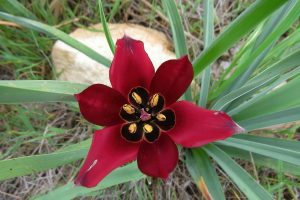
Among the many wildflowers that brighten Cyprus in spring, few capture the imagination quite like the Cyprus Tulip. This rare beauty, found nowhere else in the world, emerges each year with its deep, velvety petals – often appearing almost black against the sunny landscape. Spotting one in the wild feels like uncovering a small treasure hidden on the island. www.inaturalist.org How does it look like and where it grows The Cyprus Tulip, or Tulipa cypria, is a perennial bulbous plant that belongs to the lily family. There are three species of tulips on the island – Tulipa cypria, Tulipa akamasica and the parent specie of which both endemics originated – Tulipa agenensis. Tulipa cypria has been part of Cyprus’s flora for around 5 million of years, shaped by the island’s isolated geography into a separate specie during last Glacial cycles. It grows in Juniperus phoenicea maquis, pastures and cereal fields on limestone. The plant grows 15–40 cm tall, usually with four smooth, fleshy slightly bluish-green leaves, two at the base which are larger and lanceolate, and the two upper leaves which are much smaller and almost linear. Petals are deep blood-red colour with distinctive internal black blotch bordered by a yellow zone, earning the plant its nickname as the “black tulip” of Cyprus – a rare trait that makes it…

Read more
Nymphs and Nature Spirits in Cypriot Mythology

Nymphs and Nature Spirits in Cypriot Mythology

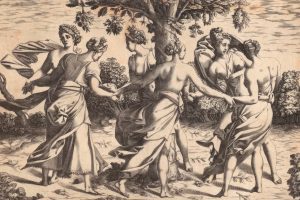
Cyprus is an island with a long memory. Long before cities were built and kingdoms were named, the people who lived here believed that the land around them was alive. Springs, forests, rivers, mountains, and the sea itself were not just features of the landscape. athensaf.eu They were home to spirits. These spirits had names, roles, and personalities. The Greeks called them nymphs, and on Cyprus, they took on a life of their own, shaped by the island's unique mix of Greek, Phoenician, and local traditions. Nymphs were not gods. They sat below the major gods in rank, but they were present everywhere, and the people of Cyprus respected them for it. Historical Background The belief in nature spirits on Cyprus goes back a long way, well before the Greeks arrived. The island was a meeting point for cultures from Greece, Egypt, Phoenicia, and Anatolia. Each of these brought its own ideas about the natural world. The Greeks had a detailed system for classifying nymphs by the type of nature they were tied to: water, trees, mountains, or the sea. When Greek ideas reached Cyprus, they mixed with local beliefs that already existed on the island. The result was something distinct. Cypriot nymph traditions were not a simple copy of Greek mythology. They were a blend, shaped by the land…

Read more

Cape Greco National Forest Park

Cape Greco National Forest Park

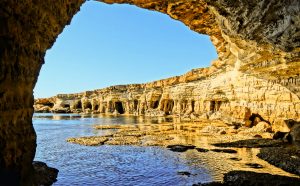
Cape Greco National Forest Park sits on the southeastern tip of Cyprus between the resort towns of Ayia Napa and Protaras. This protected area covers 385 hectares of dramatic coastal landscape where limestone cliffs drop into clear Mediterranean waters. The park opened in 1993 and remains free to visit 24 hours a day throughout the year. chooseyourcyprus-com The park features white limestone cliffs carved by wind and waves over thousands of years. These geological formations created numerous sea caves, natural rock bridges, and coastal platforms. The most famous rock formation is Kamara tou Koraka, a natural arch that stands 50 feet high and 23 feet wide. Erosion continues to shape this landmark, though roots from plants have unfortunately accelerated the process in recent years. The coastline offers crystal-clear water with visibility reaching up to 40 meters in good conditions. Sea temperatures range from 16 degrees Celsius in winter to 28 degrees Celsius in summer. These conditions combined with the rocky underwater landscape attract divers and snorkelers from across the island. Important Bird Area Status BirdLife International designated Cape Greco as an Important Bird Area in 2009 because it serves as a key migration site for thousands of birds traveling between Europe and Africa. The cape creates a migratory bottleneck where birds concentrate before crossing to or from the Mediterranean coast.…

Read more