Explore Cyprus with Our Interactive Map

Explore our top stories and discover ideas worth your time.

Vouni Palace in Cyprus

Vouni Palace in Cyprus

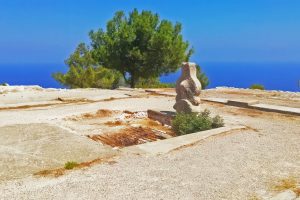
Perched on a rocky hilltop 250 meters above the Mediterranean Sea, the ruins of Vouni Palace stand as a remarkable architectural anomaly in ancient Cyprus. This site represents the only known example of Persian palace design not just on the island but throughout the entire eastern Mediterranean, built during one of history's most intense power struggles between two great civilizations. visitnorthcyprus-com Historical Background Around 500 BC, Cyprus found itself caught in the crossfire of the great wars between the Persian Empire and the Greek city-states. The island's ten kingdoms split into opposing camps, with some supporting the Persians and others backing the Greeks. This division led to bitter conflicts across Cyprus, on both land and sea. google-com The ancient city of Soli, located near modern Lefke on the northwest coast, firmly supported the Greek cause. This position threatened Marion, a nearby pro-Persian kingdom situated close to present-day Polis. King Doxandros of Marion, a ruler loyal to the Persian Empire, decided to take action against his pro-Greek neighbor. In 500 BC, Doxandros established a military settlement on a strategic hill overlooking Soli. The location was perfect for surveillance. From this elevated position, Persian forces could monitor all sea traffic along the coast and observe every activity in the city below. What began as a simple military outpost would transform into one…

Read more
Cyprus Fishing Village Communities

Cyprus Fishing Village Communities

Along the Cypriot coast, fishing was never simply a job carried out at sea and forgotten once boats returned to shore. It was a shared way of life that shaped villages, relationships, and daily rhythm. In small coastal communities, fishing organised how people worked, ate, celebrated, and supported one another. Boats and nets mattered, but cooperation mattered more. Understanding Cyprus’s fishing villages means looking beyond catches and techniques to the social systems that grew around them and quietly endured. Adobe-Stock-com Villages Built Around Shared Work Community-based fishing villages developed where fishing was not an individual pursuit but a collective responsibility. Boats were small, crews were familiar, and labour depended on trust rather than contracts. Knowledge, tools, and effort were shared because survival demanded it. Cyprus’s coastline encouraged this structure. Shallow nearshore waters, sheltered bays, and predictable conditions suited small boats operated by families and neighbours. Fishing rarely rewarded isolation. Success came from working together, coordinating timing, and respecting unwritten rules shaped by experience. In these villages, fishing was not separate from life. It was life. A Way of Living Passed Down, Not Designed The roots of Cyprus’s fishing villages stretch back thousands of years. Archaeological evidence shows coastal communities relying on the sea from the Neolithic and Bronze Ages onward. Early fishers used simple vessels and local materials, learning quickly…

Read more
Cyprus City Kingdoms

Cyprus City Kingdoms

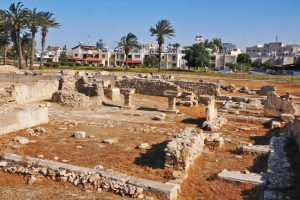
For over 3,000 years, Cyprus was home to powerful independent city-kingdoms that controlled trade routes, mined copper, and blended Greek, Phoenician, and local cultures into something uniquely Cypriot. These ancient cities left behind spectacular ruins - theaters still hosting performances, mosaic-floored villas, and temple foundations - that tell the story of a small island that punched far above its weight in the ancient world. A Patchwork of Powerful Cities Unlike many ancient lands ruled by a single king or empire, Cyprus developed as a collection of independent city-kingdoms. Each coastal city controlled its surrounding territory, built its own temples and palaces, minted its own coins, and conducted its own diplomacy with the great powers of Egypt, Persia, and Greece. worldhistory-org At its height during the Iron Age (around 1000-300 BC), Cyprus had about a dozen of these city-kingdoms. Names like Kourion, Kition, Salamis, and Paphos appeared in ancient texts and on diplomatic correspondence. Some were founded by Greek colonists, others by Phoenician traders, but all developed distinctly Cypriot identities that blended Eastern and Western influences in architecture, religion, and daily life. From Bronze Age Towns to Iron Age Kingdoms Cyprus's city-kingdoms emerged from earlier Bronze Age settlements that had grown wealthy from copper mining and Mediterranean trade. By 1600-1050 BC, the island had become a crucial hub connecting the civilizations…

Read more