Necropolises and burial grounds

Royal Tombs of Tamassos In Cyprus

Royal Tombs of Tamassos In Cyprus

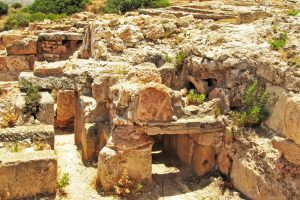
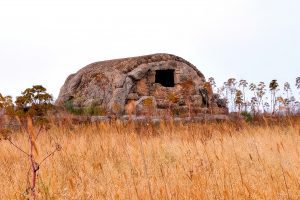
Southwest of Nicosia, near the modern village of Politiko, stand two monumental burial chambers that tell the story of ancient Cyprus's wealthiest inland kingdom. The Royal Tombs of Tamassos represent the height of 6th century BCE Cypriot architecture and demonstrate the immense prosperity that copper mining brought to this ancient city-kingdom. These tombs, carved from limestone blocks and built to resemble wooden houses, remain among the most impressive examples of pre-Hellenistic burial architecture on the island. The Royal Tombs of Tamassos are two monumental burial chambers constructed in the mid-6th century BCE. They belonged to the local rulers or elite aristocrats of the ancient city-kingdom of Tamassos, one of the ten major kingdoms of ancient Cyprus. The tombs were built…

Read more
Deneia Necropolis Cyprus Bronze Age Site

Deneia Necropolis Cyprus Bronze Age Site

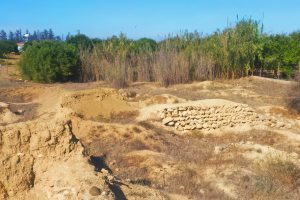
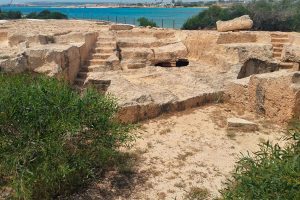
Just southeast of the modern village of Deneia in the Nicosia district lies one of Cyprus's most significant Bronze Age burial grounds. This ancient necropolis contains over 1,250 tombs that document nearly a thousand years of funerary practice, from approximately 2500 BCE through 1650 BCE, making it among the most extensively used cemeteries in prehistoric Cyprus. The Deneia necropolis represents an extraordinary concentration of chamber tombs carved into natural rock during the Early and Middle Bronze Age periods. Unlike many smaller cemeteries scattered across Cyprus that served individual villages, Deneia appears to have functioned as a regional burial ground that drew communities from a wider area. The tombs follow the standard Bronze Age design, with a dromos or entrance passage…

Read more
Makronissos Tombs

Makronissos Tombs

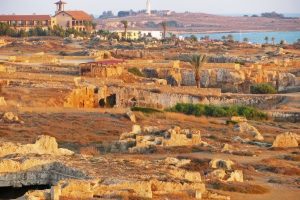
Carved into solid rock on a small peninsula west of Ayia Napa, the Makronissos Tombs are a window into ancient Cyprus. These 19 underground burial chambers date back over 2,000 years and reveal how people lived, died, and honored their dead during the Hellenistic and Roman periods. The Makronissos Tombs form an ancient necropolis, a city of the dead, where families buried their relatives between the 4th century BCE and the 4th century CE. Each tomb consists of a stepped pathway that descends into the rock, leading to a rectangular chamber sealed by stone slabs. Inside, the chambers feature three stone benches carved along the walls and a central rectangular trench slightly lower than the floor. The site also includes…

Read more
Vouni Necropolis

Vouni Necropolis

On gentle slopes near the medieval abbey of Bellapais in the Turkish-occupied part of Cyprus sits an extensive Bronze Age cemetery known to the world almost exclusively through its dead. The Vounous necropolis contains 164 rock-cut chamber tombs that served an unknown settlement for nearly five centuries, from approximately 2500 to 2000 BCE, preserving one of the finest collections of prehistoric pottery ever discovered on the island. Vounous presents archaeologists with an unusual challenge. Despite extensive searches that began in the 1930s and continue sporadically today, the settlement that used this cemetery has never been located. The site sits somewhere between the villages of Ozanköy and Çatalköy in the Kyrenia region, but the homes, workshops, and temples of the people…

Read more
Toumba tou Skourou

Toumba tou Skourou

Near the town of Morphou in northwestern Cyprus, an artificial hill once rose from the fertile plain where the Ovgos River flows toward the sea. For over 600 years during the Bronze Age, this spot was home to potters who made beautiful ceramics, copper workers who processed metal from nearby mines, and families who buried their dead in tombs cut into the rock. Bulldozers destroyed much of the site before archaeologists could study it, but what they found in three short years changed how we understand Bronze Age Cyprus. Historical Background Toumba tou Skourou was a Late Bronze Age settlement and cemetery located 4 kilometers from central Morphou on Cyprus's northwestern coast. The name means "Mound of Darkness" in Greek,…

Read more
Tombs of the Kings

Tombs of the Kings

The Tombs of the Kings is a large necropolis that served the ancient city of Nea Paphos from the 3rd century BCE to the 3rd century CE. The site covers approximately 1.2 square kilometers in the northwestern part of the city, just outside the ancient fortifications. Eight major tomb complexes have been excavated, along with numerous smaller burial chambers. These monuments were built for Ptolemaic officials and aristocratic families who governed Cyprus during the Hellenistic period. The royal institution had been abolished in 312 BCE, so no actual kings were buried here. The name comes purely from the impressive scale and elaborate architecture of the tombs themselves. When early visitors saw these underground structures with their Doric columns and painted…

Read more
Agia Paraskevi Necropolis

Agia Paraskevi Necropolis

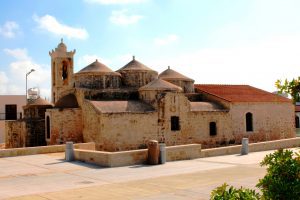
The Agia Paraskevi necropolis is an extensive Bronze Age burial ground located approximately half a mile north of the Church of Agia Paraskevi in the Nicosia district. The site occupies the edge of a plateau southwest of Cyprus's modern capital. It takes its name from the nearby Byzantine church. This cemetery was used continuously throughout the Early and Middle Bronze Age periods, roughly from 2400 BCE to 1100 BCE. The site contains hundreds of rock-cut chamber tombs where ancient communities buried their dead along with pottery, tools, jewelry, and other grave goods. These artifacts provide detailed information about how Cypriots lived, traded, and organized their societies during prehistoric times. The necropolis is particularly important because it represents the burial ground…

Read more
Phaneromeni Necropolis Larnaca

Phaneromeni Necropolis Larnaca

Beneath the streets and churches of modern Larnaca lies a network of ancient tombs that gave the city its name. The Phaneromeni necropolis represents a vast burial ground used for over 1,500 years, from the Late Bronze Age through the Phoenician and Hellenistic periods, preserving layers of history beneath one of Cyprus's oldest continuously inhabited cities. The name Larnaca comes from the ancient Greek word larnax, meaning sarcophagus or stone coffin. This etymology directly reflects the thousands of tombs and burial chests discovered throughout the city. An American consul in the late 19th century claimed to have explored more than 3,000 tombs in the Larnaca area, and archaeological work continues to uncover more burial sites with each new construction project.…

Read more
Salamis Necropolis Royal Tombs

Salamis Necropolis Royal Tombs

The necropolis consists of two distinct burial areas that reflect ancient social hierarchy. The Royal Tombs, sometimes called the Tombs of the Kings, hold nine massive built chamber tombs where nobility and wealthy elites were buried with spectacular ceremony. These tombs feature long dromos passages, monumental entrances called propylaea, and burial chambers constructed from enormous limestone blocks. About 400 meters away sits the Cellarka cemetery, a network of over 100 smaller rock-cut chamber tombs carved directly into hard limestone. These served the general population of Salamis from the 7th through the 4th centuries BCE. The name Cellarka comes from the Greek word for cells, describing how closely the tombs cluster together. Historical Background According to Greek legend, Teucer founded Salamis…

Read more