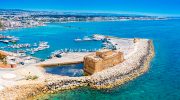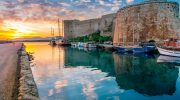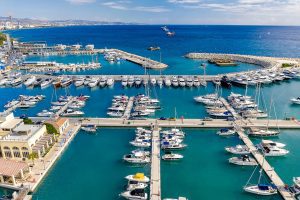
Cyprus operates as one of the Mediterranean’s most important maritime hubs, with ports handling approximately 4.7 million tonnes of cargo annually and the island controlling the third largest merchant fleet in the European Union. The strategic location at the crossroads of Europe, Asia, and Africa has made Cyprus a natural transhipment center for European-Far East trade routes.
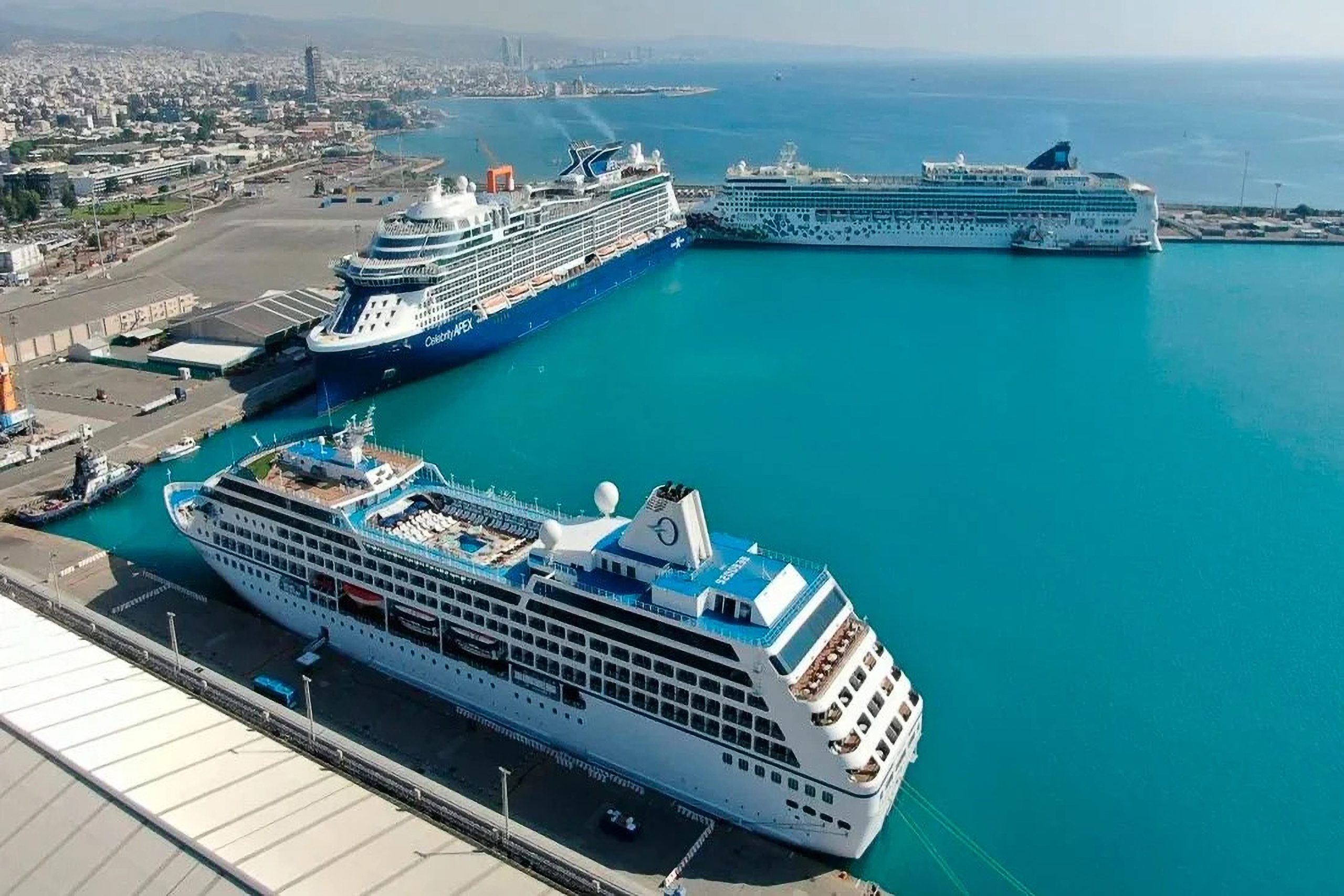
Limassol serves as the main port, processing around 90 percent of the island’s exports and imports with capacity for 500,000 twenty-foot equivalent units. The Cyprus ship registry ranks eleventh globally with over 2,200 ocean vessels totaling more than 25 million gross tons.
Limassol city has evolved into Europe’s largest third-party ship management center, with over 200 shipping companies managing approximately 20 percent of the world’s third-party fleet. This concentration of maritime expertise contributes over one billion euros annually to Cyprus’s economy, representing approximately seven percent of GDP.
The Main Ports That Drive Cyprus Trade
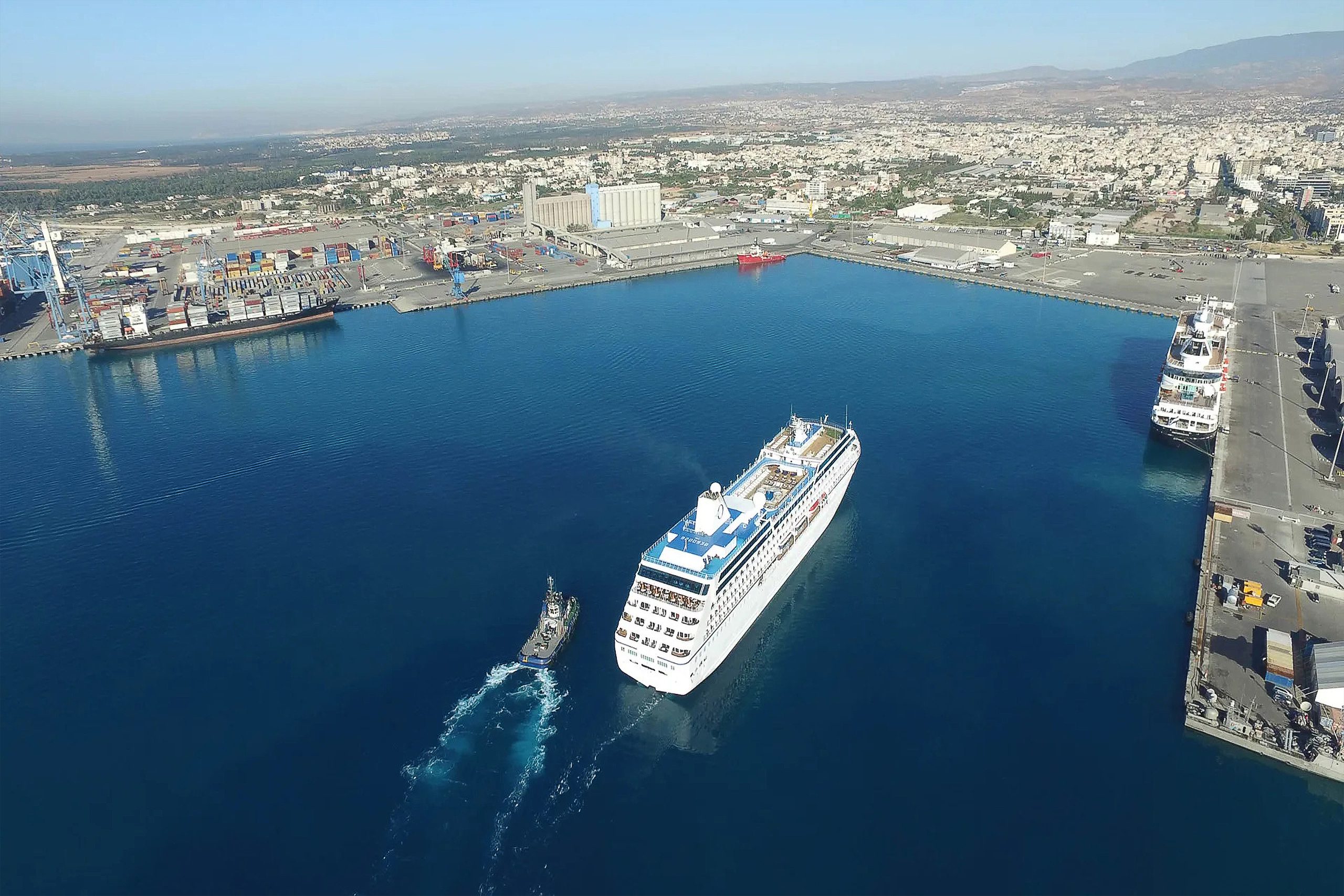
Limassol Port dominates Cyprus’s maritime infrastructure as the busiest facility in the Mediterranean transit trade. Built after the 1974 Turkish invasion left Famagusta Port inaccessible, Limassol handles containers, iron, roll-on roll-off cargo, dry and liquid bulk, timber, and ferry passengers. Around 4,000 ships, 418,000 TEU, and 381,000 passengers pass through annually. The port can accommodate vessels up to 250 meters in length at berths with 14 meters of water depth. Access occurs through an approach channel 15 meters deep and 150 meters wide between two breakwaters.
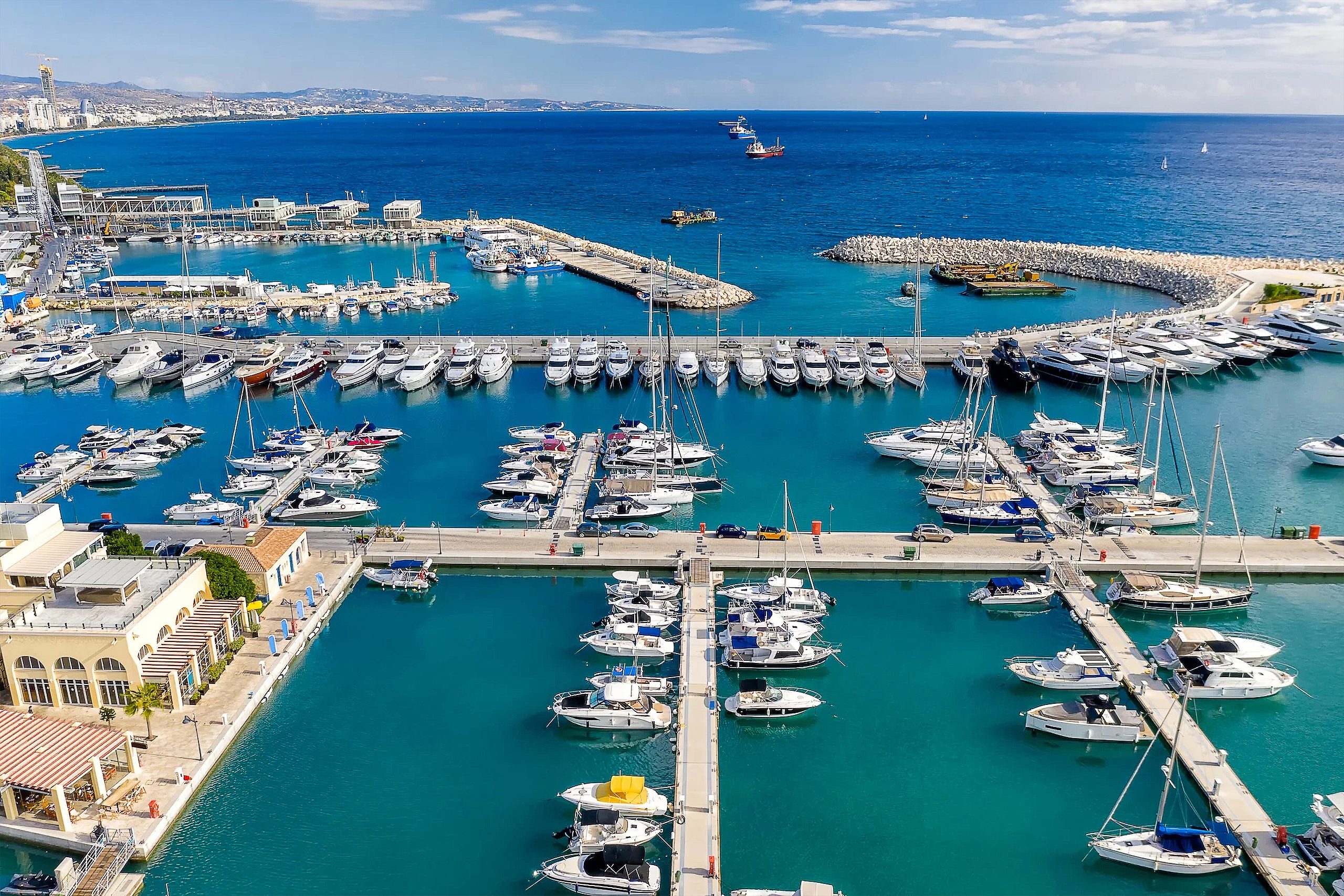
DP World Limassol received a 25-year concession in February 2017 to exclusively operate the multipurpose port and cruise terminal. The company has invested heavily across all aspects including offshore oil and gas services, general cargo, roll-on roll-off operations, and the cruise sector. The new 7,000 square meter passenger terminal opened in May 2018, enabling the largest cruise ships to dock and offering comprehensive services for transit and homeport operations. P&O Maritime Cyprus was awarded a 15-year concession to provide marine services. The port generates approximately two billion euros for state coffers over the concession period.
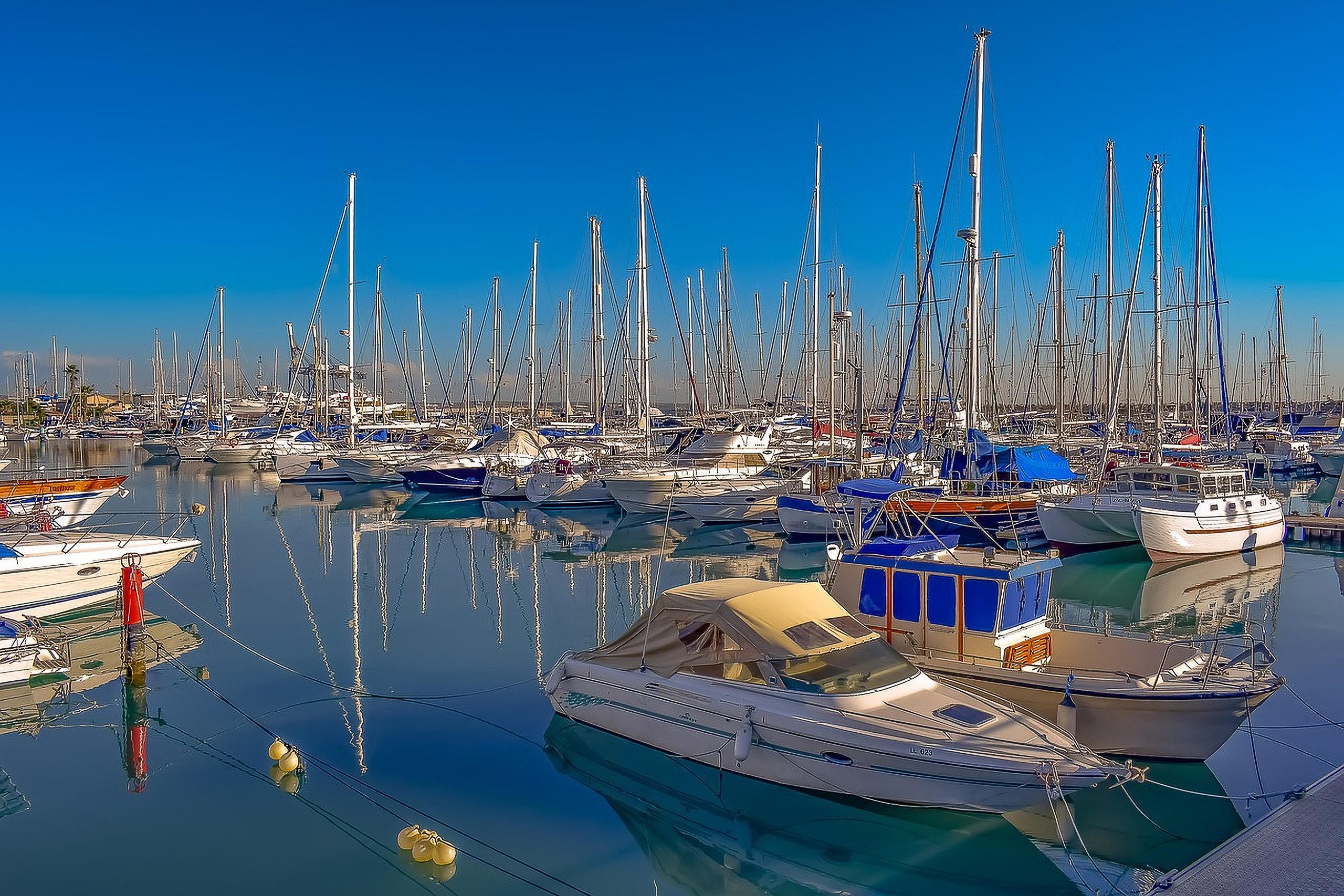
Larnaca Port ranks as Cyprus’s second busiest facility, located just two kilometers from the town center and six kilometers from the island’s largest airport. The multipurpose port covers 445,000 square meters of land and 250,000 square meters of sea area with capacity for approximately 250,000 TEU. The North Quay extends 326 meters with a 10-meter draft and features a crane on rails. The South Quay runs 340 meters with a 12-meter draft, equipped with a similar crane and a ramp suitable for roll-on roll-off ships. Three warehouses provide cargo storage. Larnaca handles containers, motor cars, petroleum products, timber, animal feed, iron, grains, and fertilizers.
The troubled 1.2 billion euro redevelopment of Larnaca port and marina represents Cyprus’s most ambitious infrastructure project. The government awarded the concession to Cypriot-Israeli consortium Kition Ocean Holdings in 2020, but terminated the agreement in May 2024 following financing problems and contractual breaches. The Cyprus Ports Authority currently administers the port while Greece’s Hellenic Republic Asset Development Fund prepares a new masterplan. Advisers recommended in February 2026 that the port and marina proceed as separate projects rather than unified development. Despite ongoing issues, Larnaca continues servicing local dry bulk cargoes, general cargo, gypsum exports via conveyor belts, and monthly calls from a pure car carrier line.
The Ship Registry That Powers Maritime Success
The Cyprus ship registry achieved remarkable growth from just two vessels totaling 96 gross tons in 1963 to over 2,200 ocean vessels exceeding 25 million gross tons by 2024. The fleet expanded 18 percent from September 2023 through 2024, with 198 newly registered vessels. This growth reflects Cyprus’s position as one of only two open registries within the European Union, allowing non-Cypriot citizens to register ships under the Cyprus flag provided they meet specific ownership requirements.

The registry maintains a reputation as a flag of progress and quality through strict adherence to safety and security standards. Cyprus holds white list status under both the Paris and Tokyo Memoranda of Understanding, resulting in fewer port state control inspections and reduced delays. The Department of Merchant Shipping has modernized operations with extended hours, overseas offices in Europe and the United States, and advanced computer systems that make Cyprus one of the most technologically advanced registries globally.
More than 50 percent of vessel shares must be owned by Cypriot citizens or citizens of EU member states for registration eligibility. Alternatively, corporations can register vessels if 100 percent of shares are owned by companies established under Cyprus law with registered offices in Cyprus, or by companies from other EU states that have appointed authorized representatives in Cyprus. The legislation allows six-month provisional registration prior to permanent registration, providing time to complete administrative formalities from previous flag states.
The Tonnage Tax System That Attracts Ship Owners
Cyprus implemented its tonnage tax system in 2010 following European Commission approval as compatible with EU state aid guidelines. This simplified tax regime applies to qualifying owners of Cyprus and foreign ships, charterers, and ship managers performing qualifying activities. Companies pay annual tonnage tax calculated on net tonnage of qualifying ships at scaled rates rather than traditional corporate income tax on profits.
The system offers substantial benefits including no tax on shipping profits from qualifying activities, no tax on dividends paid from shipping profits, and no tax on wages or benefits of seafarers on qualifying Cyprus flag ships. Tonnage tax for vessels laid up or inoperative for at least three consecutive months may be reduced by 75 percent under certain conditions. Companies registered under the tonnage tax system increased 15 percent in 2024, demonstrating continued attractiveness.
Cyprus provides green incentives for shipowners whose vessels achieve effective greenhouse gas emission reductions. These include reductions of up to 30 percent on annual tonnage tax for vessels with significant emission reductions and for use of alternative fuels. In 2024, 15 companies benefited from these incentives, resulting in total tax reductions of 100,787 euros for 68 vessels. This aligns Cyprus policies with International Maritime Organization decarbonization objectives.
Ship Management Leadership in Limassol
Limassol has emerged as the heart of Cyprus’s maritime cluster and Europe’s largest third-party ship management center. Over 200 companies operate from Limassol offering comprehensive services including ship ownership, ship management, chartering, shipping insurance, shipping finance, brokerage, bunkering, ballast water system production, marine training, and maritime technology. Some of the world’s largest ship management companies maintain headquarters in Limassol.
Companies based in Cyprus manage approximately 20 percent of the world’s third-party ship management market, controlling around 3,300 ships under various flags with combined net tonnage of 47 million. Among ship management companies operating from Cyprus, 87 percent are controlled by EU interests. These companies employ almost 40,000 seafarers, of whom 5,000 are EU nationals. Shore-based employment reaches approximately 4,500 people, representing two percent of Cyprus’s total workforce.
Importance of Cyprus in Global Shipping
Cyprus plays a critical role in the international shipping industry due to its strategic location and favorable maritime legislation. The country’s shipping registry is the third largest in the European Union and the eleventh worldwide. Cyprus has become a maritime hub, attracting major shipping companies by offering competitive taxation systems and comprehensive support services. The regulatory framework complies with all major international conventions, ensuring safety and environmental protection standards.
Additionally, the Cypriot government maintains strong cooperation with maritime stakeholders, promoting innovation and digitalization, which strengthens its competitive edge. Cyprus is also a committed member of the International Maritime Organization, actively contributing to shaping global maritime policies. These efforts have made Cyprus an attractive destination for shipowners and operators looking for a reliable base to manage their fleets. The country’s substantial infrastructure and skilled workforce further cement its reputation as one of the leading players in global shipping.