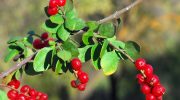
High on a sun-bleached limestone cliff in the Akamas or along a rocky gulley near Paphos, you might spot a graceful evergreen shrub with deep-green leaves cascading like a living curtain. In late summer its branches glow with clusters of bright red berries that shine like tiny rubies against the rock. This is Bosea cypria, a quiet but extraordinary survivor that has clung to the island’s rugged edges for millions of years.
An Ancient Shrub from the Amaranth Family
Bosea cypria belongs to the Amaranthaceae family – the same group that gives us spinach, beetroot and colourful garden amaranths. Unlike most of its relatives, which are soft-stemmed herbs, this species is a woody evergreen shrub, one of only three living members of the genus Bosea worldwide. In Cyprus it grows 1–2 metres tall, highly branched, often pendulous, seeming to drape dramatically from cliffs, old stone walls or even tree trunks.
A Living Fossil from the Ancient Tethys Sea
This plant is a true botanical relic. Its ancestors once grew along the shores of the vast Tethys Sea during the Tertiary period, long before the Mediterranean took its present form. As continents drifted and the sea shrank, most Bosea species disappeared; today only three remain — one in Cyprus, one in the Canary Islands and one in the north-west Himalayas.
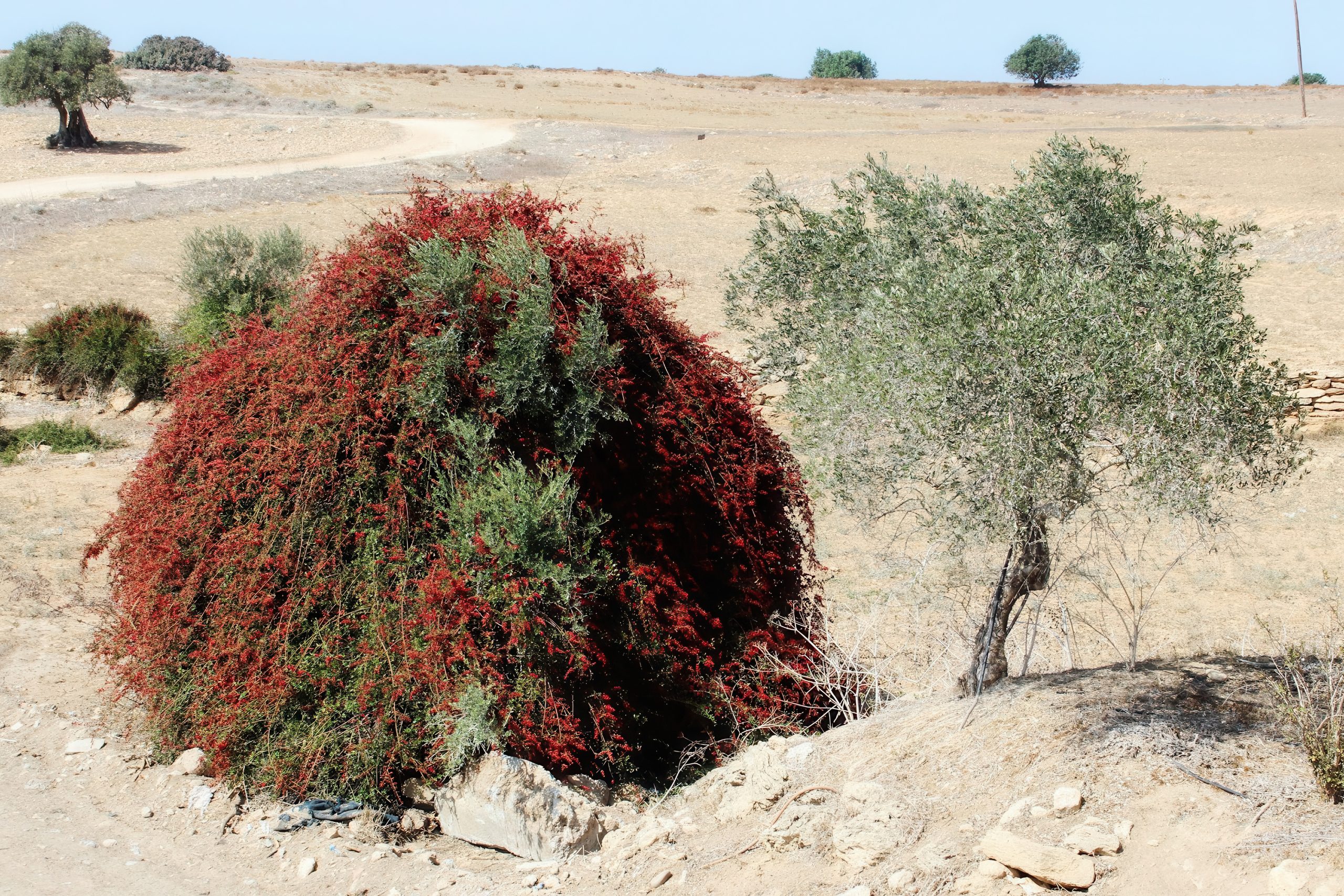
Early botanists such as Pierre Edmond Boissier described it in the 19th century, but it has been part of Cyprus’s wild landscape far longer. Early forest reports and modern surveys highlight its role in the island’s unique flora, while its presence in the LIFE-ArgOassis project underlines its value for restoring degraded land today.
Graceful Branches and Ruby Treasures
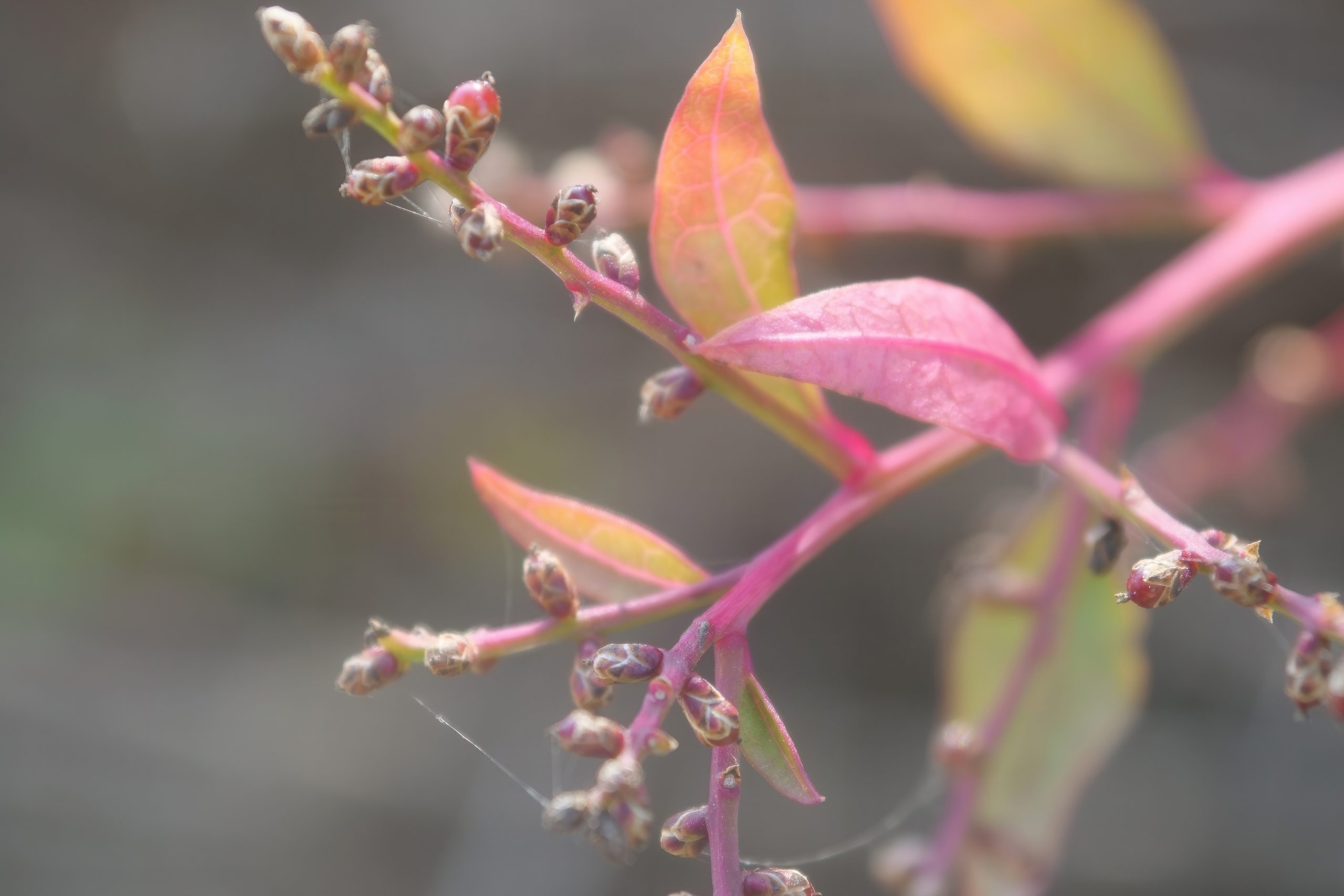
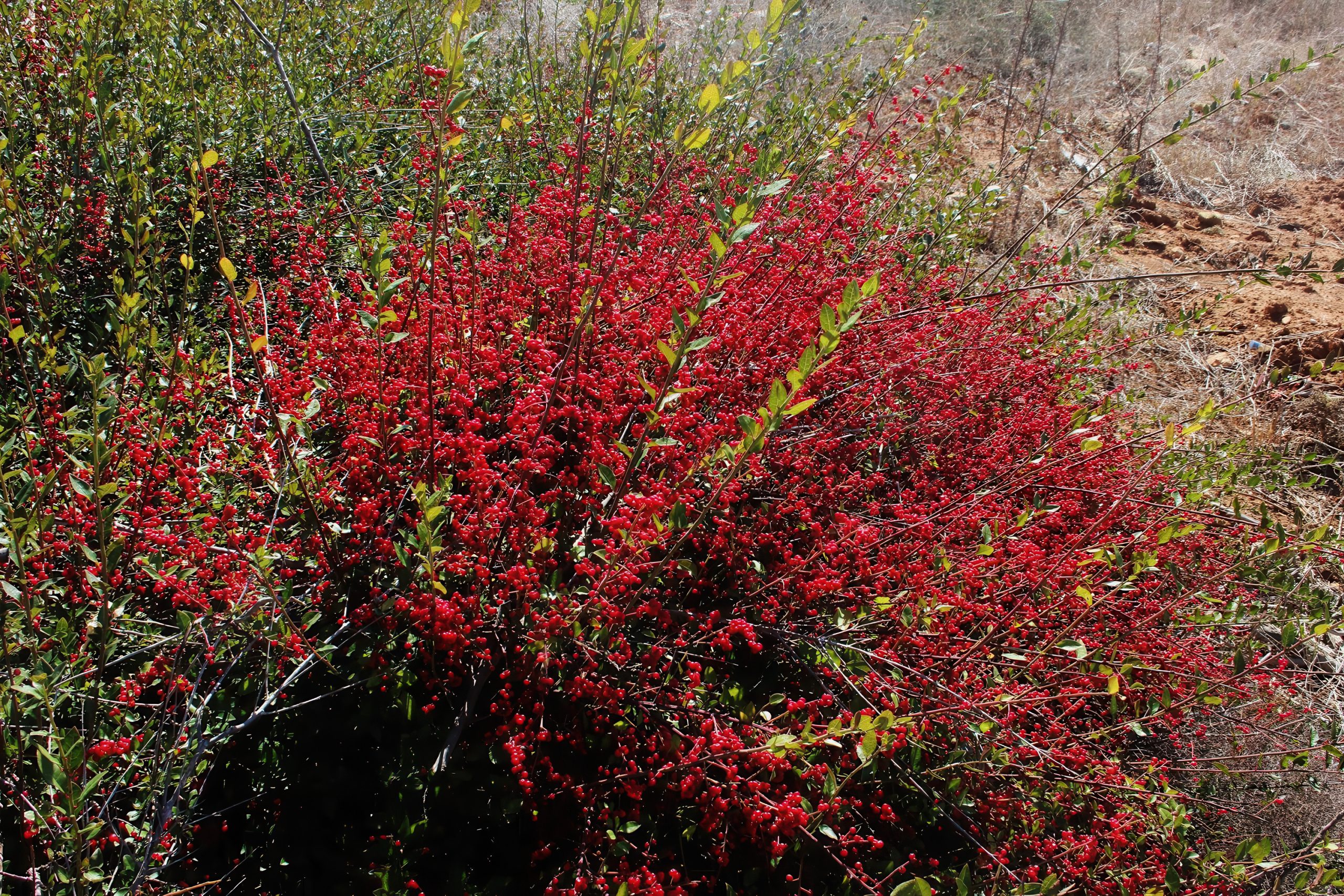
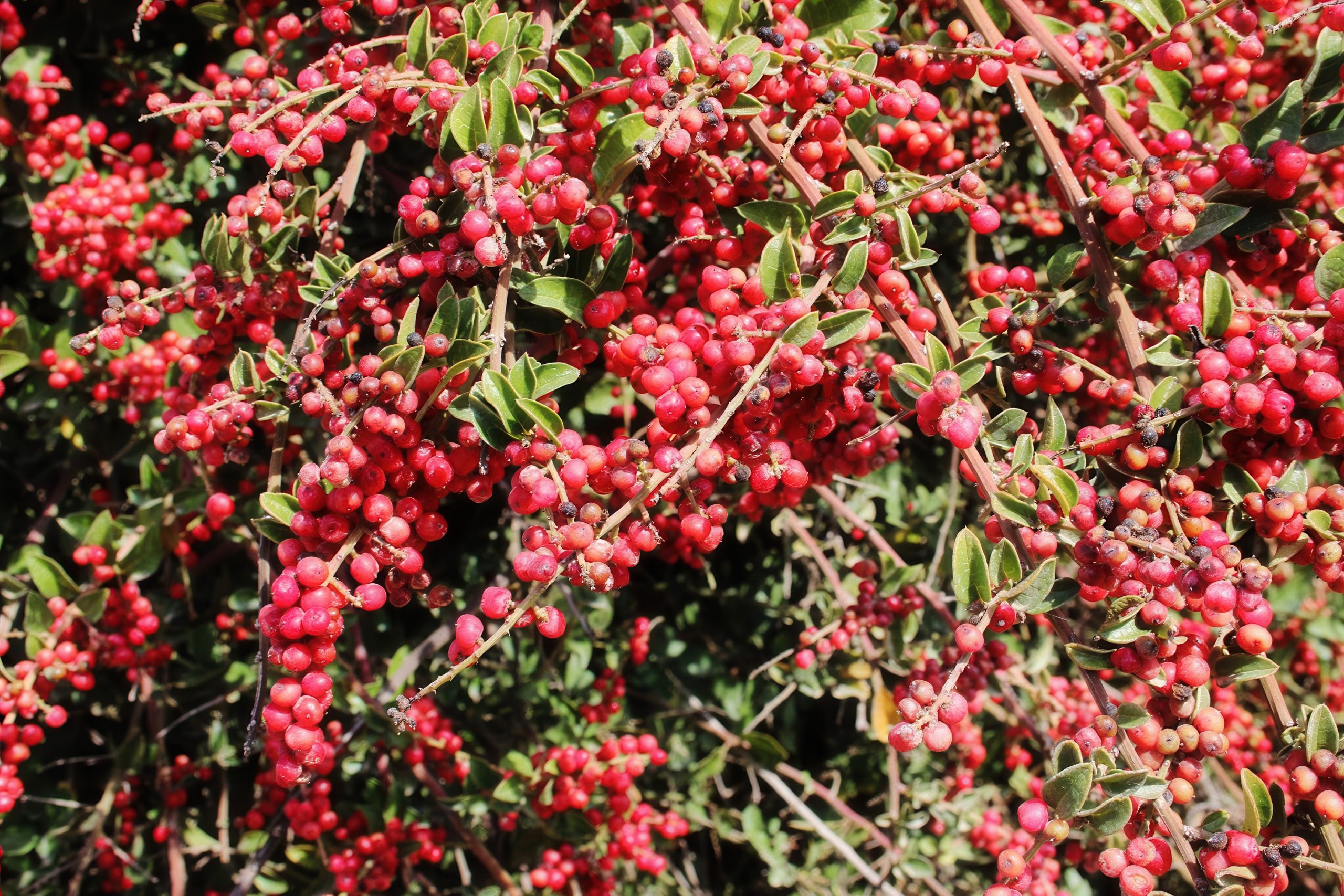
The shrub’s angular, hairless shoots carry opposite, elliptical leaves 2–6 cm long – leathery, dark green (sometimes tinged red) and perfectly suited to the dry Mediterranean climate. From April to July it produces small, inconspicuous green-brown flowers in branched spikes. By late summer the real spectacle appears: globose, fleshy red berries that cover the plant, loved by birds that help scatter the seeds along rocky slopes.
Fun Facts to Share on the Trail
- In the local Cypriot Greek dialect it is called ζουλατζιά (zoulatzia) or ζουλάτζιν – a charming name used only on the island.
- The bright red berries are a favourite snack for local birds, turning the shrub into a living bird-feeder in late summer and autumn.
- As a member of the amaranth family it is unusual for being woody and evergreen – most relatives are soft-stemmed herbs.
- It is one of Cyprus’s true “living fossils,” with close relatives separated by thousands of kilometres, a reminder of how continents have drifted apart over deep time.
- In the LIFE-ArgOassis project it has shown excellent nursery survival (up to 94 %) and is one of the 18 carefully selected species for resilient hedgerow planting in burnt or degraded agricultural land.
Deeper Roots in Cyprus Nature
Botanically, Bosea cypria is perfectly adapted to limestone habitats. Its deep roots anchor it firmly on cliffs and gullies from sea level up to about 600 metres, while its leathery leaves reduce water loss during the long dry summers. In the broader picture of the island’s flora it grows alongside wild olive, pistachio, myrtle and other maquis species, helping stabilise rocky soils and providing cover for insects and small birds.
Living Link to Today’s Cyprus
Today Bosea cypria remains a proud symbol of Cyprus’s remarkable natural heritage. It is found mainly in the western and central regions – Akamas (Avakas Gorge, Kouphes), Peyia, Kritou Terra, Lysos, Episkopi and scattered northern sites. Although not globally threatened on the IUCN Red List, its narrow endemic range makes it a species of special conservation interest; it is protected within Natura 2000 sites and nature reserves. Its selection for the LIFE-ArgOassis hedgerow programme shows how this ancient plant is now helping combat desertification and restore resilience in modern Cyprus.
Experiencing Zoulatzia for Yourself
The best way to meet this special shrub is on foot in the Akamas Peninsula – try the Avakas Gorge trail or the paths around Pegeia and Kritou Terra, where it often drapes gracefully over limestone outcrops. Late spring for the tiny flowers or late summer for the glowing red berries are ideal times. Wear sturdy shoes for the rocky terrain, bring binoculars for close views, and move slowly so you don’t miss the pendulous branches. Local guided walks from the Akamas Visitor Centre or Cyprus botanical groups often highlight it as a star endemic. Always stay on paths to protect the fragile cliff habitats.
Why This Cliff-Hugging Gem Matters
In a world where so many unique plants are under pressure, Bosea cypria stands as a quiet hero rooted in the deep geological past of the Tethys Sea, perfectly at home on our island’s sun-baked cliffs, and now actively helping restore degraded landscapes through the LIFE-ArgOassis project. It connects us to Cyprus’s ancient natural story and reminds us that even the most specialised plants deserve our care. Next time you walk a rocky trail in the west of the island and spot a cascade of green leaves and red jewels clinging to the rock, pause and give thanks for zoulatzia: a true Cypriot treasure that has survived millions of years and still graces our wild places today.