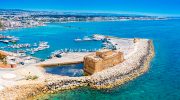
For centuries, Cyprus lived with a constant awareness of the sea. Its position at the crossroads of Europe, the Middle East, and North Africa brought trade, wealth, and cultural exchange, but it also exposed the island to piracy and naval warfare. Ships on the horizon were never neutral. They could mean commerce and connection, or sudden violence and loss. Over time, this uncertainty shaped how Cyprus was built, governed, and defended. Piracy and naval conflict were not interruptions to Cypriot history. They were defining forces.
- An Island That Could Not Be Ignored
- Piracy as a Constant, Not an Exception
- When Naval Warfare Reached the Shore
- Why Cyprus Was So Exposed
- Living With the Threat of the Sea
- Fortresses Built for a Hostile Horizon
- Naval Power Without a Navy
- Details That Reveal the Human Cost
- Cyprus as a Mediterranean Crossroads
- Why This History Still Matters
- An Island Defined by Adaptation
An Island That Could Not Be Ignored
Cyprus sits directly along major east–west Mediterranean sea routes. Any ship moving between the Aegean, the Levant, and Egypt passed close to its shores. This made the island strategically valuable to empires and dangerously attractive to pirates.
Its long coastline offered sheltered bays and natural harbours that were ideal for trade, but equally useful as hiding places for raiders. Cyprus was never isolated from maritime traffic. It was embedded within it, and that visibility made avoidance impossible.
Piracy as a Constant, Not an Exception
Piracy in the eastern Mediterranean did not belong to a single era. From the Bronze Age onward, coastal communities in Cyprus faced the risk of seaborne raids. Archaeological sites such as Maa-Palaeokastro show early attempts to respond, featuring Cyclopean-style walls designed to protect against raiders such as the ‘Sea Peoples’, designed for protection rather than openness.
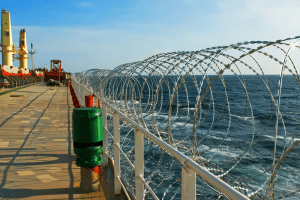
Under Greek and Roman rule, piracy never fully disappeared. Merchant ships carrying copper, wine, olive oil, and grain were high-value targets, especially during periods of political instability. Even strong imperial navies struggled to police vast maritime spaces consistently. Cyprus, close to pirate bases in southern Anatolia and the Levant, remained exposed.
Piracy was not always lawless. At times, raiders operated with the approval of rival states, blurring the line between crime and warfare. What mattered to coastal populations was not the label, but the impact.
When Naval Warfare Reached the Shore
The Byzantine period marked a turning point. From 649 CE onward, Arab naval raids under Mu’awiya I intensified, leading to the Arab-Byzantine Condominium treaty, devastating coastal cities and reshaping settlement patterns across the island. Entire communities moved inland, seeking distance from sudden attacks.
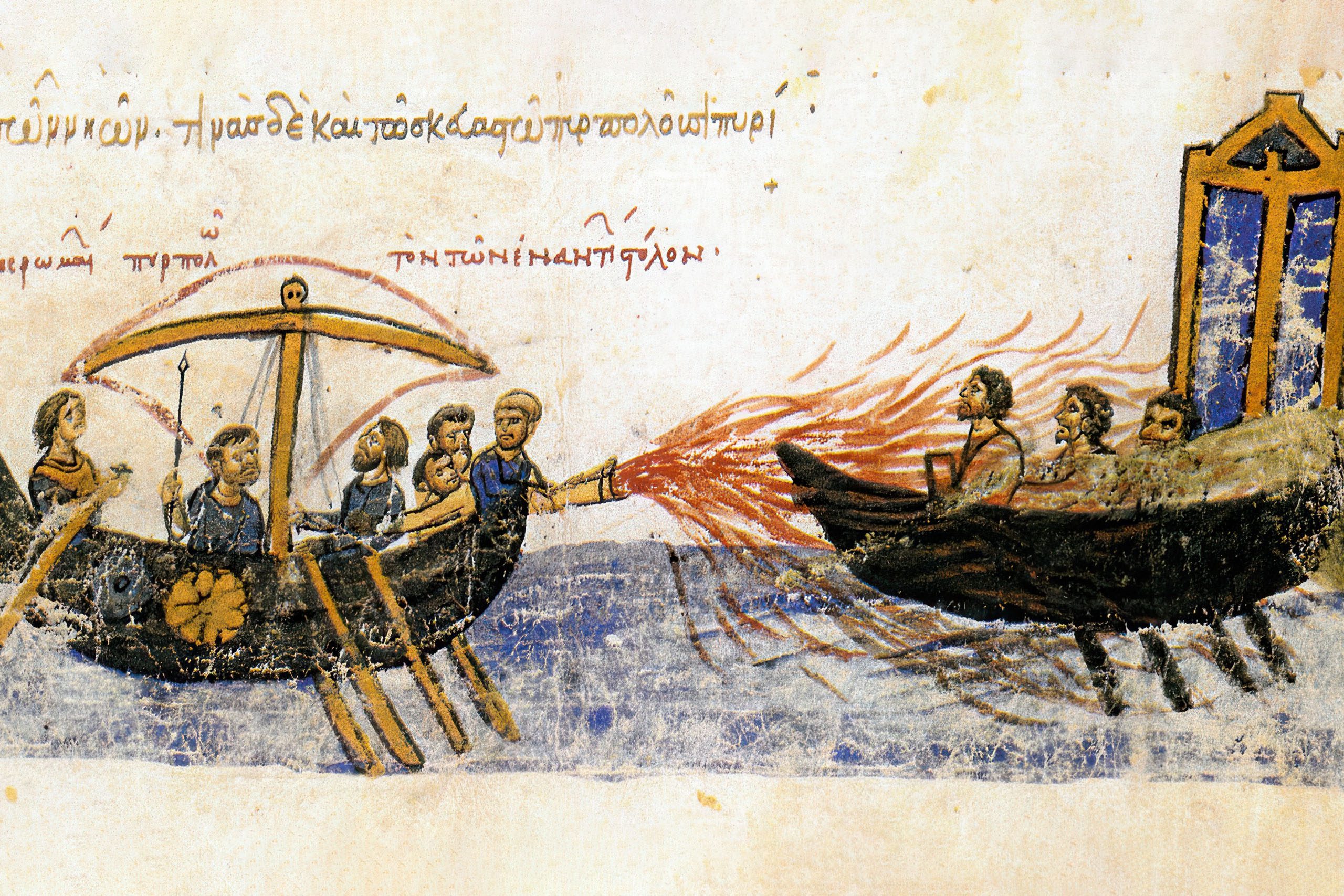
This shift, accelerated by the destruction of the coastal capital Salamis, explains why the capital eventually moved to Nicosia, lies far from the sea. Unlike many Mediterranean societies that anchored power on the coast, Cyprus learned that proximity to the shore could be a liability. Inland space offered time, warning, and a measure of safety.
Medieval Cyprus continued to attract conflict. Crusader states, Genoese merchants, Venetian administrators, and Muslim powers all fought for control of the island. Each struggle reignited pirate activity, whether independent or state-backed, reinforcing a cycle of threat and response.
Why Cyprus Was So Exposed
Several factors combined to make piracy and naval conflict persistent realities:
- Geographic position: Cyprus lay directly between rival power centres
- Economic value: Copper, agriculture, and port revenues drew attention
- Imperial rivalry: Control of Cyprus meant control of sea lanes
- Long coastline: Easy access for both trade and attack
The sea brought opportunity, but it also demanded constant vigilance.
Living With the Threat of the Sea
For ordinary Cypriots, piracy was not an abstract historical concept. Coastal villages faced sudden raids that could result in looting, destruction, or enslavement. Fishermen risked capture, and traders often travelled in convoys to reduce danger.
Fear reshaped daily life. Communities learned to read the horizon, react quickly, and value early warning. Over time, Cypriot society adapted by balancing maritime dependence with defensive distance. The sea was never abandoned, but it was never fully trusted either.
Fortresses Built for a Hostile Horizon
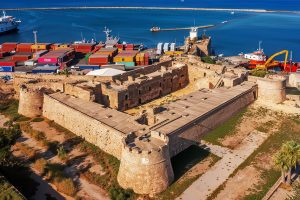
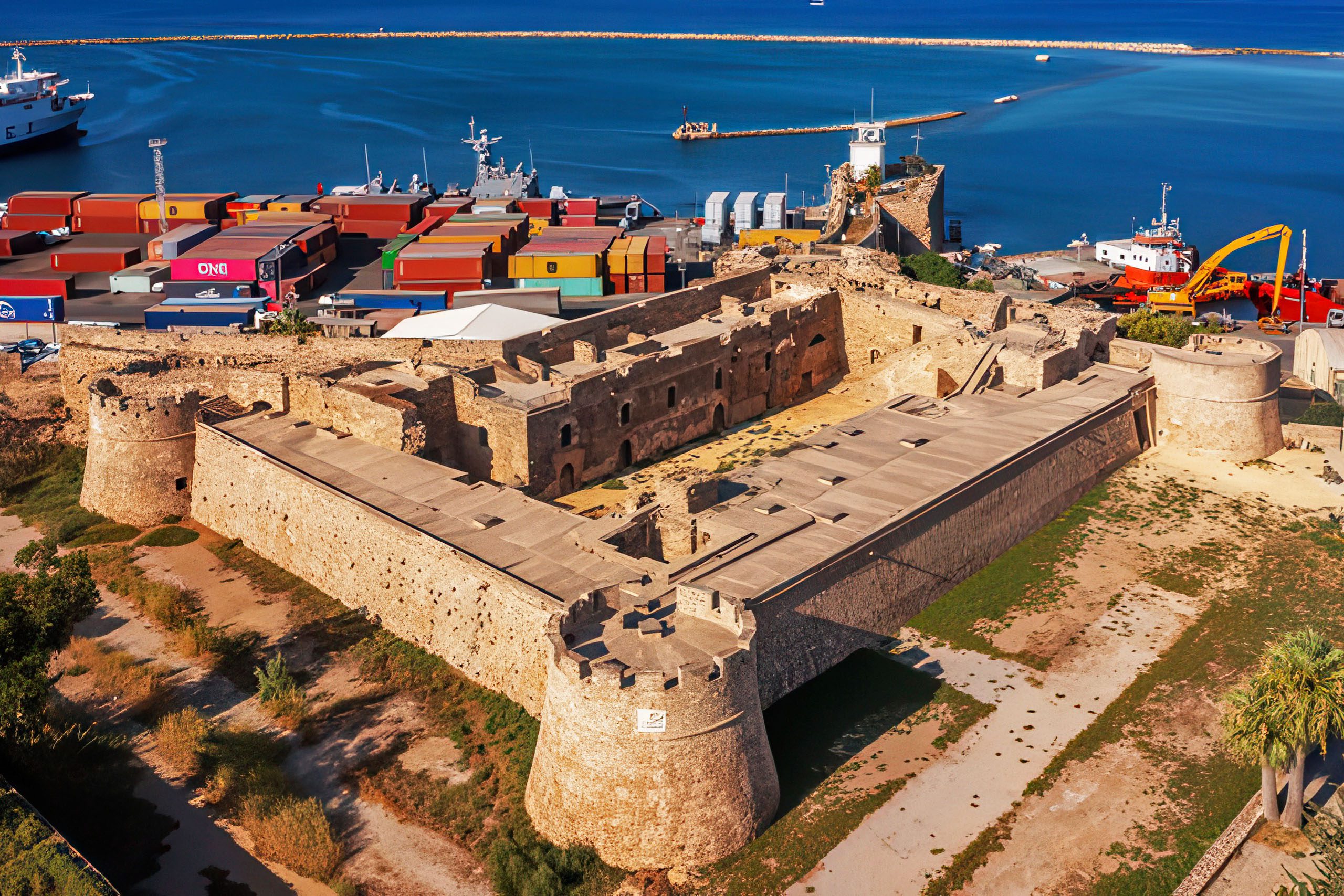
The most visible legacy of piracy and naval conflict is Cyprus’s defensive architecture. Coastal castles guarded harbours, while fortified cities were redesigned to withstand siege and cannon fire.
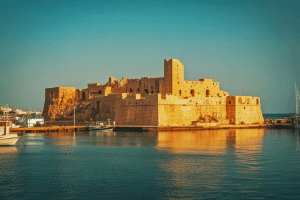
Venetian rule left a particularly strong imprint. Cities such as Famagusta were reshaped with Renaissance artillery defenses, including the innovative Martinengo Bastion and the Othello Castle citadel designed to deflect artillery. These were not decorative structures. They were responses to very real threats from the sea.
Beyond major fortresses, watchtowers formed coastal networks. Positioned on headlands and cliffs, they allowed defenders to spot approaching ships and signal danger inland using smoke or fire. This system bought time, which often meant survival.
Naval Power Without a Navy
Cyprus rarely possessed a strong independent fleet. Instead, its security depended on the naval power of whoever ruled it. Byzantine warships, Venetian galleys, and Ottoman patrols all used Cypriot ports as strategic bases.
Naval strategies focused on escorting merchant vessels, controlling key harbours, and denying pirates safe access to the coast. Yet complete control of the Mediterranean was never possible. Whenever authority weakened, piracy resurfaced.
This imbalance reinforced Cyprus’s defensive mindset. The island learned to assume that protection from the sea was temporary and that resilience had to be built on land.
Details That Reveal the Human Cost
Several historical details underline how deeply piracy shaped life:
- Pirate raids often followed seasonal wind patterns
- Captives were frequently enslaved or ransomed across the Mediterranean
- Some pirates operated under official letters of marque
- Shipwreck evidence suggests abandoned vessels after attacks
These were not isolated incidents. They were part of a long pattern that affected generations.
Cyprus as a Mediterranean Crossroads
Cyprus’s experience with piracy reflects a wider Mediterranean reality. Control of the sea meant power, but that power was always contested. The island became a microcosm of these struggles, absorbing the pressures of empire, trade, and conflict more intensely than most.
Its history shows how geography can shape destiny. Cyprus could not escape the sea, and so it learned to live defensively with it.
Why This History Still Matters
Today, the walls, castles, and inland cities of Cyprus remain physical reminders of a time when survival depended on watching the water. These structures explain more than military history. They explain urban planning, political caution, and cultural memory.
Understanding piracy and naval conflict helps explain why Cyprus developed as it did and why security and maritime control continue to matter in the region. The island’s past was not shaped by isolation, but by exposure.
An Island Defined by Adaptation
Piracy and naval conflict did not break Cyprus. They shaped it. The same sea that connected the island to the wider world also forced it to adapt, defend, and endure.
To understand Cyprus is to understand this balance. The horizon always promised opportunity, but it also demanded readiness. That tension, repeated over centuries, remains one of the island’s most defining characteristics.