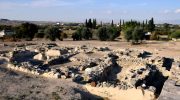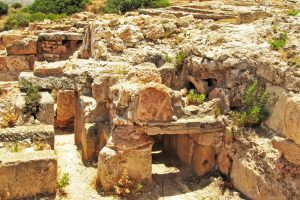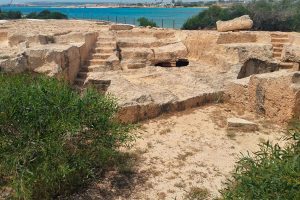
Carved into solid rock on a small peninsula west of Ayia Napa, the Makronissos Tombs are a window into ancient Cyprus. These 19 underground burial chambers date back over 2,000 years and reveal how people lived, died, and honored their dead during the Hellenistic and Roman periods.
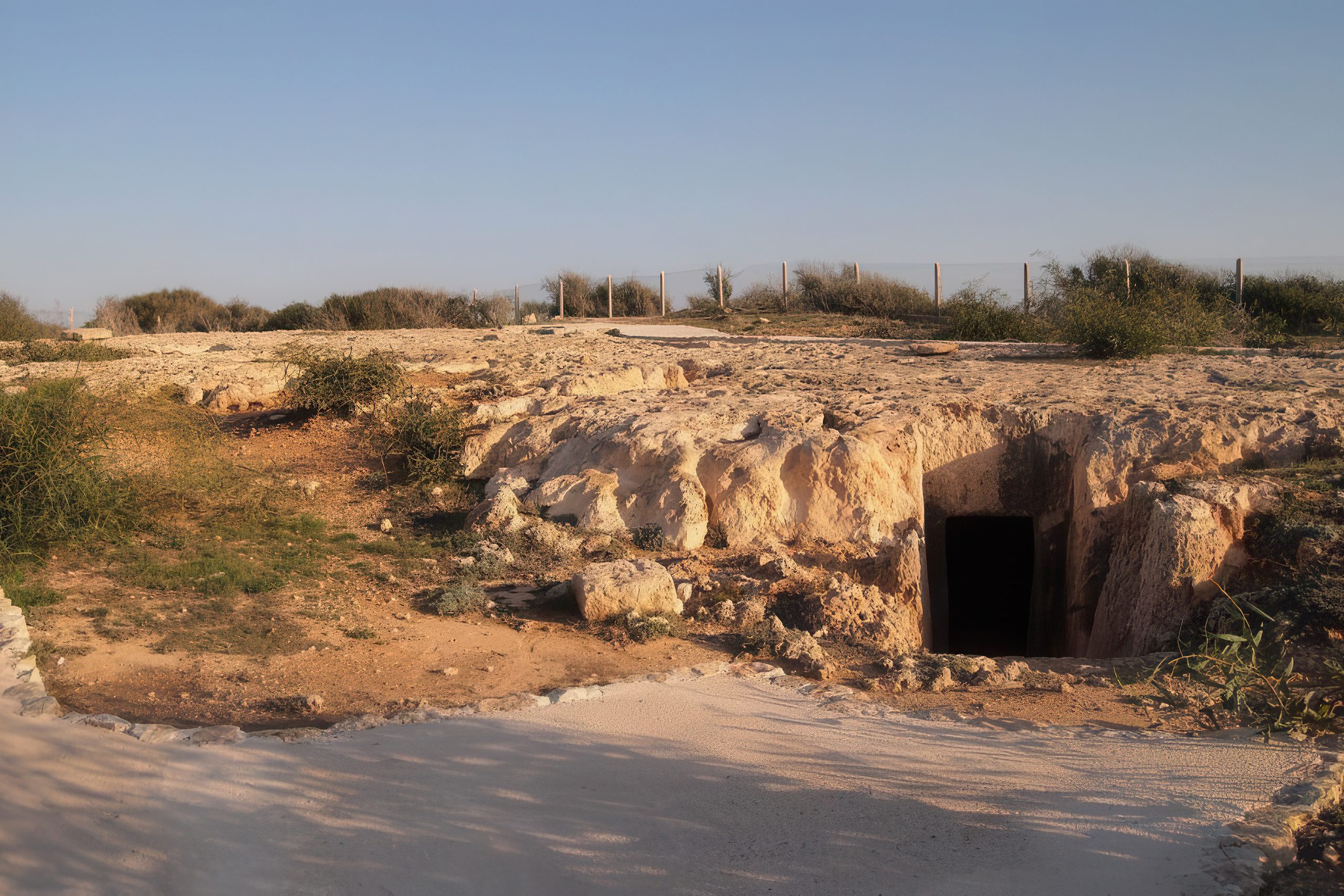
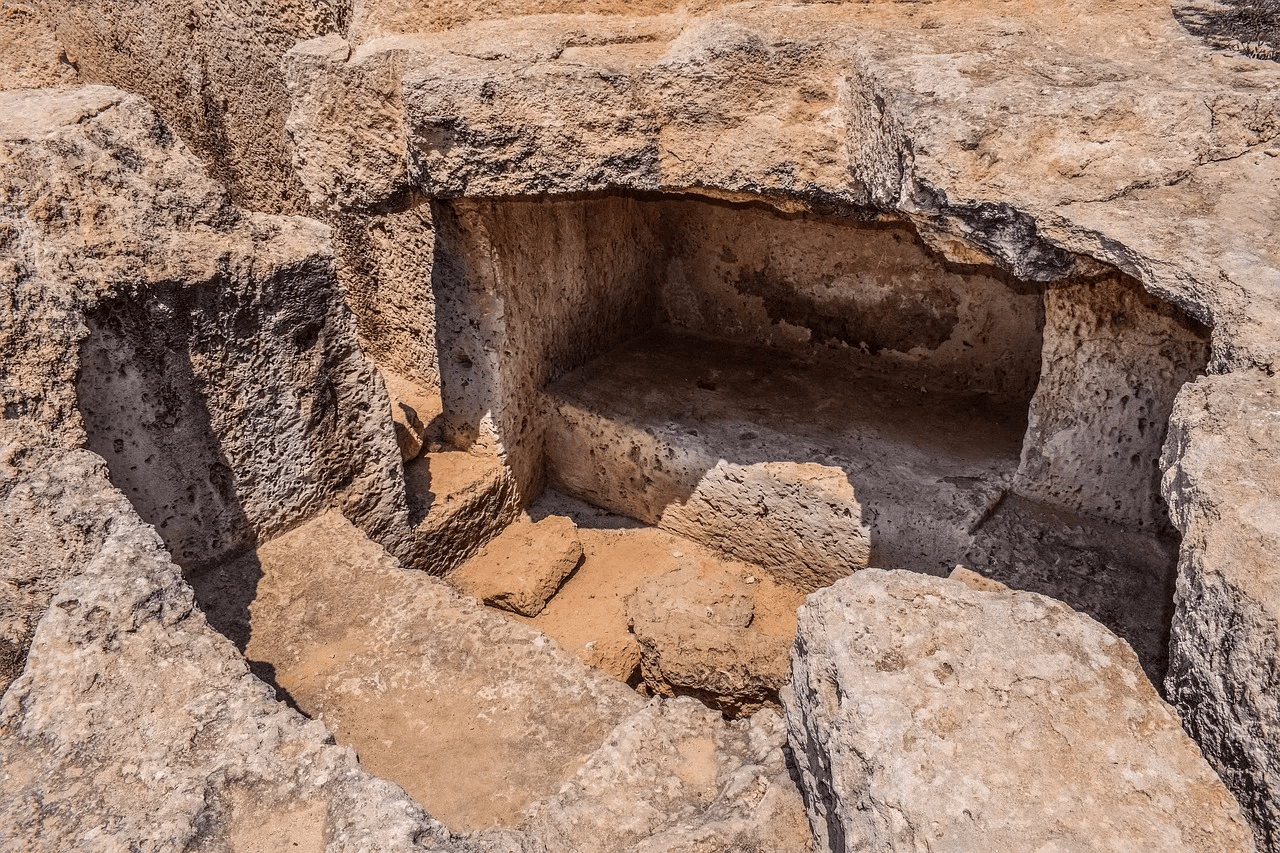
The Makronissos Tombs form an ancient necropolis, a city of the dead, where families buried their relatives between the 4th century BCE and the 4th century CE. Each tomb consists of a stepped pathway that descends into the rock, leading to a rectangular chamber sealed by stone slabs. Inside, the chambers feature three stone benches carved along the walls and a central rectangular trench slightly lower than the floor.
The site also includes a small sanctuary built from large irregular stone blocks and remnants of an ancient quarry that operated nearby. The quarry unfortunately damaged some tombs, but enough survived to tell us about burial practices in ancient Cyprus.
The Ancient Settlement of Thronon
According to historical records, an ancient settlement called Thronon existed in the Ayia Napa area, along with several smaller communities. These settlements thrived until the Early Christian period but were abandoned around the 7th century CE during the Arab raids that swept across the Eastern Mediterranean. The tombs at Makronissos served as the final resting place for people from these communities.
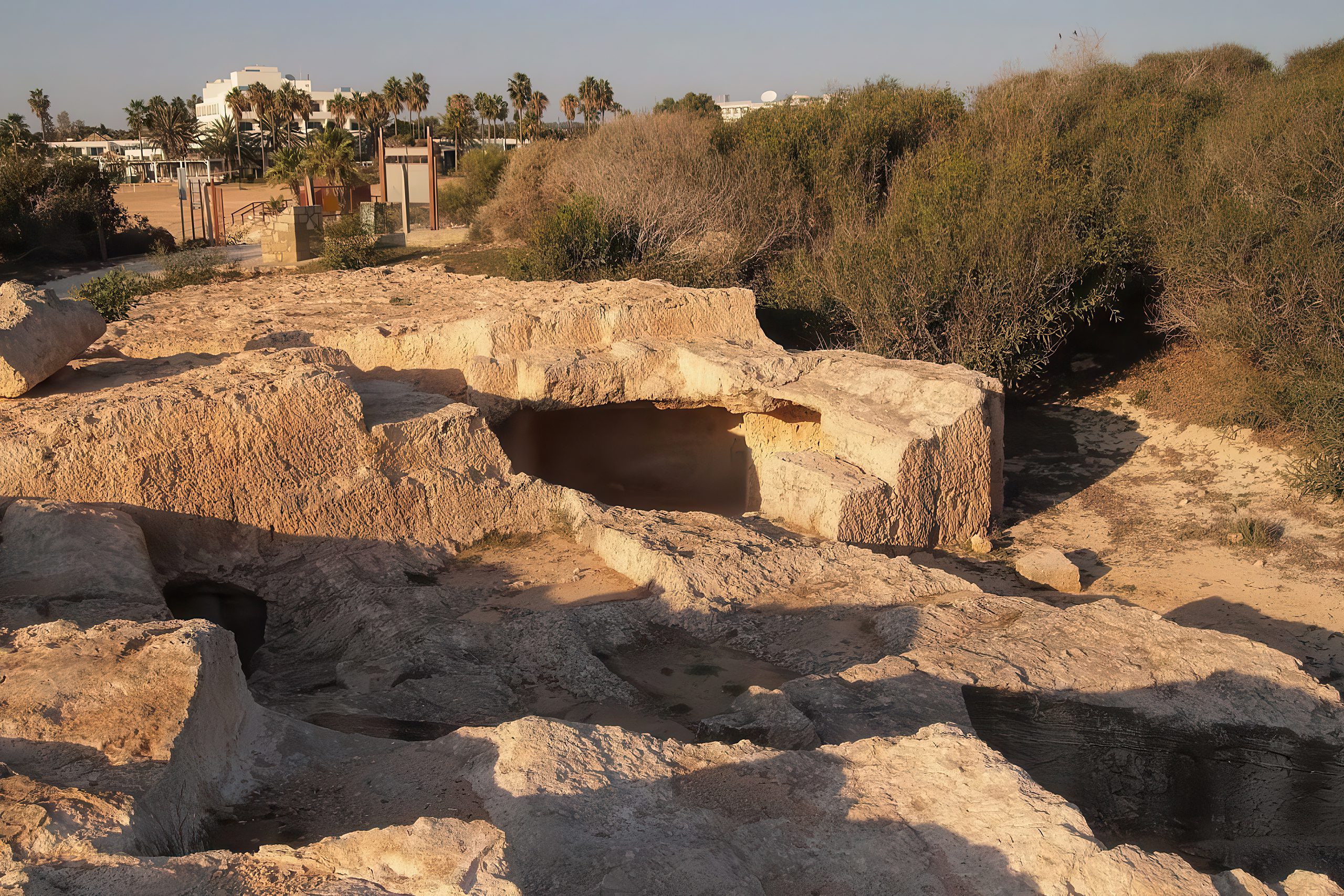
The name Makronissos, meaning long island, comes from the geography of this peninsula. In ancient times, the area may have been a small island before it connected to the mainland. From above, the landform resembles the tail of a fish extending into the Mediterranean Sea.
Discovery and Excavation
The tombs suffered from illegal looting as far back as 1872, when tomb raiders stripped many chambers of their contents. Between November 1989 and January 1990, the Municipality of Ayia Napa sponsored intensive excavations to properly study and preserve what remained. Archaeologists uncovered 19 tombs, documented the sanctuary, and mapped the ancient quarry.
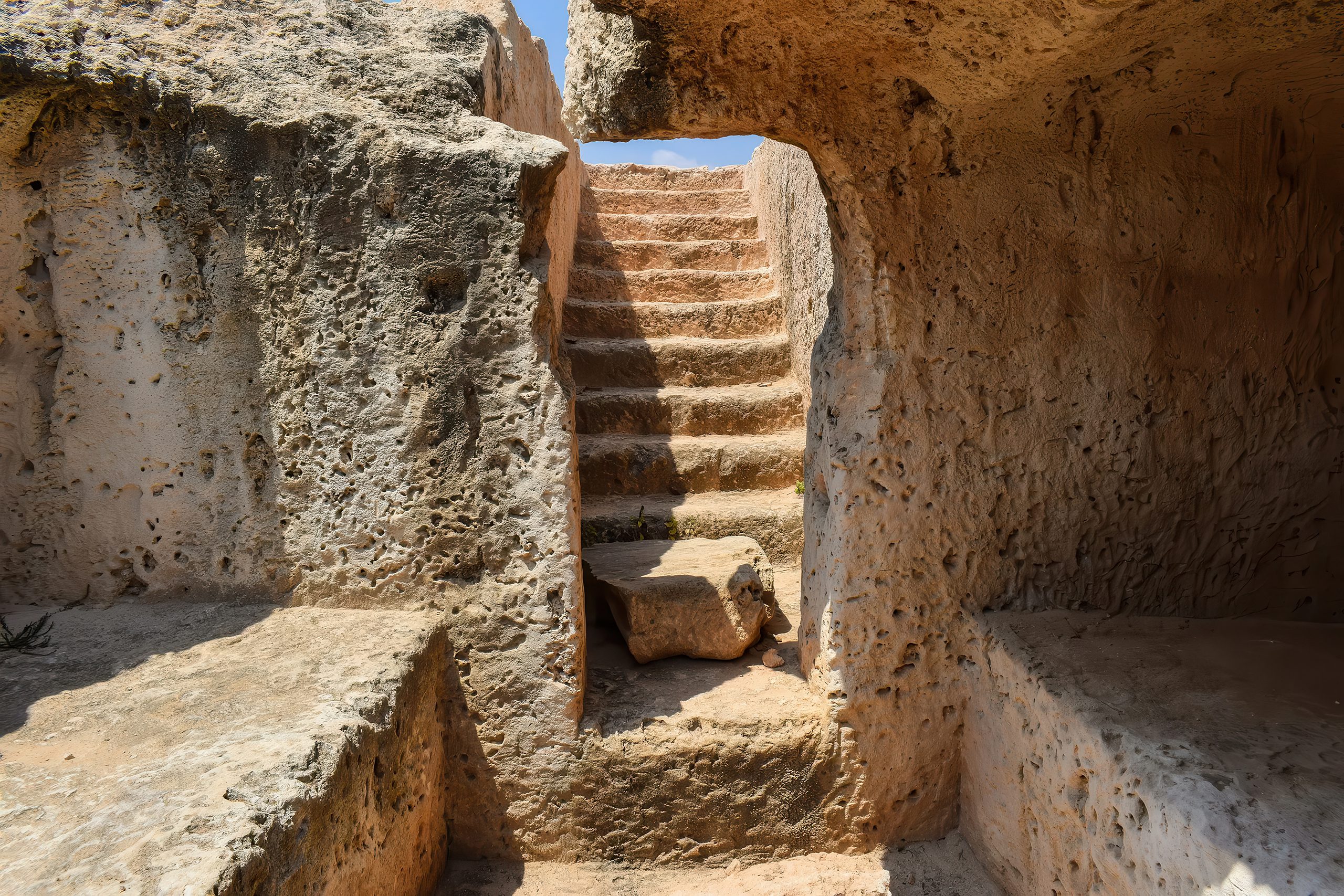
Despite the extensive looting, excavators found pottery fragments, ceramic sarcophagi pieces, and evidence of funeral pyres on the surface near the tomb entrances. These discoveries provided valuable information about trade connections and burial customs in ancient Cyprus.
The Architecture of Death
Most of the chambers follow an identical design. A stepped road, called a dromos, descends from ground level to a rectangular entrance. Workers originally sealed these entrances with one large calcarenite slab or two smaller ones. The chambers themselves are simple but functional.
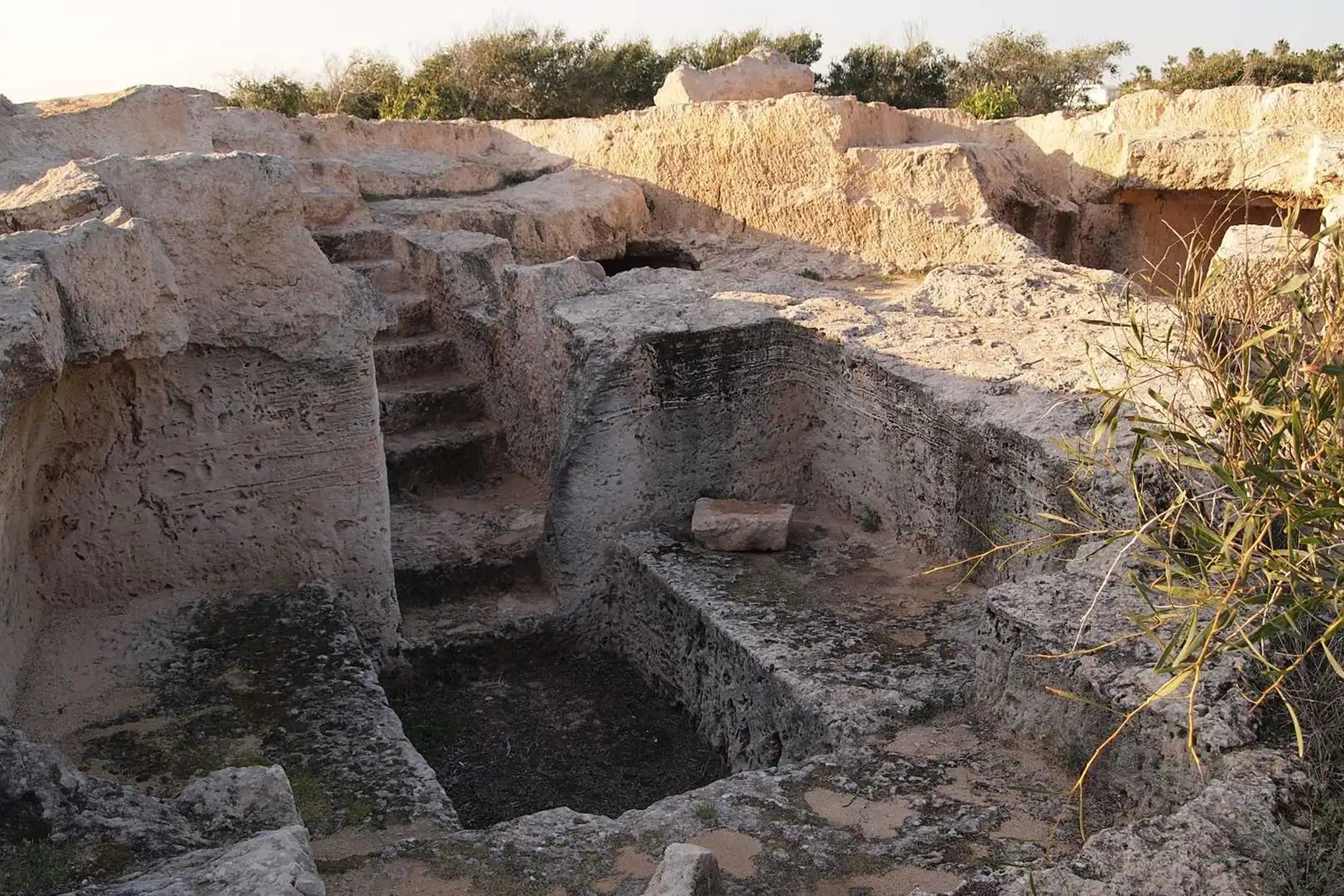
The three carved benches along the chamber walls served a specific purpose. They held clay sarcophagi, which contained the bodies of the deceased. Each sarcophagus rested on a bench and was covered with three flat tiles. The rectangular trench in the center of the chamber floor collected any liquids from the decomposition process. Most chambers could accommodate three to five burials, suggesting family tombs used over multiple generations.
One tomb differs from the standard design. Instead of three benches, it has four benches on two sides and one opposite the entrance. This arrangement allowed for five interments instead of three, possibly indicating a larger or wealthier family.
Burial Customs and Greek Influence
The tombs reveal strong Greek influence in Cypriot burial practices. Archaeologists found remnants of funeral pyres on the surface near the tomb entrances, a characteristic element of Greek funeral customs. The dead were cremated on pyres before their ashes or bodies were placed in clay sarcophagi and interred in the chambers.
The funerary architecture mirrors burial practices found in other Cypriot necropolises like those in Salamina and Paphos. This similarity suggests widespread adoption of Greek customs across the island during the Hellenistic and Roman periods. The Greeks believed proper burial was essential for the soul to reach the underworld, and these tombs reflect that sacred obligation.
Pottery found in the tombs, along with studies of the ceramic sarcophagi, shows that Cyprus maintained active trade relationships with countries in the Middle East. Import goods and local pottery styles mixed together, demonstrating how Cyprus sat at a crossroads of Mediterranean cultures.
Who Was Buried Here
The Makronissos Tombs served middle-class families, not royalty or the wealthy elite. Unlike the grand Tombs of the Kings in Paphos with their elaborate architecture and decoration, these chambers are functional and modest. They represent ordinary people who lived, worked, and died in the Ayia Napa region.
The multiple burials in each tomb indicate family plots used over several generations. When a new family member died, earlier remains were sometimes moved aside or placed in amphorae to make room. This practice of reusing tombs was common throughout ancient Cyprus and shows the importance of family ties that extended beyond death.
The Small Sanctuary
East of the tombs stands a simple rectangular sanctuary constructed from large irregular blocks. Archaeological surveys conducted in 1974 and later excavations found few offerings at the site, but what remained dates the sanctuary to the Cypro-Classical and Hellenistic periods.
The sanctuary likely served as a place for families to make offerings and perform rituals honoring their dead. Ancient Greeks and Romans believed the deceased required regular attention from the living, including libations, prayers, and occasional feasts. This small temple gave families a sacred space to fulfill those obligations.
Archaeological Significance Today
Despite the looting and quarry damage, the Makronissos Tombs provide important evidence for understanding ancient settlements in the Ayia Napa region. They confirm that communities existed here continuously from the Hellenistic period through the Early Christian era. The abandonment of these settlements in the 7th century CE marks a significant shift in Cypriot history, when Arab raids disrupted life across the island.
One of the salvaged clay sarcophagi is now on display at the Thalassa Museum in central Ayia Napa, along with some funeral gifts recovered from the tombs. These artifacts offer visitors a tangible connection to the people who lived here over two millennia ago.
Visiting the Site
The Makronissos Tombs are located on a headland between Makronissos Beach and Nissi Beach, just west of Ayia Napa. The site is open year-round except on public holidays, with free entry. Visitors can walk down into many of the chambers and see the carved benches and central trenches firsthand.
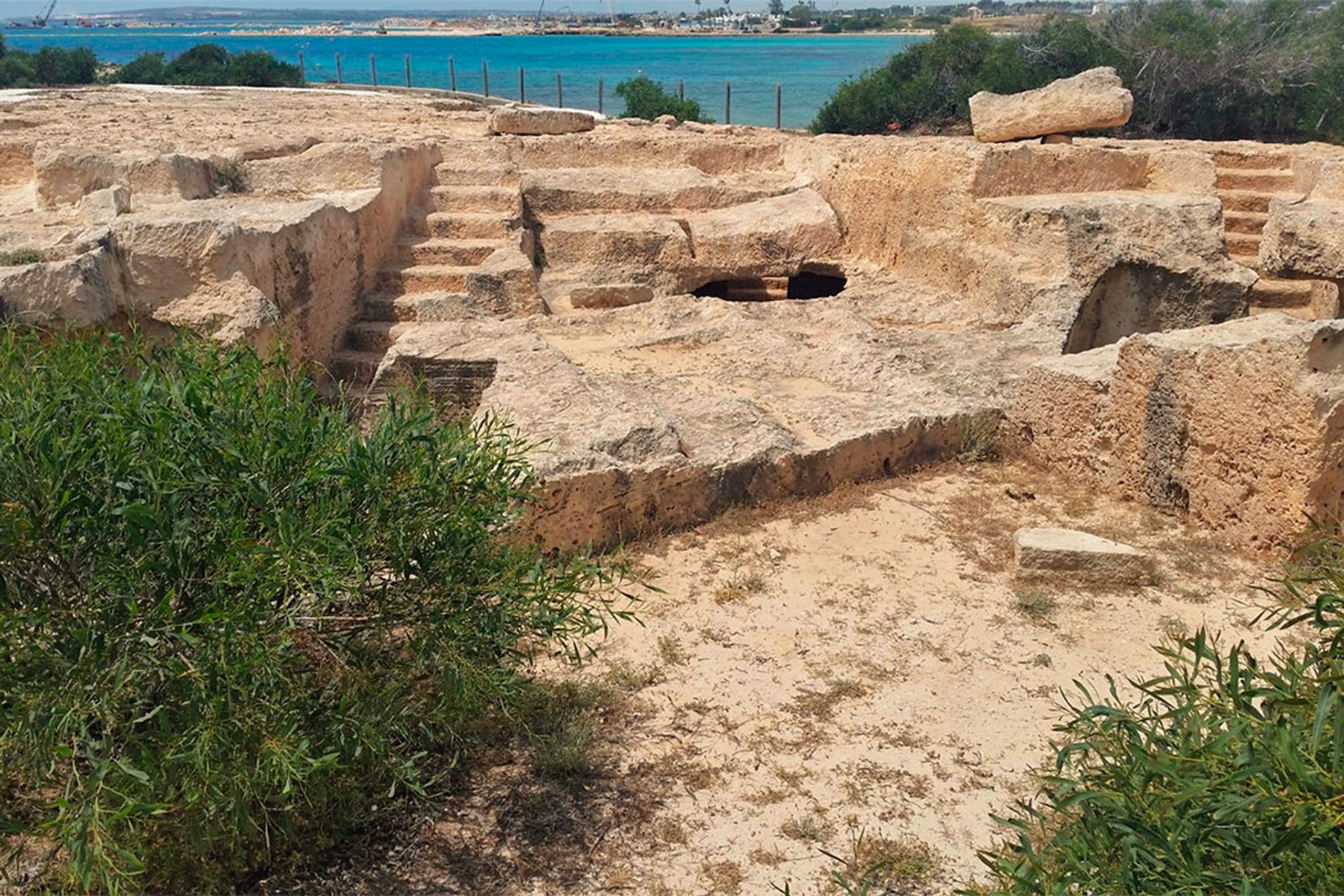
The terrain is rocky and uneven, so sturdy footwear is essential. There are no marked paths through the site, and some tomb entrances remain open, requiring careful navigation. No shade exists at the location, making early morning or late afternoon the best times to visit when the Mediterranean sun is less intense.
The site sits just three minutes on foot from Makronissos Beach, one of the finest beaches in Cyprus. Many visitors combine a beach day with a quick exploration of the tombs, enjoying both the natural beauty and historical significance of the area. The contrast between the lively beach scene and the quiet tombs creates a unique experience.
A Link to Ancient Cyprus
The Makronissos Tombs matter because they show us how ordinary Cypriots lived and died during a critical period in Mediterranean history. They demonstrate the blend of Greek customs with local traditions and reveal Cyprus as a place where cultures met and mixed. These simple rock-cut chambers survived centuries of looting, quarrying, and natural weathering to tell their story.
Walking through this ancient necropolis connects us to families who mourned their dead, performed sacred rituals, and believed in an afterlife worth preparing for. The tombs remind us that death and memory have always been part of what makes us human, and that these universal experiences link us to people who lived 2,000 years ago on this same rocky peninsula by the sea.