In the ancient Mediterranean imagination, Cyprus held a reputation that extended beyond its physical size or political power. Myths and historical traditions alike described the island as uniquely blessed, a land favored by the gods for its fertility, natural resources, and sacred associations. Its geographic position at the crossroads of Asia, Africa, and Europe made it a meeting place of cultures, but it was the perception of divine favor that elevated Cyprus into a symbolic landscape within mythology. Ancient writers often portrayed the island as a place where divine presence was especially strong, where natural abundance and spiritual significance were closely connected.

This mythological reputation did not arise from imagination alone. The island’s fertile plains, forested mountains, and productive coastline supported agriculture, trade, and settlement from early times. Such visible prosperity encouraged the belief that Cyprus was under the protection or blessing of powerful deities. In myth, natural abundance was rarely seen as accidental; it was interpreted as a sign of divine approval. Thus, geography and spirituality became intertwined, shaping Cyprus’s identity as a sacred land.
Fertility and Agricultural Abundance
One of the most important aspects of Cyprus’s divine reputation was its fertility. The island’s climate and soil supported the cultivation of grain, olives, grapes, and fruit, sustaining local communities and contributing to trade networks. Ancient societies depended heavily on agricultural success, and fertile land was understood as a gift of the gods. In Cyprus, this abundance was often associated with divine figures connected to growth and renewal, most notably Aphrodite, whose cult became central to the island’s religious identity.

Fertility in myth extended beyond agriculture to include human and animal reproduction. Rituals honoring deities of growth were intended to ensure not only healthy harvests but also the continuation of families and herds.

The association of Cyprus with Aphrodite reinforced the idea that the island itself embodied generative power. Its landscapes and sanctuaries symbolized the life-giving forces of nature, strengthening its image as a land under divine protection.
Copper Wealth and Divine Prosperity
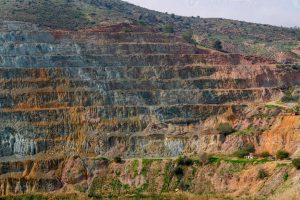
Cyprus was one of the primary sources of copper in the ancient world, and this resource played a crucial role in shaping both its economy and its mythological identity. The very name of the element copper derives from the Latin term “cuprum,” meaning metal of Cyprus. In antiquity, copper was essential for the production of bronze, a material used in tools, weapons, and art. The island’s mineral wealth made it a vital participant in Mediterranean trade and contributed to its prosperity.

In mythological thought, mineral resources were often seen as gifts from the earth, linked to divine generosity. The wealth generated from copper reinforced the perception that Cyprus enjoyed special favor from the gods. Prosperity was interpreted as a sign of divine blessing, further enhancing the island’s sacred reputation. The connection between natural wealth and spiritual significance demonstrates how economic reality and religious belief supported one another in shaping cultural identity.
Divine Patronage and Sacred Associations
Cyprus’s reputation as a favored island was also strengthened by its association with major deities. Aphrodite, believed to have been born from the sea near the island’s shores, became its most famous divine patron. Her cult centers at Palaepaphos and other sites attracted pilgrims from across the Mediterranean, making Cyprus a focal point of religious devotion. Through Aphrodite, the island became symbolically linked to beauty, love, and renewal, qualities that reinforced its image as a blessed land.

Other deities were also associated with Cyprus. Apollo, Artemis, and Zeus appear in various local myths and cult traditions, reflecting the island’s integration into the wider Greek religious world. These associations created a network of sacred sites that anchored mythological narratives in the island’s landscape. By serving as the setting for divine stories and rituals, Cyprus gained a reputation as a place where the boundary between human and divine worlds was especially close.
Cultural Exchange and Sacred Identity
Cyprus’s position between major civilizations facilitated the exchange of religious ideas. Influences from the Near East, Greece, and later Rome merged with local traditions, enriching the island’s spiritual landscape. This blending of cultures did not diminish its sacred status; rather, it enhanced it by connecting Cyprus to multiple mythological traditions. The island became a symbolic meeting point where diverse religious practices could coexist and interact.
Such cultural exchange reinforced the belief that Cyprus was a place of divine significance. Sacred sites maintained continuity even as political control shifted, suggesting that spiritual identity transcended changing regimes. The persistence of religious traditions helped maintain the island’s reputation as a land favored by the gods.
Myth, Prosperity, and Political Authority
The belief in divine favor also had political implications. Rulers and elites could claim legitimacy by associating themselves with sacred traditions and patron deities. By supporting sanctuaries and religious festivals, leaders demonstrated their role as guardians of divine favor. The prosperity of the island was thus tied to the maintenance of ritual and piety. Mythological narratives about divine blessing reinforced the idea that social and political stability depended on honoring the gods.

This connection between myth and governance highlights how sacred reputation shaped historical reality. The belief that Cyprus was blessed encouraged both internal cohesion and external respect, contributing to its enduring cultural significance.
Enduring Legacy of Sacred Reputation
The ancient image of Cyprus as an island favored by the gods continued to influence later historical and cultural perceptions. Even as religious practices evolved, the island’s association with beauty, fertility, and divine presence persisted. Literary and artistic traditions preserved this image, ensuring that Cyprus remained linked to mythological narratives long after the original cults had faded.
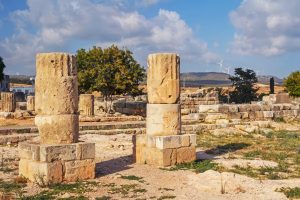
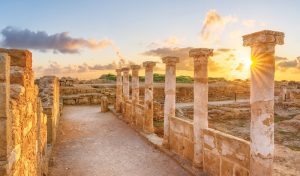
Today, archaeological remains of sanctuaries and sacred landscapes provide tangible evidence of this enduring heritage. The myths that once defined the island’s reputation continue to shape its cultural identity and attract interest from scholars and visitors alike.
Conclusion
In ancient tradition, Cyprus was celebrated as an island uniquely favored by the gods, a land where fertility, mineral wealth, and divine patronage combined to create a sacred reputation across the Mediterranean. Its agricultural abundance and copper resources were seen as signs of divine blessing, while its association with Aphrodite and other deities rooted its identity in mythological narrative. Through cultural exchange and religious continuity, this sacred image endured across centuries. The legacy of Cyprus as a blessed island illustrates how natural prosperity and spiritual meaning can merge to shape a powerful and lasting cultural identity.