Cyprus hosts an extraordinary concentration of endemic species in its high-elevation zones, particularly within the Troodos Mountains. At altitudes between 1,000 and 1,952 meters, unique geological conditions combine with Mediterranean climate variations to create habitats found nowhere else on Earth. The island supports 143 endemic plant species, with 47 of these confined exclusively to the Troodos range above 1,000 meters. These mountains function as a natural laboratory where volcanic soils, steep valleys, and climate extremes have shaped remarkable biodiversity over millions of years.
- The Troodos Mountain Environment
- Endemic Flora Concentrated Above the Thousand-Meter Line
- Specialized Plants of the Serpentine Soils
- High-Altitude Flowering Plants and Orchids
- The Cyprus Mouflon and Mountain Mammal Fauna
- Endemic Birds of the Forest Zone
- Endemic Reptiles and Rare Amphibians
- Endemic Insects and Specialized Invertebrates
- Conservation Status and Future Challenges
The Troodos Mountain Environment
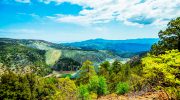
Mount Olympus, also called Khionistra, rises to 1,952 meters and represents the highest point in Cyprus. The Troodos range occupies roughly half the island’s total area, its core composed of igneous rocks formed from elevated ocean shell and lithospheric mantle. This volcanic substrate creates serpentine soils with mineral compositions drastically different from the island’s lowlands.
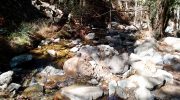
Deep valleys carved by streams such as Pedios, Yelias, Serakhias, Ezousa, Diarizos, and Xeropotamos provide north and northwest-facing slopes where humidity accumulates and temperatures moderate.
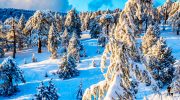
Between the thermophilous lower slopes and the semi-alpine summit zone, elevation creates distinct vegetation bands. Black pine forests dominate from 1,300 to 1,950 meters, replacing Calabrian pine at the transition point. The highest slopes support foetid juniper in what approaches an alpine environment. Annual precipitation ranges from 300 millimeters on the central plains to 1,100 millimeters at the Troodos peak. Winter snow covers the summit for several months, creating conditions absent elsewhere on the island.
Endemic Flora Concentrated Above the Thousand-Meter Line
The Troodos National Forest Park contains 10 local endemic species found nowhere else in the world and 70 Cypriot endemics representing 50 percent of the island’s total endemic flora. Research confirms that 47 endemic plants grow exclusively between 1,000 and 1,950 meters elevation where volcanic soils dominate. The endemic rate in this zone reaches 34 percent, an exceptionally high proportion reflecting intense isolation and specialization.
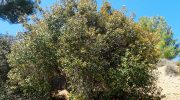
Golden oak covers extensive areas on steep slopes and scree, its silvery leaves creating distinctive patches visible across the mountain landscape. This endemic evergreen oak grows between 400 and 1,800 meters exclusively on igneous substrate. The species appears either in pure stands or mixed with Calabrian pine. Both Cypriot law and European Union regulations protect golden oak and its associated scrub habitat.
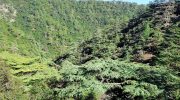
Cyprus cedar exists in six fragmented populations within Cedar Valley, where it occupies elevations between 800 and 1,400 meters. The entire population covers just 290 hectares, with only 106 hectares consisting of pure cedar stands. This endemic conifer faces severe threats from periodic droughts, insect infestations, and its inability to migrate to higher altitudes under climate change. The LIFE-KEDROS conservation project has expanded cedar habitat by 9.4 hectares and restored an additional 12.3 hectares of degraded land through silvicultural treatments.
Specialized Plants of the Serpentine Soils
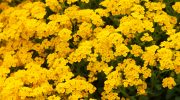
Serpentine soils derived from ultramafic rock create extreme growing conditions. These soils contain high magnesium levels, low calcium, and toxic heavy metal concentrations that most plants cannot tolerate. Several endemic species have evolved specialized adaptations for these harsh conditions. Yellow-flowered Alyssum troodi and near-endemic Alyssum cypricum grow exclusively on serpentine areas. Centaurea veneris, another serpentine specialist, thrives in conditions that would kill most vegetation.
Chasmophytic communities develop on limestone, ultramafic rock, and wet rocks throughout the Troodos range. These rock-dwelling plant assemblages include numerous endemic species adapted to vertical surfaces and minimal soil. Serpentinophilous chamaephytic communities represent one of five endemic habitat types officially recognized in Cyprus under the Habitats Directive. The distribution of these communities follows geological boundaries with remarkable precision.
High-Altitude Flowering Plants and Orchids
Troodos mountains bloom late in spring after snow melts. Rosy-purple peonies appear near Prodromos and in forests at Madhari and Papoutsa. The saprophytic orchid Limodorum abortivum grows under pine trees in both black pine zones and lower elevations, this leafless purple plant often exceeds half a meter in height. Endemic Epipactis troodi, a helleborine orchid locally known as the Holy Virgin’s Tears, grows exclusively on Troodos.

The endemic Crocus cyprius flowers in the western Troodos Mountains between October and November. This autumn-blooming species differs from the spring-flowering Crocus hartmannianus found in north and east-central Cyprus. Ornithogalum chionophilum, Scilla lochiae, and Scilla morrisii all restrict their distribution to the Troodos massif. The endemic Arabis purpurea colonizes higher elevations where few other plants survive.
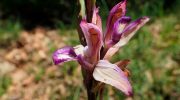
Aromatic herbs flourish throughout the mountain zone. Endemic Origanum cordifolium grows in western Cyprus, while Troodos sage, wild thyme, and various endemic species of Acinos, Nepeta, Phlomis, Salvia, Scutellaria, Sideritis, and Teucrium create complex plant communities. Each species occupies specific elevation ranges and aspects determined by moisture, temperature, and soil chemistry.
The Cyprus Mouflon and Mountain Mammal Fauna
The Cyprus mouflon stands as the island’s most iconic endemic mammal and the largest wild land animal in the region. This wild sheep subspecies, scientifically designated Ovis orientalis ophion, exists nowhere else on Earth. Archaeological evidence from the Choirokoitia Neolithic settlement confirms mouflon presence for 8,000 years. The species likely arrived as domestic animals with early human settlers around 8000 BC, then established feral populations that evolved distinct characteristics through island isolation.
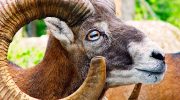
Adult males reach one meter at the shoulder and weigh up to 35 kilograms. Females lack horns, display lighter brown coloration, and weigh approximately 25 kilograms. Mature males carry distinctive curved horns that can extend up to 33 inches in a near-complete revolution. Island dwarfism reduced Cyprus mouflon to sizes 15 centimeters shorter at the shoulder than Armenian mouflon, their closest relatives.
The mouflon population crashed to only 15 individuals by 1939 due to hunting pressure intensified by firearm introduction during Ottoman rule. That year, Paphos Forest received designation as a permanent no-hunting zone, and shepherds with their herds faced eviction from the area. Conservation efforts succeeded dramatically, with the current population exceeding 3,000 individuals inhabiting Paphos Forest and extending into western Troodos areas.
Mouflon feed on at least 85 different plant species, with grass representing their preferred food. By June, all grasses dry out in the forests, and forage quality drops drastically. Golden oak leaves, though abundant, prove deadly to mouflon because compounds in the leaves destroy rumen bacteria essential for digestion. By late summer and early fall, grass quality falls below minimum maintenance requirements, creating an annual survival challenge.
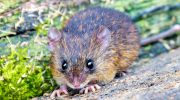
The endemic Cypriot mouse occupies vineyards and fields primarily in the Troodos region. This species remained unrecognized until 2004 when DNA testing confirmed its distinct genetic identity. Larger ears, eyes, and teeth distinguish it from other European mice. The Cyprus spiny mouse represents another endemic rodent, though with a broader distribution across suitable habitats. These two species constitute the only endemic rodents surviving on any Mediterranean island, all others having disappeared following human arrival.
Endemic Birds of the Forest Zone
Cyprus hosts three endemic bird species found nowhere else globally. The Cyprus wheatear arrives from African wintering grounds in Ethiopia and Sudan to breed between March and October. This black and white bird inhabits elevations from Troodos peaks down to coastal areas. Males sing from high perches for hours, particularly during April through June breeding season. The population reaches an estimated 70,000 to 140,000 breeding pairs annually.
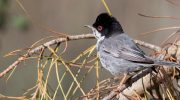
The Cyprus warbler breeds exclusively on the island, though it migrates to Egypt, Israel, and Jordan for winter. In harsh winters in surrounding countries, some individuals remain in Cyprus year-round. Recent observations suggest population decline due to habitat loss from construction and competition with Sardinian warblers that colonized the island only two decades ago.
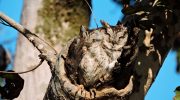
The Cyprus scops owl received recognition as a distinct species only in 2016, previously classified as a subspecies of Eurasian scops owl. Cyprus individuals appear darker and lack the rufous color variation. Their calls differ markedly from mainland relatives. These owls inhabit sparse woodland throughout Cyprus but prove exceptionally difficult to locate during daylight when their camouflage against tree trunks becomes nearly perfect. At night, their distinctive calls carry great distances.
Three endemic subspecies mostly confine themselves to Troodos forests. The Cyprus jay displays a reddish forehead striped with black, a black mustache-like stripe, and bright blue wing feathers with black stripes. This noisy member of the crow family inhabits forested mountains of Troodos and Paphos. The Cyprus coal tit and short-toed treecreeper represent slight variations from mainland populations, recognizable primarily to experienced ornithologists through subtle plumage differences and vocalizations.
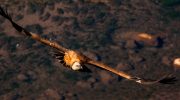
Birds of prey patrol the high zones. Griffon vultures, reduced to only 10 individuals by 2011, face severe endangerment. Imperial eagles, Eleonora’s falcons, and Bonelli’s eagles hunt across mountain landscapes. Crossbills, hawfinches, and blue rock thrushes occupy specific niches in the conifer forests. The high elevation environment supports specialized species absent from lowland areas.
Endemic Reptiles and Rare Amphibians
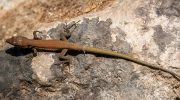
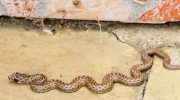
The Troodos lizard exists only in this mountain range, making it a true local endemic. This reptile occupies rocky habitats at middle and high elevations. Cyprus supports eight lizard species total, with four classified as endemic subspecies. The Cyprus whip snake, a non-venomous species reaching 75 centimeters in length, inhabits Paphos and Troodos forests plus Limassol and Machairas forest areas. This slim gray or black snake with white lines feeds primarily on other lizards and prefers shady damp locations near rivers and streams.
The Cyprus grass snake represents the rarest snake on the island. This endangered subspecies faces severe habitat loss and population decline. Conservation efforts include online petitions and captive breeding programs. Eight snake species inhabit Cyprus, including three venomous varieties. Only the blunt-nosed viper poses serious danger to humans. This large front-fanged viper, though not aggressive, delivers bites dangerous even to large mammals.
Three frog species and one toad constitute the island’s amphibian fauna. These animals concentrate near permanent water sources, which become increasingly scarce at higher elevations. Dam construction has eliminated many riparian habitats, reducing populations throughout mountain stream systems. Freshwater crabs survive in several mountain streams, recovering from DDT contamination that once devastated their numbers.
Endemic Insects and Specialized Invertebrates
Mount Olympus harbors several endemic weevil species found nowhere else. These include Melanobaris troodi, Otiorhynchus crassicollis, Psallidium chionistrae, and Strophomorphus exophthalmus. Each species occupies specific elevation ranges and microhabitats within the summit zone. Approximately 6,000 insect species inhabit Cyprus, with numerous endemics concentrated at higher elevations.
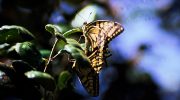
Cyprus supports 52 butterfly species, with nine classified as endemic. Mountain butterflies display distinct patterns and behaviors compared to lowland relatives. Two endemic bush-cricket species, Platycleis kibris and Isophya mavromoustakisi, inhabit high-elevation grasslands. Endemic grasshoppers Xerohippus cyprius and Pezotettix cypria occupy specific mountain zones. These specialized insects fill crucial ecological roles as herbivores and prey for birds and reptiles.
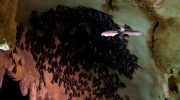
Nineteen bat species use Cyprus, with 18 microchiroptera and one megachiroptera. The Egyptian fruit bat feeds on fruit unlike the insectivorous species. Bats face persecution due to superstitions despite their essential ecosystem services controlling insect populations. Several species roost in mountain caves and forest areas, emerging at dusk to hunt flying insects.
Conservation Status and Future Challenges
Troodos National Forest Park covers 90.62 square kilometers and received UNESCO Global Geopark status in 2015. The park protects mountain conifer forests, juniper woodlands at highest elevations, and numerous endemic plant communities. More than 70 percent of the Natura 2000 network in Cyprus falls within forested areas, with Troodos representing the core protected zone.
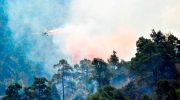
Climate change poses the most serious long-term threat. Endemic species confined to high elevations cannot migrate upward when temperatures rise. Species like Cyprus cedar already show drought stress and population decline. Fire frequency increases with hotter, drier conditions. Historical afforestation programs created vulnerable pine monocultures susceptible to catastrophic burns and pest outbreaks including pine processionary caterpillar and bark beetles.
Current conservation priorities emphasize diverse reforestation using native species appropriate for specific localities. Special attention focuses on endemic plant communities and the five endemic habitat types. Research into socio-economic aspects of conservation aims to incorporate local community interests into policy decisions. The survival of Cyprus’s unique high-elevation biodiversity depends on maintaining genetic diversity, protecting remaining habitat, and adapting management strategies to changing environmental conditions.
The high-elevation zones of Cyprus function as biodiversity refuges where endemic species evolved in isolation from mainland populations. These mountains contain one of Europe’s most important assemblages of endemic plants, supported by unique volcanic geology and climate gradients. The mouflon, endemic birds, specialized reptiles, and countless invertebrates create interconnected ecosystems found nowhere else on Earth. Protecting these irreplaceable communities requires continued vigilance, expanded research, and adaptive management responding to accelerating environmental change.