Explore Cyprus with Our Interactive Map

Explore our top stories and discover ideas worth your time.

A Tapestry of Faith

A Tapestry of Faith

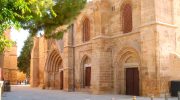
Most visitors to Cyprus know about its Greek Orthodox churches and ancient Christian monasteries, but the island's religious story is far richer and more complex. For millennia, Cyprus has been home to Jewish communities, Muslim mosques, Armenian and Maronite Christians, Sufi mystics, and Latin Catholic cathedrals - each faith leaving monuments that testify to survival, migration, and remarkable coexistence. Walking through Cyprus's cities means encountering this layered religious landscape where synagogues stand near mosques, Gothic cathedrals became prayer halls, and sacred springs were shared by people of different beliefs. orthodoxtimes-com Where Many Faiths Met and Mingled Cyprus has never belonged to a single religious tradition. Its position at the meeting point of Europe, Asia, and Africa made it a crossroads not only for trade and armies but also for belief systems. Long before Orthodox Christianity became dominant in the medieval period, Cyprus hosted Jewish traders and craftsmen, pagan mystery cults, and early Christian congregations mentioned in the New Testament. Later waves brought Islamic institutions during Ottoman rule, Armenian refugees fleeing persecution, Maronite Christians migrating from Lebanon and Syria, and Western European Crusaders establishing Latin Catholic strongholds. Rather than existing as isolated enclaves, these religious minorities participated actively in Cyprus's economy, diplomacy, and urban life. Their monuments - synagogues, mosques, churches of different denominations, and Sufi lodges - aren't marginal curiosities…

Read more

Ancient Wine Pressing Techniques Cyprus Wineries

Ancient Wine Pressing Techniques Cyprus Wineries

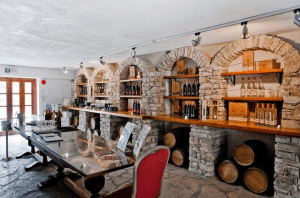
Cyprus holds one of the longest unbroken wine traditions in the world, with archaeological evidence placing winemaking on the island at approximately 5,500 years ago. Pottery fragments discovered at Erimi village and analyzed in 2005 by Italian archaeologist Maria-Rosaria Belgiorno showed traces of tartaric acid, proving that these Chalcolithic period vessels dated between 3500 BC and 3000 BC were used for wine storage. What makes Cyprus unique is not just the antiquity of its wine culture, but the remarkable continuity of production methods that survived for millennia. Historical Background The earliest winemaking in Cyprus relied on simple but effective techniques. Grapes were placed in stone or clay basins where workers trod them with bare feet to extract the juice. A ceramic jug from Pyrgos dating to 2000 BC depicts a woman with her feet in a pressing vessel with juice flowing into a basin below, representing one of the earliest known visual records of grape treading anywhere in the Mediterranean. Medieval wine presses evolved into more sophisticated equipment, with the Omodos Wine Press representing a stunning example that is between 700 and 800 years old. This press features an enormous double wooden beam spanning the room, with a giant wooden screw attached to one end and weighted by a large stone that could be raised and lowered by pulley. Workers…

Read more
Labyrinth Streets of Cyprus Villages

Labyrinth Streets of Cyprus Villages

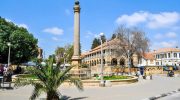
The narrow labyrinth streets of Cyprus villages create distinctive spatial patterns that developed organically over centuries without formal planning. These winding lanes, rarely exceeding 2 to 3 meters in width, twist through compact settlements where stone houses press close together along irregular paths dictated by terrain, water sources, and family land divisions. img-tourister-ru Cypriot villages were built without original master plans, with street locations determined by natural conditions including slope, rivers, and agricultural boundaries. The compact layouts served practical purposes including defense against raiders, social cohesion through proximity, protection from summer heat through shade creation, and efficient land use that maximized agricultural acreage surrounding settlements. The resulting maze-like networks connect homes to central squares where churches, mosques, coffee shops, and taverns anchored community life while radiating outward to agricultural fields and vineyards that sustained village economies. Organic Growth Without Urban Planning Traditional Cyprus villages developed through accretion as families built homes adjacent to relatives and neighbors without coordinating with central authority or following predetermined layouts. When young people married, they typically constructed new houses near their parents' property, creating family clusters that expanded outward from original settlement cores. This pattern repeated across generations, producing intricate networks of connected buildings separated by the minimum passages needed for human and animal movement. dom-com-cy The terrain fundamentally shaped village morphology. Mountain villages like…

Read more