Explore Cyprus with Our Interactive Map

Explore our top stories and discover ideas worth your time.

Makronissos Tombs

Makronissos Tombs

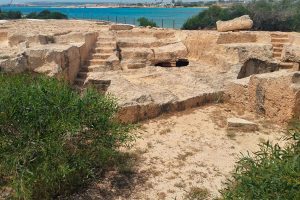
Carved into solid rock on a small peninsula west of Ayia Napa, the Makronissos Tombs are a window into ancient Cyprus. These 19 underground burial chambers date back over 2,000 years and reveal how people lived, died, and honored their dead during the Hellenistic and Roman periods. kiprguru-com The Makronissos Tombs form an ancient necropolis, a city of the dead, where families buried their relatives between the 4th century BCE and the 4th century CE. Each tomb consists of a stepped pathway that descends into the rock, leading to a rectangular chamber sealed by stone slabs. Inside, the chambers feature three stone benches carved along the walls and a central rectangular trench slightly lower than the floor. The site also includes a small sanctuary built from large irregular stone blocks and remnants of an ancient quarry that operated nearby. The quarry unfortunately damaged some tombs, but enough survived to tell us about burial practices in ancient Cyprus. The Ancient Settlement of Thronon According to historical records, an ancient settlement called Thronon existed in the Ayia Napa area, along with several smaller communities. These settlements thrived until the Early Christian period but were abandoned around the 7th century CE during the Arab raids that swept across the Eastern Mediterranean. The tombs at Makronissos served as the final resting place for people…

Read more
Cyprus Museum of Natural History (Nicosia)

Cyprus Museum of Natural History (Nicosia)

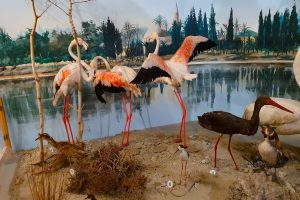
The Cyprus Museum of Natural History is the largest natural history exhibition in Cyprus. Located on the outskirts of Nicosia within the grounds of the Carlsberg Brewery, the museum displays approximately 2,500 exhibits that showcase the island's geology, flora, and fauna. Since its inauguration in 1996, the museum has welcomed thousands of visitors annually and serves as an educational resource for understanding Cyprus's natural heritage. wikipedia-org Historical Background The Photos Photiades Charity, Scientific and Cultural Foundation established the museum as part of its mission to benefit the public through educational and cultural projects. Former President of the Republic of Cyprus Glafkos Clerides inaugurated the facility on May 29, 1996. The museum was the first institution of its kind on the island, dedicated specifically to preserving and presenting Cyprus's natural history. The foundation created the museum to educate visitors about the island's biodiversity and geological evolution. The collection documents millions of years of natural history, from ancient fossils to current wildlife species. The exhibits aim to inspire environmental awareness and appreciation for nature conservation. Main Collections and Exhibits The museum houses over 2,500 items across several categories. The majority consists of taxidermied animals including mammals, birds, fish, reptiles, and insects. These specimens are preserved using professional taxidermy techniques that make them appear lifelike. The displays allow visitors to examine species they…

Read more

Ancient Wine Pressing Techniques Cyprus Wineries

Ancient Wine Pressing Techniques Cyprus Wineries

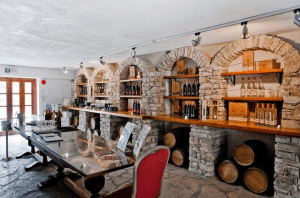
Cyprus holds one of the longest unbroken wine traditions in the world, with archaeological evidence placing winemaking on the island at approximately 5,500 years ago. Pottery fragments discovered at Erimi village and analyzed in 2005 by Italian archaeologist Maria-Rosaria Belgiorno showed traces of tartaric acid, proving that these Chalcolithic period vessels dated between 3500 BC and 3000 BC were used for wine storage. What makes Cyprus unique is not just the antiquity of its wine culture, but the remarkable continuity of production methods that survived for millennia. Historical Background The earliest winemaking in Cyprus relied on simple but effective techniques. Grapes were placed in stone or clay basins where workers trod them with bare feet to extract the juice. A ceramic jug from Pyrgos dating to 2000 BC depicts a woman with her feet in a pressing vessel with juice flowing into a basin below, representing one of the earliest known visual records of grape treading anywhere in the Mediterranean. Medieval wine presses evolved into more sophisticated equipment, with the Omodos Wine Press representing a stunning example that is between 700 and 800 years old. This press features an enormous double wooden beam spanning the room, with a giant wooden screw attached to one end and weighted by a large stone that could be raised and lowered by pulley. Workers…

Read more