Explore Cyprus with Our Interactive Map

Explore our top stories and discover ideas worth your time.

Sonic Evolution Cyprus Tradition Meets Fusion

Sonic Evolution Cyprus Tradition Meets Fusion

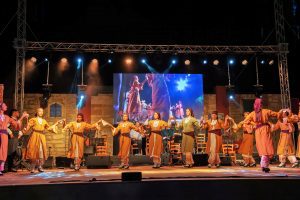
Music in Cyprus has never existed in isolation. It has always moved with people, landscapes, rituals, and political change. From shepherds playing flutes in mountain pastures to electrified bands performing in divided city streets, Cypriot music reflects the island’s role as a cultural meeting point in the Eastern Mediterranean. Today, that long tradition is not fading. It is transforming. Contemporary Cypriot musicians are reshaping ancient sounds into new forms, proving that heritage survives not by standing still, but by adapting. An Island Shaped by Crossing Sounds Cyprus sits at the intersection of Greek, Byzantine, Ottoman, and Western European worlds, and its music carries traces of each. Rather than following Western major and minor scales, traditional Cypriot music is built on modal systems influenced by Byzantine echoes and Ottoman makam. These modes allow for subtle microtonal shifts that give the music its emotional depth and distinctive colour. For centuries, these sounds were not concert material. They were woven into daily life: agricultural cycles, religious festivals, weddings, and communal gatherings. Music functioned as memory, communication, and identity, not entertainment alone. Voices Without Sheet Music At the heart of Cypriot folk tradition lies the concept of fones, literally meaning “voices.” These are not fixed songs, but melodic frameworks passed orally from generation to generation. Singers adapt poetic verses to these melodic shapes, allowing…

Read more

Green Sea Turtle Conservation Programs in Cyprus

Green Sea Turtle Conservation Programs in Cyprus

The green sea turtle represents one of the Mediterranean's rarest nesting species. In this entire sea, only 300 to 400 female green turtles nest each year, with the vast majority choosing beaches in Cyprus and Turkey. This makes Cyprus critically important for the species' survival in the region. The green turtle earned its name from the green fat stored beneath its shell, a result of its diet that consists almost entirely of seagrass and algae once the turtle reaches adulthood. suemtravels-com Green turtles belong to the family Cheloniidae and hold the distinction of being the largest hard-shelled sea turtle species. Adults can reach one meter in length and weigh between 130 and 160 kilograms. Their distinctive heart-shaped shell ranges from olive to black in color, while the underside stays pale yellow. Unlike their carnivorous loggerhead cousins, adult green turtles maintain an almost exclusively herbivorous diet, grazing on seagrass meadows and coastal algae. From Crisis to Conservation Action Historical records and testimony from older fishermen confirm that green turtles were once far more abundant around Cyprus than they are today. Exploitation of Mediterranean sea turtles from ancient times through the mid-20th century devastated populations. An estimated 100,000 turtles were shipped from the Eastern Mediterranean to Europe to meet demand for turtle soup and other products. This commercial harvest, combined with coastal…

Read more
Ayia Irini Sanctuary 

Ayia Irini Sanctuary 

Nestled near the northwestern coast of Cyprus, close to Morphou Bay, stands one of the Mediterranean's most important archaeological discoveries.  talanews-blogspot Ayia Irini was a sacred sanctuary that served the people of ancient Cyprus for over a thousand years, from 1200 B.C. until around 500 B.C. The site became famous after excavations revealed thousands of terracotta statues left as offerings to the gods.   wikipedia Today, it remains a testament to how people in ancient Cyprus expressed their religious beliefs through art and ritual. The sanctuary's discovery transformed our understanding of Cypriot religion and culture during the Iron Age, making it one of the most studied sacred sites of the ancient Mediterranean. From Bronze Age Shrine to Iron Age Center of Devotion The sanctuary's history began in the Late Bronze Age around 1200 B.C. and continued until the end of the Cypro-Archaic period. The site underwent significant transformations throughout its long existence.  Originally, it consisted of rectangular houses built with mud brick walls on stone foundations. These buildings were arranged around a large open court, with some structures serving as living spaces and storerooms for the priests, while others were dedicated to religious ceremonies. The sanctuary was flooded multiple times, and at the beginning of Cypro-Archaic II, it was covered with layers of sand and gravel. Rather than abandon the site,…

Read more