Explore Cyprus with Our Interactive Map

Explore our top stories and discover ideas worth your time.

Hiking Trails in the Troodos Mountains

Hiking Trails in the Troodos Mountains

The Troodos Mountains offer Cyprus's most extensive network of hiking trails, with approximately 90 designated paths across the island's largest mountain range. Mount Olympus rises to 1,952 meters as the highest peak, surrounded by dense forests of black pine, Cyprus cedar, and golden oak. lonelyplanet-com The Department of Forests manages most trails through state forests, while local communities maintain paths in their jurisdictions. These trails range from easy 30-minute family walks to challenging 14-kilometer circuits that require several hours to complete. The Troodos region contains 64 percent of Cyprus's endemic flora despite covering only 12 percent of the island's territory, with 37 plant species found nowhere else on Earth. This combination of dramatic mountain scenery, unique biodiversity, and well-maintained paths has made Troodos a premier destination for hikers seeking alternatives to Cyprus's beach-focused tourism. The Geological Foundation That Shapes the Trails The Troodos Mountains represent a rare geological phenomenon where scientists can examine ocean floor and upper mantle rocks without descending to the seabed. These mountains formed 92 million years ago at the bottom of the ancient Tethys Sea at a depth of 8,000 meters. Tectonic movements caused by the collision between African and Eurasian plates pushed Troodos upward starting 15 million years ago. UNESCO recognized this extraordinary geological importance by designating Troodos as a Geopark in 2008. pinterest-com This…

Read more
Vouni Necropolis

Vouni Necropolis

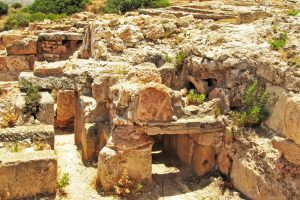
On gentle slopes near the medieval abbey of Bellapais in the Turkish-occupied part of Cyprus sits an extensive Bronze Age cemetery known to the world almost exclusively through its dead. The Vounous necropolis contains 164 rock-cut chamber tombs that served an unknown settlement for nearly five centuries, from approximately 2500 to 2000 BCE, preserving one of the finest collections of prehistoric pottery ever discovered on the island. wikipedia-org Vounous presents archaeologists with an unusual challenge. Despite extensive searches that began in the 1930s and continue sporadically today, the settlement that used this cemetery has never been located. The site sits somewhere between the villages of Ozanköy and Çatalköy in the Kyrenia region, but the homes, workshops, and temples of the people buried here remain hidden beneath modern development or agricultural land. Historical Background The tombs at Vounous date to the Early and Middle Bronze Age, a period when Cyprus underwent major transformation. Around 2500 BCE, settlers from Anatolia arrived on the island, bringing new pottery styles, copper-working technology, plow agriculture, and the warp-weighted loom. These immigrants, identified as the Philia Culture, moved quickly to the foothills of the Troodos Mountains to exploit the rich copper deposits. shutterstock-com The people who used Vounous cemetery were part of this cultural shift. Their pottery shows clear Anatolian influence, particularly the distinctive Red Polished…

Read more
Whispers from the Antipodes

Whispers from the Antipodes

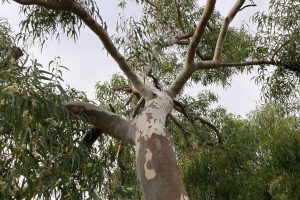
Imagine strolling across the sun-drenched plains of central Cyprus on a warm spring morning. Tall, graceful trees with silvery, peeling bark rise above the dry grasses, their narrow leaves whispering in the breeze and filling the air with a fresh, camphor-like scent. These are the eucalypts of Cyprus – not ancient natives, but fascinating newcomers whose story weaves together botany, colonial history, and the island’s fight against desertification. www.inaturalist.org Getting to Know the Genus Eucalyptus belongs to the vast Myrtaceae family, a group of flowering plants that also includes myrtles, guavas, and bottlebrushes. The genus Eucalyptus alone contains over 700 species, nearly all native to Australia, where they dominate woodlands and riverbanks. In Cyprus we mainly encounter Eucalyptus camaldulensis, the river red gum, though other species such as E. gomphocephala and E. torquata appear in small numbers. Locally they are known as Ευκάλυπτος (Efkalyptos), from the ancient Greek words “eu” (well) and “kalyptos” (covered), referring to the neat little cap that protects each flower bud until it is ready to bloom. Their Journey to Cypriot Soil When the British took control of Cyprus in 1878, the island had lost much of its original forest cover to centuries of grazing, firewood cutting and fires. In 1876 the French arborist P.G. Madon, working for the Ottoman administration, had already recommended eucalypts in…

Read more