Explore Cyprus with Our Interactive Map

Explore our top stories and discover ideas worth your time.

Bread Village Baking Traditions

Bread Village Baking Traditions

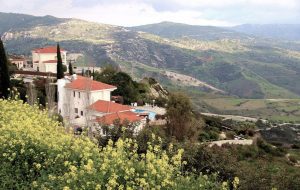
In Cypriot villages, bread has never been just food. It is routine, ritual, and social glue, baked in wood-fired ovens that anchor neighbourhood life. From ancient grain cultivation to communal baking days, village bread and pies reflect how Cypriots learned to survive drought, celebrate faith, and care for one another. This article explores how village baking worked, why it mattered, and how these traditions continue to shape Cyprus today. vkcyprus-com Where Daily Life Began: Wheat, Fire, and the Village Hearth For centuries, village life in Cyprus revolved around three constants: wheat, fire, and community. Bread was baked not occasionally, but rhythmically, setting the pace of domestic and social life. In rural areas, meals, hospitality, and even religious observance were structured around when the oven was fired and when fresh loaves emerged. Unlike urban bakeries, village baking was never anonymous. Each loaf carried the mark of a household, a season, and a shared oven. The act of baking was as important as the bread itself, turning daily sustenance into a collective ritual. The Land That Fed the Oven Cyprus’s central plains and foothills supported grain cultivation long before written history. Villages relied on locally grown wheat and barley, shaped by climate rather than industrial yield. Stone-milled flour retained bran and germ, producing darker, denser bread that was nourishing and durable. When…

Read more

Western Kingdom of Paphos

Western Kingdom of Paphos

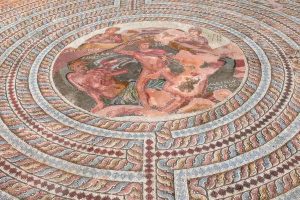
Paphos refers to two distinct but connected ancient cities in southwestern Cyprus. Palaipaphos (Old Paphos), located at modern Kouklia village, was the original seat of the kingdom and the center of Aphrodite worship from the 12th century BC. Nea Paphos (New Paphos), founded around 320-310 BC at the modern coastal city of Paphos, served as the administrative and commercial capital during Hellenistic and Roman periods. www.sovereign.com The archaeological complex encompasses both sites and was inscribed on the UNESCO World Heritage List in 1980. The Sanctuary of Aphrodite at Palaipaphos dates to Mycenaean times and functioned as one of the most important pilgrimage destinations in the ancient Greek world. The Archaeological Park at Kato Paphos preserves Roman villas with elaborate mosaic floors, a Hellenistic theater, fortifications, public buildings, and the Tombs of the Kings necropolis. Together, these sites document over 2,500 years of continuous religious and political significance. Historical Background According to Greek stories, the hero Agapenor from Arcadia founded Paphos after the Trojan War and built a temple to Aphrodite around 1200 BC. Archaeology confirms Mycenaean people lived there, supporting this date. This makes it one of the earliest Greek religious sites in Cyprus. The sanctuary was unusual because it did not have a human statue of the goddess. Instead, people worshipped a conical stone, possibly a meteorite, as a…

Read more
Laouto (Lute)

Laouto (Lute)

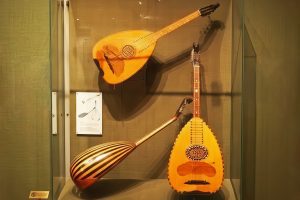
The Cypriot laouto is a plucked string instrument with a distinctive accompaniment style that plays a crucial rhythmic and harmonic role in the island's music, supporting both instrumental ensembles and vocal traditions while embodying strong regional identities. Its pear-shaped body and resonant tone allow for improvisation within ancient modal systems inherited from Byzantine and Ottoman influences, making it a cornerstone of Cypriot folk expression. This instrument not only preserves historical musical practices but also adapts to contemporary settings, raising interest in how such traditions endure in a modern world. nakas-com A Core Element of Cypriot Musical Heritage The laouto, a lute-like instrument central to Cypriot folk music, features a large pear-shaped body, long neck, and four strings tuned in a way that facilitates both melody and rhythm. Crafted from local woods like mulberry or walnut, with a soundboard often made from spruce or cedar for resonance, it produces a warm, bright sound that blends seamlessly with other instruments. In traditional settings, the laouto provides the backbone for dances, songs, and improvisations, its strings plucked with a plectrum to create driving rhythms and harmonic support. This role extends beyond mere backing; it shapes the music's texture, allowing vocalists or lead instruments like the violin to soar while maintaining a grounded, percussive foundation. Regional variations in playing styles—more ornate in the south,…

Read more