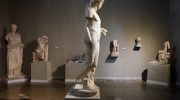
Salamis Marble Portraits
The marble portraits of Roman Salamis turned authority into something citizens met daily, placing emperors, local benefactors, and symbolic figures inside gyms, baths, theatres, and civic halls. Because Cyprus had no native marble, each imported head and statue also signalled access to imperial trade, wealth, and cultural alignment, while local workshops adapted Roman styles through Cypriot hands. This article explains where these portraits stood, how they communicated loyalty and status, and how recutting, earthquakes, and Christian transformation reshaped what survives today. commons-wikimedia-org A Roman City Built on Visibility Under Roman rule, Salamis evolved from a Hellenistic centre into a fully Roman metropolis. Its harbour connected Cyprus to trade routes linking Asia Minor, the Levant, and the Aegean, while its public buildings reflected imperial ideals of urban life. irecommend-ru. In this environment, sculpture was not optional. Portraits were central to how Roman cities functioned. They filled spaces where people exercised, bathed, watched performances, or gathered for civic business. To move through Salamis was to move among faces carved in stone, each reinforcing the city’s place within the Roman world. Portraits That Claimed Authority Roman portrait sculpture followed a visual hierarchy. Emperors and members of the imperial family occupied the most prominent positions, often displayed in niches or along colonnades where their likenesses were impossible to ignore. commons-wikimedia-org These portraits followed official…
Read more