Explore Cyprus with Our Interactive Map

Explore our top stories and discover ideas worth your time.

Cyprus Pine Cedar Forests

Cyprus Pine Cedar Forests

Cyprus forests cover approximately 42% of the island's total area, with 18% classified as high forest and the remaining 20% as other wooded land. These green expanses stretch across mountain ranges, particularly the Troodos Mountains that dominate the western side of the island. Pine and cedar forests create distinctive ecosystems supporting unique endemic species found nowhere else on Earth. cyprusdiscovery-com The island was almost entirely forested in ancient times, earning its reputation as the green island of the Mediterranean. Historical records describe Cyprus as a major timber exporter and shipbuilding center. Today, forests remain vital to Cyprus's natural heritage, water resource protection, and village economies through timber and non-wood products. Ancient Forest Legacy Shapes Modern Landscape Ancient civilizations harvested Cyprus forests extensively for shipbuilding and construction. The timber quality made Cyprus a strategic resource for Mediterranean powers. By the 19th century, overgrazing by the largest goat population of any Mediterranean island degraded mature woodlands into garigue and maquis shrubland. kibris-nethouse-ru Deciduous oak forests disappeared as communities cleared land for crop terracing. Today, cultivation occupies 45% of the island, primarily across the Mesaoria plain and coastal zones. What remains concentrates in protected mountain areas where terrain prevented agricultural development. bp-blogspot-com The forests host 1,750 native plant species, with 128 endemic varieties. Endemic species concentrate in the Troodos Mountains (87 species), Kyrenia…

Read more
Makronissos Tombs

Makronissos Tombs

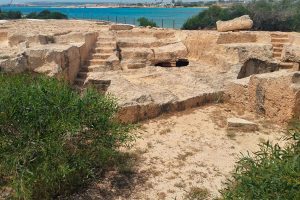
Carved into solid rock on a small peninsula west of Ayia Napa, the Makronissos Tombs are a window into ancient Cyprus. These 19 underground burial chambers date back over 2,000 years and reveal how people lived, died, and honored their dead during the Hellenistic and Roman periods. kiprguru-com The Makronissos Tombs form an ancient necropolis, a city of the dead, where families buried their relatives between the 4th century BCE and the 4th century CE. Each tomb consists of a stepped pathway that descends into the rock, leading to a rectangular chamber sealed by stone slabs. Inside, the chambers feature three stone benches carved along the walls and a central rectangular trench slightly lower than the floor. The site also includes a small sanctuary built from large irregular stone blocks and remnants of an ancient quarry that operated nearby. The quarry unfortunately damaged some tombs, but enough survived to tell us about burial practices in ancient Cyprus. The Ancient Settlement of Thronon According to historical records, an ancient settlement called Thronon existed in the Ayia Napa area, along with several smaller communities. These settlements thrived until the Early Christian period but were abandoned around the 7th century CE during the Arab raids that swept across the Eastern Mediterranean. The tombs at Makronissos served as the final resting place for people…

Read more
Carob Tree Of Cyprus Hillsides

Carob Tree Of Cyprus Hillsides

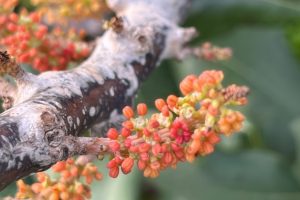
High on the sun-baked slopes where the Mediterranean breeze carries the scent of wild herbs, a sturdy evergreen stands like an old friend its broad crown offering shade and its long, chocolate-brown pods dangling like nature’s own candy bars. Meet the carob tree, a quiet giant of the Cypriot landscape that has sweetened island life for thousands of years. www.inaturalist.org A Hardy Member of the Legume Family Known scientifically as Ceratonia siliqua, this evergreen tree belongs to the Fabaceae family (the pea and bean clan) within the broader order Fabales. In Cyprus it is a classic component of the maquis and garigue shrublands, thriving alongside olives, pistachios and pines. Reaching up to 15 metres with a rounded crown and rough, dark bark, it is perfectly adapted to the island’s dry summers and mild winters. Ancient Companion of Cyprus Forests Long before vineyards or pine plantations covered the hills, carob trees formed part of the island’s original woodland cloak. Early naturalists described vast Mediterranean forests where carob mingled with myrtle, arbutus and pistachio on slopes that later became maquis after centuries of grazing and clearing. In the 19th century, British foresters noted its presence in degraded shrublands, while local tradition has always celebrated the tree’s resilience — plant an olive for your children, the saying goes, but plant a carob for…

Read more