Explore Cyprus with Our Interactive Map

Explore our top stories and discover ideas worth your time.

Mamonia Mélange Cyprus

Mamonia Mélange Cyprus

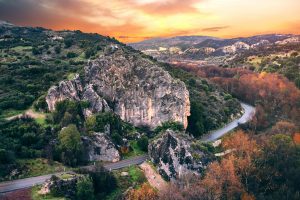
You can arrive at Mamonia without planning to. You stop to watch the sunset near Petra tou Romiou. You follow a narrow road inland from Paphos. You walk a riverbed after winter rain and pick up a stone that feels heavier and smoother than it should. The land looks familiar yet slightly unsettled. A hillside glows deep red. A green rock appears among pale gravel. A white cliff rises abruptly above darker slopes. VasilyPapkovskiy It takes a moment to realise the reason. You have not left Cyprus. You have stepped onto land that existed before the island itself. The Mamonia Mélange, a geological area occupying a large portion of West Cyprus: from Akamas Peninsula to Petra Tou Romiou and all the way up to Troodos foothills, belongs to the material tied to the African tectonic plate. Long before Troodos rose and long before Cyprus took shape, this land lay along the margin of the African continent facing the Neo-Tethys Ocean. When that ocean began to close, the seabed fractured violently. Mantle rock, submarine lava and coral reef were compressed together and later lifted above the sea, scrapping themselves ontop of slowly rising Troodos range. Much later the rest of Cyprus formed around it. Therefore, Mamonia Mélange represents an accretionary complex, a term geologists use to describe similar unique occurrences. The…

Read more
Cyprus Wine Harvest Festivals

Cyprus Wine Harvest Festivals

The Cyprus Tourism Organisation created seven designated wine routes between 2004 and 2013 with funding from European Union structural programs. These routes include over 60 wineries, traditional restaurants, museums, churches, and cultural attractions spread across wine-producing regions. Each route showcases different indigenous grape varieties and unique terroir characteristics based on altitude, soil composition, and microclimate. kiprguru-com The Krasochoria Wine Villages Route The Krasochoria Wine Villages route in the Limassol district represents the heart of Cyprus wine production. This area contains 20 picturesque villages with the highest concentration of wineries on the island. Villages like Omodos and Koilani alone house 10 wineries between them. The dry climate and unique limestone geology create ideal conditions for cultivating both indigenous varieties like Xynisteri and Mavro, plus imported grapes, including Cabernet Sauvignon, Grenache, and Syrah. In total, 23 different grape varieties grow across this region. The Commandaria Wine Route The Commandaria route traverses 14 villages where production of the world's oldest named wine has continued since the 12th century. Knights of St. John perfected Commandaria production methods after establishing their headquarters at Kolossi Castle, creating the feudal estate called La Grande Commanderie. This sweet dessert wine won the first recorded international wine competition in 1224 when French King Philip Augustus declared it the finest wine presented. Omodos Stands as the Most Visited Wine Village…

Read more
Traditional Shoemaking and Village Footwear

Traditional Shoemaking and Village Footwear

Traditional Shoemaking (Tsamika & Village Footwear) in Cyprus involves handmade leather footwear designed for agricultural and pastoral life, reflecting craftsmanship shaped by the island's environment. Tsamika, a type of sturdy boot, and other village shoes use local materials like goat hide for durability, with simple stitches and soles suited to rocky terrain. This tradition preserves ancient skills, where functionality meets cultural symbolism, offering a glimpse into how rural Cypriots adapted to their landscape through practical art. korali-homemade-com A Timeless Craft of Leather and Land Traditional shoemaking in Cyprus embodies a practical artistry where leather is shaped into footwear that supports the demands of farming and herding. Tsamika boots, with their high ankles and thick soles, and village shoes like low-cut "podinia" for lighter work, use tanned hides to create items that withstand the island's varied climates - hot summers, wet winters, and rugged paths. This craft, passed through family workshops, blends utility with subtle symbolism, such as stitched patterns for protection or colors echoing nature. It highlights how Cypriot artisans responded to environmental needs, turning animal byproducts into essential tools that defined rural identity and status. The Historical Roots of Cypriot Shoemaking The tradition dates to prehistoric times, with leather scraps from Neolithic sites like Choirokoitia (7000 BC) suggesting early foot coverings for hunting. By the Bronze Age (2500-1050 BC),…

Read more