Explore Cyprus with Our Interactive Map

Explore our top stories and discover ideas worth your time.

Cyprus Mining Museum Skouriotissa

Cyprus Mining Museum Skouriotissa

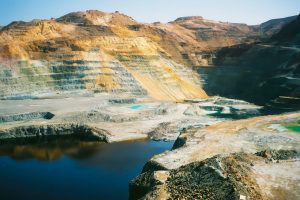
The Museum of Mining Heritage in Katydata village tells the story of Cyprus through its most defining resource: copper. Located near the Skouriotissa copper mine, the oldest continuously operated copper mine in the world, this small museum preserves the island's 4,000-year relationship with the metal that gave Cyprus its name. сvisitsolea-com The museum sits in the centre of Katydata village, next to the Community Council office. The village lies approximately 13 kilometres from Astromeritis, positioned in the Solea Valley where Cyprus's richest copper deposits concentrate. The Community Council and Emigrants Association of Katydata created the museum to document the mining heritage that shaped their region and connected Cyprus to ancient Mediterranean civilizations. Inside the Mining Caverns The first hall recreates the underground experience of working in Cyprus's copper mines. Designers modeled the space after the caverns of the Fukassa Mines, one of several ancient mining sites in the area. Large wooden beams support the low ceiling, mimicking the structural supports that prevented cave-ins in actual mine tunnels. The walls bear colours matching the minerals found in nearby deposits, giving visitors a sense of the geological environment miners worked within. visitsolea-com This immersive approach helps people understand the physical conditions of mining work. The damp caverns, low ceilings, and confined spaces tell a story beyond what artifacts alone could convey. Tools…

Read more
Ayia Napa Sea Caves

Ayia Napa Sea Caves

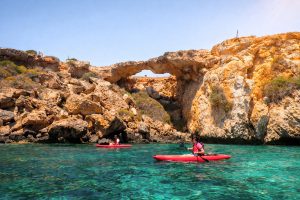
The Ayia Napa Sea Caves represent one of Cyprus's most photographed coastal features. Located just outside the resort town, these caves attract visitors year-round with their combination of geological beauty and recreational opportunities. shutterstock-com The sea caves form part of the rugged coastline around Cape Greco National Forest Park, positioned between Ayia Napa and Protaras on the southeastern edge of Cyprus. The caves themselves are carved into limestone cliffs that rise 6 to 12 meters above the sea. Some caves extend up to 80 meters into the rock. The area marks the western boundary of the 385-hectare Cape Greco National Forest Park, designated as protected land in 1993. Historical Background The formation of these caves demonstrates basic geological erosion over thousands of years. The cliffs consist of layered limestone, with each layer having different hardness levels. The middle layer is softer limestone that erodes more easily when waves crash against it repeatedly. The upper layer, made of harder rock, resists erosion better and creates a protective cap over the caves. This prevents collapse while the waves continue hollowing out the softer material underneath. The lowest layer, also harder, forms a natural platform or ledge several meters wide. tripadvisor-com Because the layers are not perfectly horizontal, parts of this ledge sit underwater while other sections remain dry. The irregular erosion patterns…

Read more
Floss Silk Tree

Floss Silk Tree

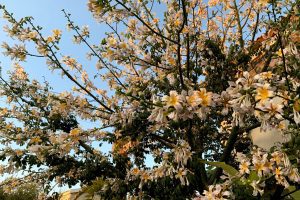
Imagine walking through a sunny park in Nicosia or Limassol when a tree catches your eye with its trunk covered in sharp thorns and branches bursting with pink flowers like fluffy cotton candy. Perhaps one of the most bizarre trees you'll encounter is the floss silk tree this South American visitor that's found a home in Cyprus, hiding surprises in its spiky exterior that make you wonder what other secrets it holds. Konstantin-Solovev Getting to Know This Exotic Guest The floss silk tree is a large, deciduous tree known for its striking appearance and fluffy seeds. It's part of the broader world of flowering plants, fitting into the Malvaceae family alongside everyday wonders like cotton and hibiscus, all sharing a love for warm climates and showy blooms. A Journey from Rainforests to Island Parks Native to the lush tropical forests of South America, where ancient peoples used its fibers for ropes and padding, this tree crossed oceans during the age of exploration. In Cyprus, it likely arrived in the early 20th century under British influence, planted as an ornamental to add flair to gardens and streets, much like other far-flung arrivals that helped shape our island's green landscape over the last century. Spikes, Blooms, and Fluffy Surprises What stands out most is its swollen, bottle-shaped trunk armored with large, conical…

Read more