Explore Cyprus with Our Interactive Map

Explore our top stories and discover ideas worth your time.

Tourism-Driven Mobility Patterns Across Cyprus

Tourism-Driven Mobility Patterns Across Cyprus

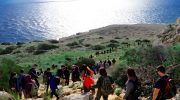
Cyprus welcomed over 4 million tourists in 2024, marking a 5.1% increase from the previous year. This surge in visitors creates distinct movement patterns across the island, from concentrated coastal resort areas to scattered mountain villages. The way tourists navigate Cyprus differs dramatically from how residents travel, shaped by seasonal preferences, transportation choices, and destination priorities. Tourist arrivals cluster heavily in specific zones rather than spreading evenly across Cyprus. Paphos dominates visitor accommodation with 31.5% of tourists choosing to stay there, followed by Ayia Napa at 15.9%, Larnaca at 14.2%, Limassol at 12.4%, and Paralimni at 11.4%. This concentration reflects both infrastructure development and marketing efforts directed at international markets. The United Kingdom supplies 34% of all tourist arrivals, maintaining its position as Cyprus's primary source market. Israel follows with 10.5%, Poland contributes 8.3%, Germany adds 5.7%, Greece accounts for 4.5%, and Sweden provides 3.7%. Each nationality displays different movement preferences once on the island. British tourists tend toward longer stays in established resort areas, while Israeli visitors often favor shorter, more intensive trips. Travel purpose data reveals that 81.1% of tourists visit for leisure, 11.9% come to see friends and relatives, and 6.9% arrive for business. These different motivations create varied mobility patterns. Leisure tourists typically remain in coastal zones with occasional day trips, while those visiting friends and…

Read more

Deneia Necropolis Cyprus Bronze Age Site

Deneia Necropolis Cyprus Bronze Age Site

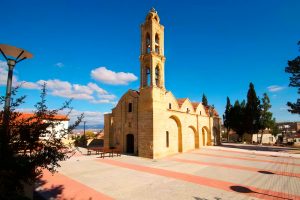
Just southeast of the modern village of Deneia in the Nicosia district lies one of Cyprus's most significant Bronze Age burial grounds. This ancient necropolis contains over 1,250 tombs that document nearly a thousand years of funerary practice, from approximately 2500 BCE through 1650 BCE, making it among the most extensively used cemeteries in prehistoric Cyprus. The Deneia necropolis represents an extraordinary concentration of chamber tombs carved into natural rock during the Early and Middle Bronze Age periods. Unlike many smaller cemeteries scattered across Cyprus that served individual villages, Deneia appears to have functioned as a regional burial ground that drew communities from a wider area. The tombs follow the standard Bronze Age design, with a dromos or entrance passage leading down to one or more roughly circular burial chambers. These chambers typically held multiple interments as families reopened tombs over generations to add new dead. Grave goods found at the site include red-polished pottery, copper tools and weapons, jewelry made from gold and precious stones, and clay figurines. Historical Background The people who used this cemetery lived during a critical transformation in Cypriot history. Around 2500 BCE, newcomers from Anatolia introduced new pottery styles and burial customs to Cyprus. These immigrants are identified by archaeologists as the Philia Culture, and they brought with them the knowledge to exploit Cyprus's…

Read more
The Arabis Species of Cyprus

The Arabis Species of Cyprus

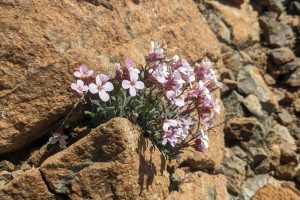
Tucked away in the rocky crevices and mountainous slopes of Cyprus, the Arabis species offer delicate bursts of color amid the island's rugged terrain. These small, resilient rockcresses, with their clusters of white, pink, or purple flowers, are a testament to the unique flora that thrives in this Mediterranean hotspot. Discovering them in the wild feels like finding hidden gems that whisper stories of Cyprus's ancient landscapes. Why is it interesting? Arabis, commonly known as rockcresses, are a genus of flowering plants in the mustard family (Brassicaceae). In Cyprus, there are four notable species, three of which are endemic to the island: Arabis cypria, Arabis purpurea, and Arabis kennedyae, along with the more widespread Arabis verna. These hardy perennials or annuals are adapted to dry, rocky environments, producing charming flowers that attract pollinators in spring. Background and Origins The Arabis species in Cyprus have evolved over millennia in the island's isolated ecosystems, particularly in the Troodos Mountains and northern ranges. Shaped by the Mediterranean climate with hot summers and mild winters, they trace their roots to ancient plant lineages that adapted to limestone cliffs and serpentine soils. Endemic varieties like Arabis purpurea and Arabis kennedyae highlight Cyprus's role as a biodiversity refuge, surviving through geological changes that separated the island from surrounding lands. Description Arabis plants are typically low-growing, forming…

Read more