Explore Cyprus with Our Interactive Map

Explore our top stories and discover ideas worth your time.

The Gymnasium of Salamis

The Gymnasium of Salamis

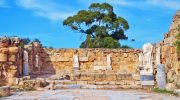
The ancient city of Salamis on Cyprus holds some of the Mediterranean's most remarkable Roman architecture. Among its treasures, the Gymnasium stands out as a testament to how Romans blended physical training, social interaction, and luxury bathing into a single sprawling complex. Located on the eastern coast near modern Famagusta, this site offers visitors a direct connection to daily life in Roman Cyprus. The Gymnasium traces its roots to the Hellenistic period, when Greek colonists first established athletic training facilities in Salamis. However, the structure visible today belongs to the 2nd century AD, specifically during the reigns of emperors Trajan and Hadrian. The transformation came after a devastating Jewish revolt in 116 AD that left much of Salamis in ruins. Rather than simply repairing the damage, Roman engineers rebuilt the Gymnasium on a grander scale. The new complex featured a colonnaded palaestra, a large open courtyard surrounded by covered walkways on all four sides. This provided athletes with shaded areas for training and spectators with comfortable viewing spots. The Romans added sophisticated bathing facilities that transformed the Gymnasium from a simple training ground into a complete social center. An inscription found in the pavement credits Trajan with constructing the roof over one of the swimming pools, while multiple honorific decrees mention Hadrian as a benefactor and savior of the city.…

Read more
Cyprus Wine Museum Erimi

Cyprus Wine Museum Erimi

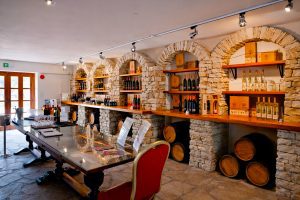
The Cyprus Wine Museum sits at the most important historical crossroads in Cyprus. The location connects the road between ancient Kourion and Kolossi Castle, the old Limassol to Paphos route, and the roads leading to the wine villages in the Troodos Mountains. Erimi village itself has produced wine for over 5,500 years. The prehistoric settlement of Sotira lies nearby, where archaeologists discovered the oldest grape seed remains on the island. Kolossi Castle stands just a short distance away, the medieval headquarters of the Knights Hospitaller who gave Commandaria wine its name. Historical Background Composer Anastasia Guy founded the museum in 2004 after years of planning. The building belonged to her family for generations and originally functioned as a traditional Cypriot inn. Guy recognized that Cyprus was one of the first wine-producing countries in the world and saw an opportunity to preserve this heritage. The concept, developed in 1998, received approval from the Cyprus Tourism Organization in 2001 and underwent construction from 2002 to 2004. President Tassos Papadopoulos performed the official inauguration in 2004. The museum immediately began enriching its collections with archaeological items on loan from the Cyprus Archaeological Museum, the Pierides Museum of Marfin Laiki Bank, and other institutions. In 2005, the Ministry of Transport approved official road signs directing visitors from archaeological sites and public roads. The Ministry…

Read more
British Colonial Cyprus

British Colonial Cyprus

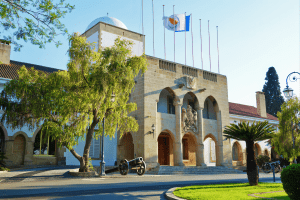
British colonial architecture in Cyprus reflects 82 years of British rule from 1878 to 1960. Unlike other colonies where British builders copied English designs directly, architecture in Cyprus followed a different path. British planners created a local style that combined European ideas with Cypriot building traditions. During this period, around 700 colonial buildings were constructed across the island. These included government offices, hospitals, post offices, courthouses, schools, and police stations. Most of these buildings were planned and built by the Public Works Department, which employed architects and engineers from Britain, other British territories, and Cyprus. Historical Background Cyprus came under British control in 1878 when the Ottoman Empire leased the island to Britain. At that time, the island was economically weak. Most towns and villages had an appearance closer to Middle Eastern settlements than European cities. The contrast between Cyprus and Britain was clear. Britain was a major industrial power with global influence, while Cyprus remained largely rural. When World War I began and the Ottoman Empire joined Germany, Britain canceled the lease and formally annexed Cyprus in 1914. In 1925, Cyprus became an official crown colony. This change marked a turning point in British construction policy. Early colonial buildings were simple and practical, showing Britain’s limited interest in long term investment. After full colonial status was established, construction increased…

Read more